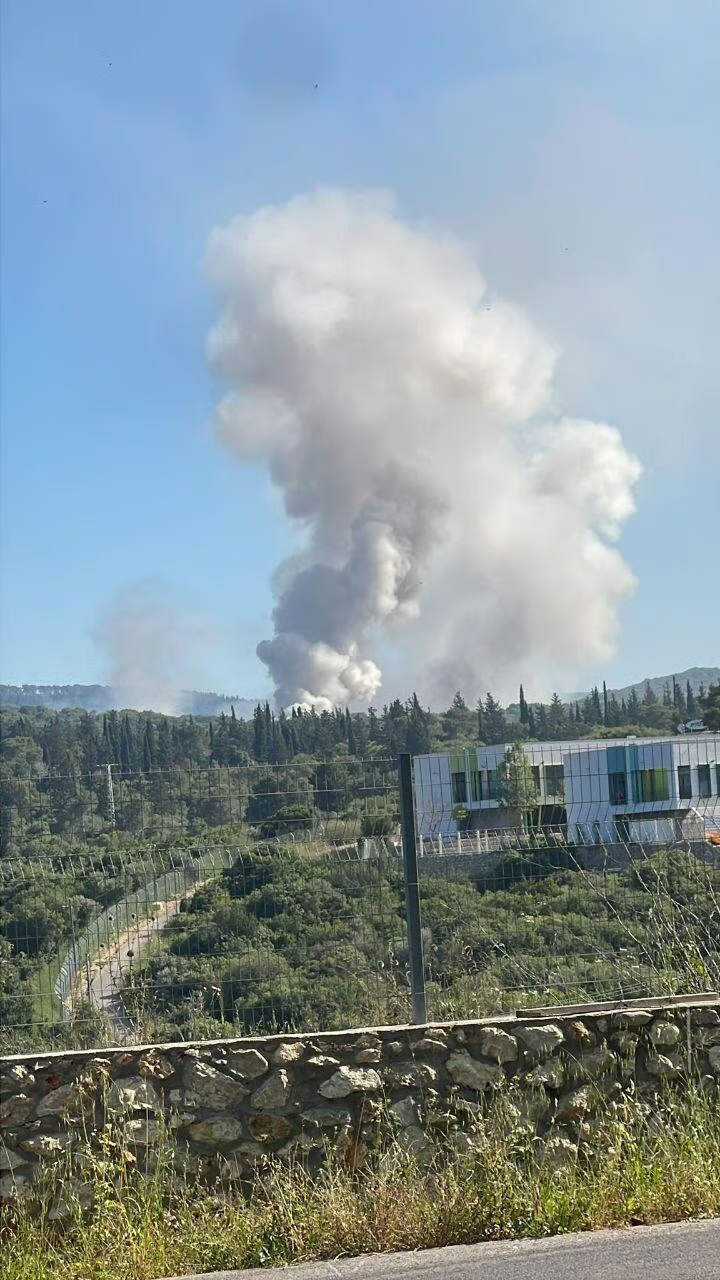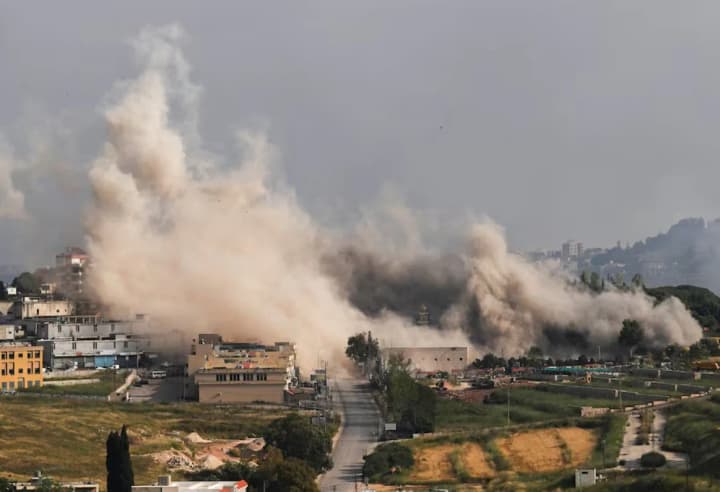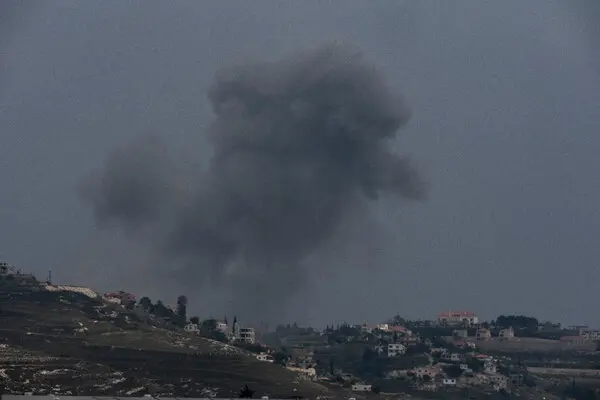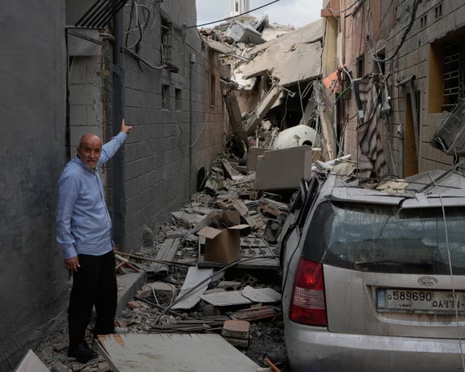
Israel's conflict with Lebanon is destined to fail, despite Israeli efforts since October 2023 to fulfill an old objective of occupying southern Lebanon up to the Litani River. This assertion is grounded in a consistent historical pattern of strategic miscalculation and the enduring resilience of Lebanese resistance. The ambition to control territory up to the Litani River is not new, representing an old dream for Israeli strategists, which they perceived an opportunity to realize following the events of October 2023. These efforts included Israel succeeding in assassinating a whole layer of Hezbollah's leadership, notably Secretary-General Hassan Nasrallah. Such targeted strikes aimed to decapitate the organization's command structure and diminish its operational capabilities. The communications and pager operation in September 2024 also signaled an unprecedented level of Israeli intelligence penetration. This sophisticated operation, which caused widespread disruption and casualties, noted Israel's advanced capabilities in covert warfare. Ramzy Baroud stated that this operation, "despite its brutality, was perhaps the most dramatic of these efforts, signaling an unprecedented level of Israeli intelligence penetration." This incident, while demonstrating a significant intelligence coup, did not, however, lead to the strategic collapse of Hezbollah. Following a ceasefire agreement signed in late 2024, Israeli officials now openly discuss intensifying attacks against Beirut's southern suburbs, Hezbollah's civilian stronghold. This rhetoric indicates a continued intent to exert pressure on Hezbollah, even after formal cessation of hostilities.
Echoes of Past Failures
Israel attempted to establish a buffer zone in southern Lebanon through direct military occupation and proxies following its 1978 invasion. This strategic endeavor aimed to create a security cordon along its northern border, preventing cross-border attacks. This experiment with a buffer zone endured for over two decades, ultimately concluding in failure in May 2000. Despite significant military investment and the establishment of proxy forces like the South Lebanon Army, Israel was unable to secure its objectives in the long term. This withdrawal was a direct result of sustained guerrilla warfare and increasing domestic pressure within Israel. Years later, in 2006, Israel again sought to decisively defeat Hezbollah and reshape Lebanon's political equation. This large-scale military campaign, intended to dismantle Hezbollah's military infrastructure and eliminate its threat, also ended with an Israeli withdrawal and a strategic defeat. The conflict, which lasted for 34 days, resulted in significant destruction in Lebanon but failed to achieve Israel's stated goals of disarming Hezbollah or securing its northern border. Hezbollah's return to military engagement after these conflicts was a continuation of a war that had not actually stopped. This perspective suggests that these conflicts are not isolated events but rather phases within a continuous struggle for influence and security in the region. The repeated failures to achieve lasting security through military occupation or decisive military victories highlight a fundamental flaw in Israel's approach to its northern border. Each attempt to impose a military solution has ultimately led to a reinforcement of Lebanese resistance and a deeper entrenchment of Hezbollah's presence. The historical record demonstrates that military interventions, while capable of causing immense destruction, have not translated into sustainable security gains for Israel in Lebanon.
Hezbollah's Enduring Resilience
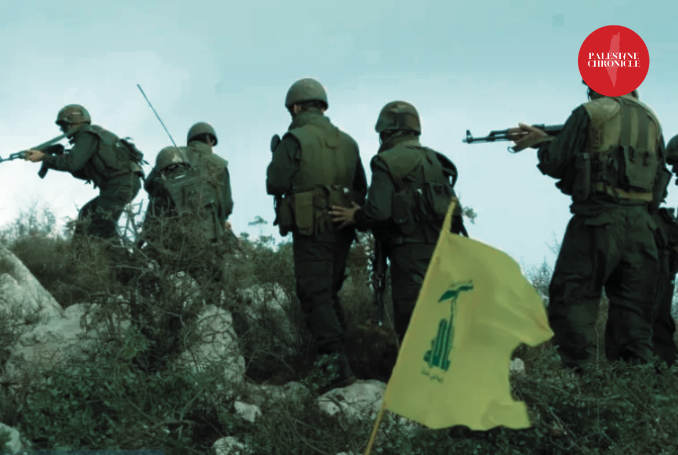
Hezbollah has demonstrated preparedness for a prolonged war of attrition, echoing the tactics that led to the expulsion of Israeli occupation forces in 2000. This preparedness is a cornerstone of its strategic doctrine, allowing it to absorb attacks and continue operations over extended periods. The group's capacity for sustained resistance is a key factor in the assessment that Israel's current military objectives are ultimately doomed to fail. Hezbollah's operational methods, including the deployment of drones and loitering munitions, increasingly complicate Israeli movements and logistics. These advanced capabilities, often developed through years of conflict and external support, allow Hezbollah to strike targets deep within Israeli territory and disrupt military operations. The precision and range of these weapons systems force Israeli forces to adopt more cautious and resource-intensive approaches. The group has also adopted decentralized operations, further challenging Israeli military responses. This decentralized structure makes it difficult for Israel to target and dismantle the organization effectively, as there is no single command center or leadership echelon whose elimination would cripple the entire network. Instead, operations can be carried out by various autonomous cells, making them resilient to concentrated attacks. This blend of advanced weaponry and flexible operational structures allows Hezbollah to maintain a credible deterrent and inflict costs on Israeli forces, even in the face of overwhelming technological superiority. The ability to adapt and innovate in its military tactics has been key to Hezbollah's survival and continued effectiveness, reinforcing the challenge it poses to Israel's military objectives.
Lebanon largely adhered to the ceasefire agreement established in late 2024. This adherence demonstrated a commitment to de-escalation from the Lebanese side, despite the ongoing tensions. However, Israeli forces repeatedly breached the terms of this agreement, conducting airstrikes, initiating incursions, and engaging in military operations. These violations included targeted attacks and ground movements that directly contravened the spirit and letter of the ceasefire. These actions continued despite the agreed-upon cessation of hostilities. Such breaches undermine the credibility of peace agreements and contribute to a cycle of mistrust and renewed conflict. The pattern of Israeli violations, even after a formal ceasefire, suggests a continued pursuit of military objectives that extend beyond the agreed-upon terms, further complicating any path towards lasting stability. This behavior reinforces the perception that Israel's long-term strategy in Lebanon relies more on military pressure than on diplomatic solutions or adherence to international agreements. The repeated disregard for ceasefire terms also notes the deep-seated nature of the conflict and the difficulty in establishing a durable peace when one party continuously seeks to gain military advantage.
The Futility of a Security Belt
Israel's historical attempts to establish a security belt in southern Lebanon have consistently met with strategic failure, despite significant military investment and prolonged occupation. The concept of a buffer zone, intended to safeguard northern Israel from attacks, proved unsustainable in the face of persistent Lebanese resistance. This strategic approach, while seemingly logical on paper, failed to account for the deep-rooted nationalistic and resistance sentiments within Lebanon. Following its 1978 invasion, Israel maintained a presence in southern Lebanon, supporting the South Lebanon Army, in an effort to create a cordon sanitaire. This occupation, which lasted over two decades, ultimately failed to achieve its long-term security objectives. The presence of foreign forces on Lebanese soil, far from creating security, instead galvanized opposition and became a rallying cry for resistance movements. Instead, it fueled the emergence and strengthening of resistance movements, notably Hezbollah. Hezbollah, initially formed in response to the Israeli occupation, grew in strength and popular support precisely because of its role in resisting this foreign presence.
The withdrawal of Israeli forces from southern Lebanon in May 2000, prompted by sustained guerrilla warfare, marked a significant strategic defeat for Israel's security belt policy. This withdrawal was not a voluntary redeployment but a forced retreat under continuous pressure, demonstrating the power of asymmetric warfare. This withdrawal demonstrated that direct military occupation and the establishment of proxy forces could not guarantee security, but rather served to entrench opposition. The act of occupation itself became a primary driver of conflict, rather than a solution to it. Subsequent Israeli military campaigns, including the 2006 conflict, also failed to eliminate Hezbollah or secure Israel's northern border definitively. These large-scale military operations, despite their destructive power, were unable to achieve the decisive military victory that Israel sought. These operations, while causing extensive damage, did not dismantle the resistance infrastructure or alter the geopolitical landscape in a manner favorable to Israel's long-term security interests. Instead, they often led to a rebuilding of Hezbollah's capabilities and an increased determination to resist.
The recurring pattern suggests that military solutions aimed at creating a physical security barrier or neutralizing resistance from Lebanese territory have consistently fallen short of their strategic goals. The pursuit of a security belt through military means has proven to be a self-defeating strategy, generating more insecurity than it resolves. The resilience of local forces, coupled with the complex political dynamics of Lebanon and the broader Middle East, has rendered such security belts futile in preventing cross-border engagements. The intricate web of alliances, sectarian divisions, and external influences in Lebanon ensures that purely military solutions are inherently limited in their effectiveness. Instead, these interventions have often led to prolonged conflict and deepened animosity, reinforcing the perception among many observers that a purely military approach to securing Israel's northern border is inherently unsustainable and ultimately destined to fail. The historical record, therefore, presents a compelling argument that Israel's current objectives in Lebanon, echoing past failed strategies, are unlikely to yield different results.