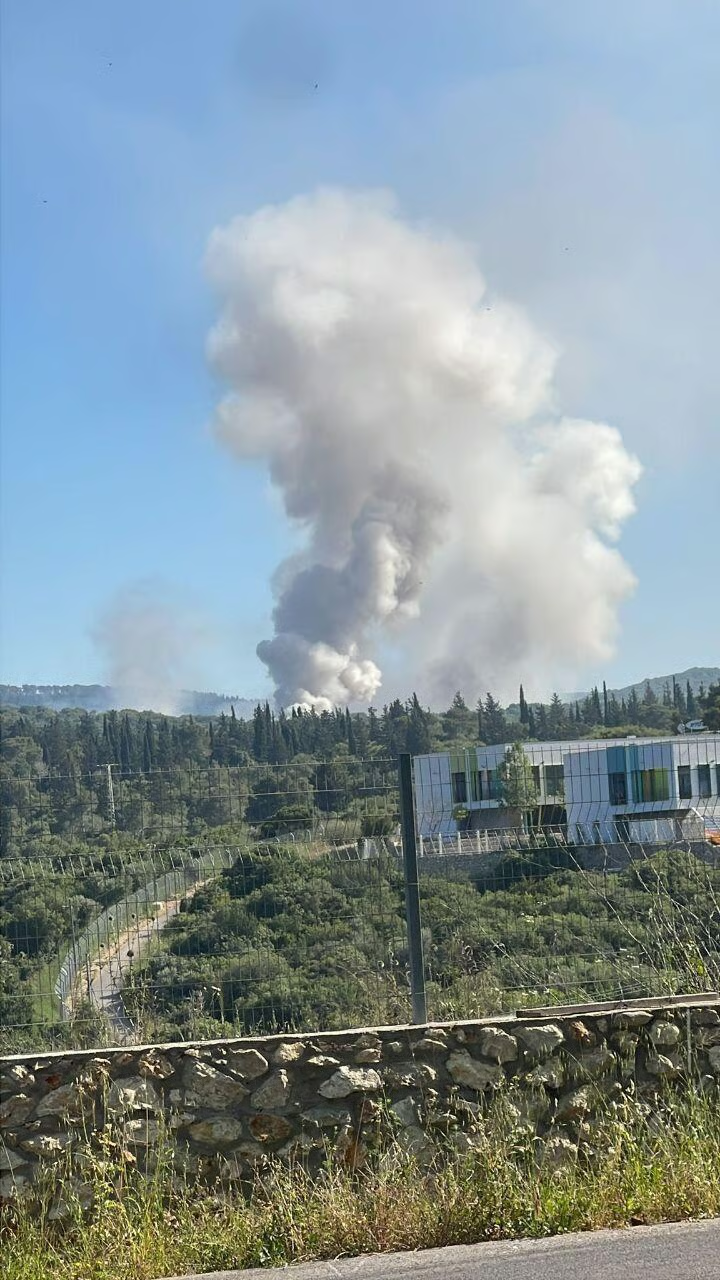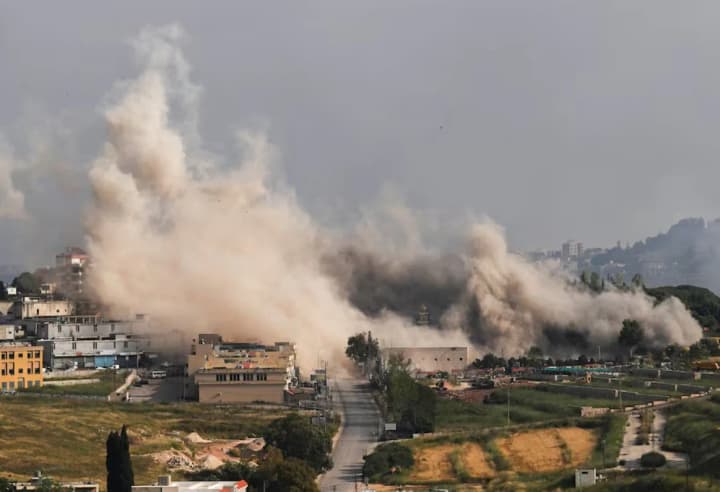
Israel conducted over 120 airstrikes across Lebanon on Tuesday, escalating cross-border hostilities. The extensive aerial bombardments targeted multiple locations throughout the country, marking a significant intensification of military actions. These operations represent a broadening of Israel's military engagement beyond previous limited confrontations, indicating a shift towards more widespread aerial assaults. The scope and scale of Tuesday's airstrikes show a deliberate expansion of Israel's operational strategy in Lebanon. The strikes occurred amid heightened tensions in the region, following recent skirmishes and exchanges of fire between Israeli forces and militant groups. The sheer volume of over 120 airstrikes launched by Israel across Lebanon on Tuesday notes the full nature of this latest military action, affecting a wide geographical span within Lebanese territory. This substantial number of aerial assaults indicates a pronounced shift in military tactics and an escalation in the ongoing conflict.
Intensified Strikes and Casualties
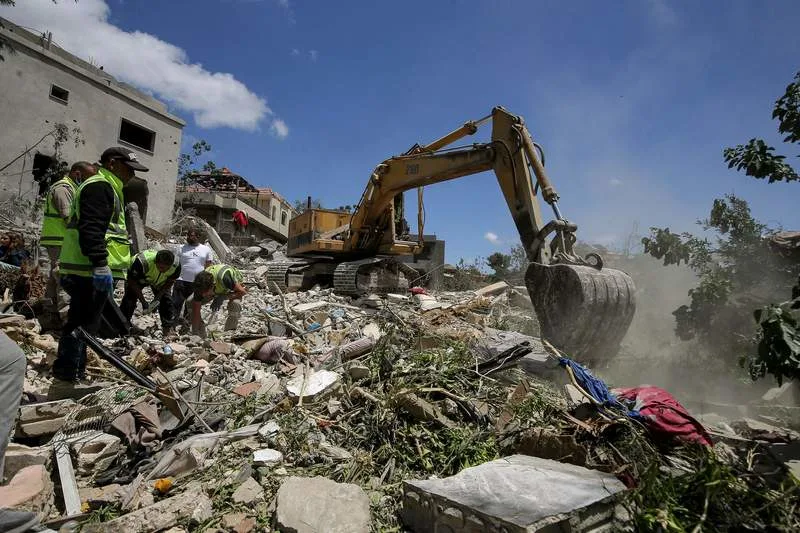
The Israeli airstrikes on Tuesday specifically targeted southern and eastern regions of Lebanon. This concentrated effort on distinct geographical areas suggests a strategic focus for the aerial campaign. An attack on the town of Burj al-Shemali, located in the Tyre District, tragically resulted in the deaths of 10 people, showing the severe human cost of the renewed hostilities. The precision and impact of these strikes are a significant concern for the civilian population in these areas. Other strikes hit areas near the medieval Beaufort Castle, a historically significant Crusader-era fortification that has seen previous military engagements, and the Qaraoun Dam, a critical piece of infrastructure forming a large artificial lake in the Beqaa Valley, vital for hydroelectric power generation and irrigation. The targeting of such diverse locations, from populated towns to historical sites and key infrastructure, illustrates the broad reach of the Israeli aerial campaign.
Ground Operation and Strategic Aims
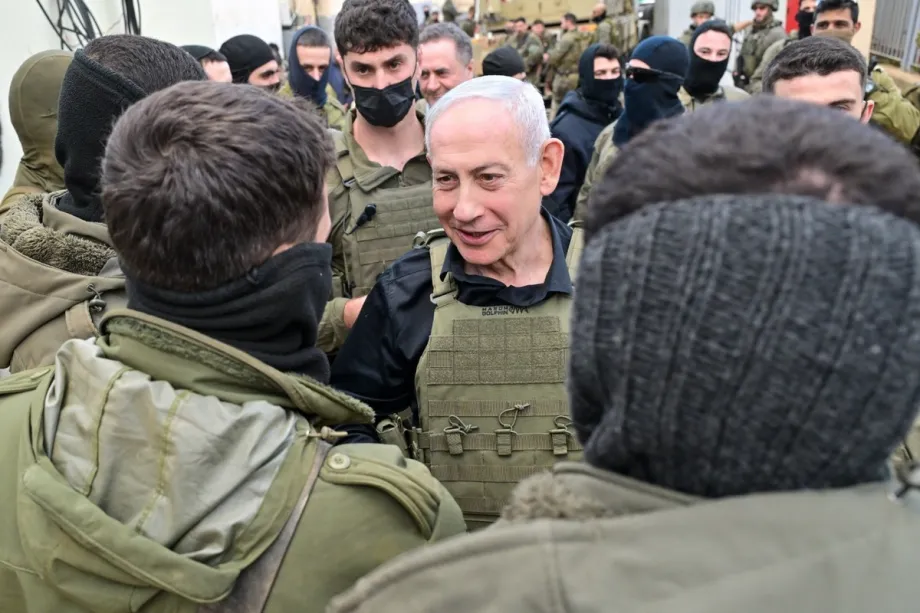
Beyond the extensive aerial campaign, Israeli forces are operating with large contingents on the ground in Lebanon, actively seizing and controlling specific areas as part of their military strategy. This ground operation marks a significant expansion of Israel's engagement beyond aerial bombardments, indicating a multi-pronged approach to its military objectives. The presence of these large forces on the ground, engaged in territorial seizure and control, signifies a deeper and more direct involvement in Lebanese territory. The ongoing deployment and territorial control efforts are designed to establish and strengthen a security strip along the border. This security strip is being actively fortified and expanded with the explicit aim of protecting northern communities within Israel from potential threats originating from Lebanese territory. The objective is to create a strong buffer zone, thereby improving the defensive posture for Israeli residents living near the frontier and enhancing their security against potential cross-border incursions or attacks.
Ceasefire Strain and Regional Context
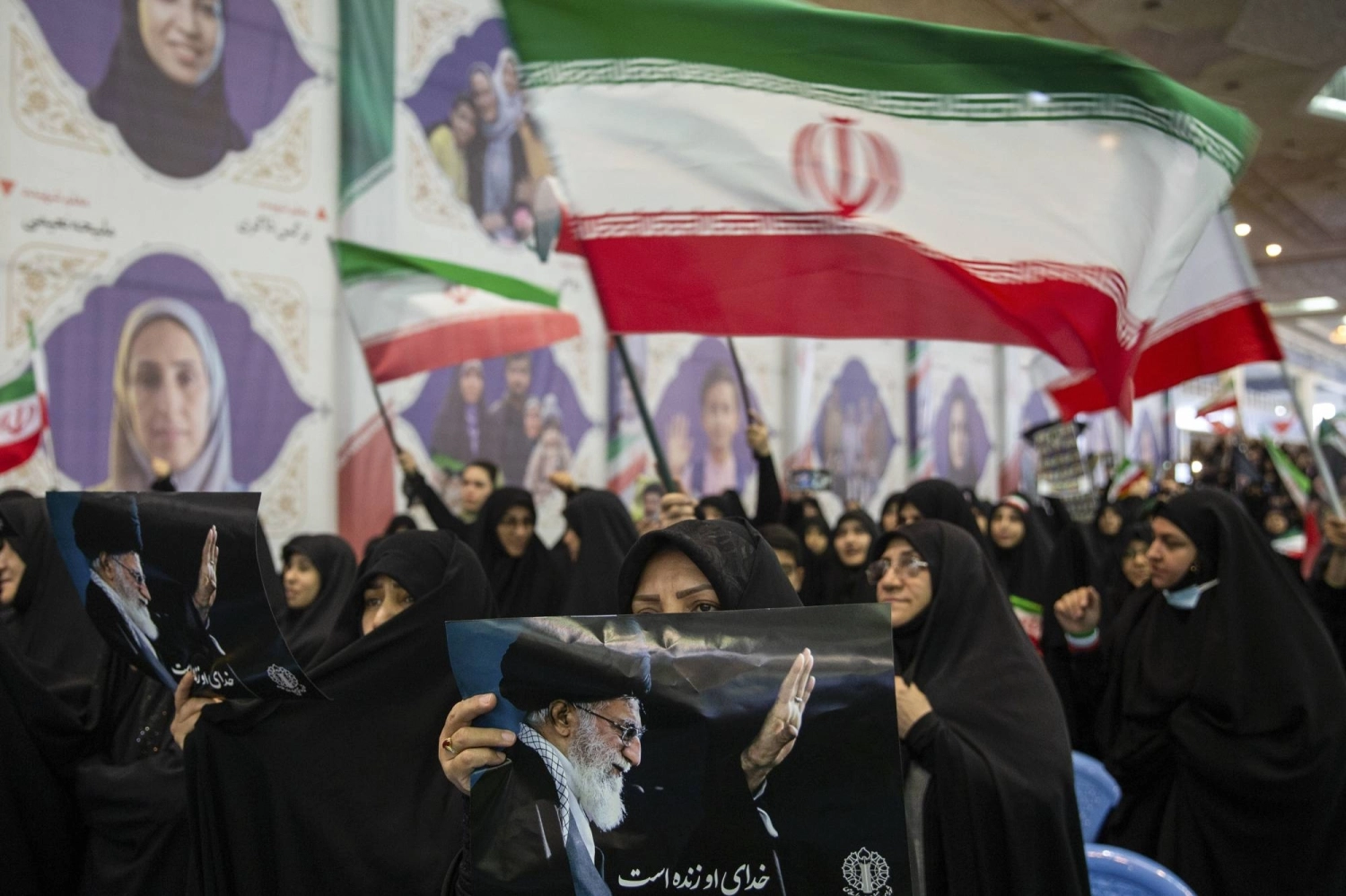
The new Israeli strikes have severely strained the situation surrounding the ceasefire between Israel and Hezbollah. This ceasefire had taken effect on April 16, establishing a period of relative calm that now appears to be jeopardized by the recent escalation. The renewed hostilities represent a significant challenge to the stability that the April 16 ceasefire was intended to foster. The escalation in hostilities also comes amid Iranian claims of violations of a separate truce following American strikes in the south of the country. These interconnected events highlight a complex and volatile regional landscape, where multiple ceasefires and agreements are simultaneously under pressure, contributing to an overall environment of heightened instability and conflict. The interplay of these various claims and military actions suggests a delicate balance of power and a fragile peace in the broader Middle East.