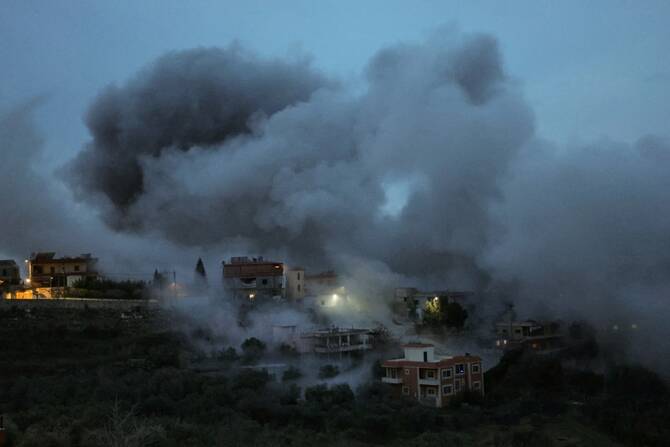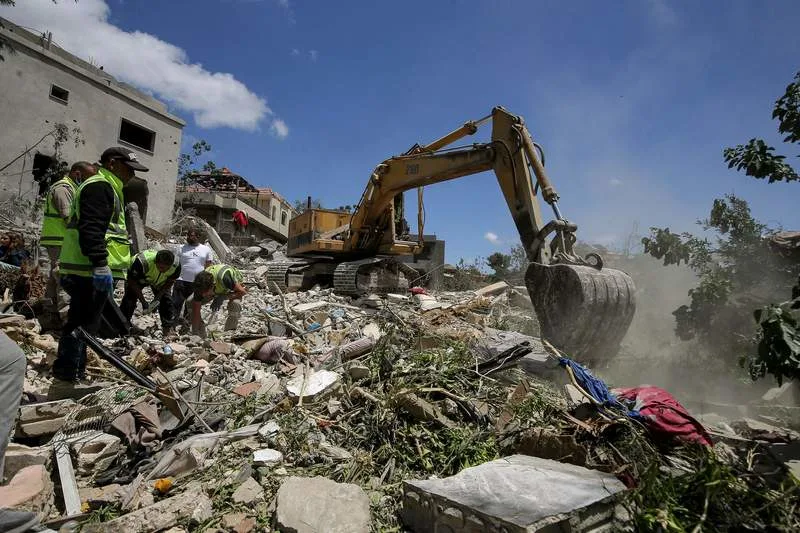
At least 12 people were killed in Israeli airstrikes late Monday in Lebanon's Bekaa Valley. The attacks occurred in the south-eastern region of the country, marking a significant escalation in the ongoing regional conflict. The strikes, which targeted various locations, have drawn international attention and raised concerns about the stability of the Middle East.
Widespread Strikes Intensify
Further strikes were reported overnight and into Tuesday morning, primarily in southern Lebanon. Israeli warplanes conducted 76 airstrikes against 44 targets across Lebanon during this period. These aerial bombardments represent a substantial military operation by Israel. Additionally, 15 drone strikes and artillery attacks were recorded, targeting 25 distinct locations within Lebanon. The intensity and breadth of these operations indicate a concerted effort by Israeli forces. The widespread nature of these attacks suggests a full strategy, impacting multiple areas within Lebanese territory. The sustained military action, extending from late Monday through Tuesday morning, notes the escalating nature of the conflict.
Context of Escalation
In mid-March, Hezbollah initiated attacks against Israel shortly after the United States and Israel conducted their own attacks on Iran. This sequence of events marked a critical point in the regional tensions. Israel subsequently retaliated against Hezbollah, leading to a cycle of reciprocal military actions. The initial attacks by Hezbollah and the subsequent Israeli response set a dangerous precedent for the region. The Israeli and Lebanese governments later agreed to a ceasefire in mid-April, offering a brief period of reduced hostilities. However, the recent events demonstrate a clear breakdown of that agreement. Since early March, almost 3,200 deaths have been reported within Lebanon, showing the severe human cost of the protracted conflict. This grim statistic reflects the profound impact of the ongoing violence on the civilian population and the country's overall stability. The current escalation follows a period of relative calm that was established by the earlier ceasefire.
Broader Regional Impact
The state news agency NNA reported that in addition to the fatalities, multiple individuals sustained injuries during the attacks in Lebanon's Bekaa Valley. The reports of injured individuals further emphasize the immediate and tragic consequences of these military actions on the ground. This recent violence follows a statement by Israeli Prime Minister Benjamin Netanyahu. On Monday evening, Prime Minister Netanyahu announced an intention to intensify Israeli military actions against Hezbollah. His declaration indicated a significant escalation in the ongoing regional tensions, signaling a potential shift towards a more aggressive military posture by Israel. The Prime Minister's statement directly preceded the reported airstrikes, suggesting a direct link between his announcement and the subsequent military operations.
Benjamin Netanyahu's statement on stepping up attacks against Hezbollah shows the potential for a broader conflict. His words indicate a strategic decision to increase military pressure, which could have broad implications for regional stability. The reported injuries further illustrate the immediate human cost of the strikes, affecting not only those directly targeted but also the wider communities in the Bekaa Valley. The situation remains volatile, with both sides indicating a readiness to continue military operations, suggesting that further confrontations are likely. The escalating rhetoric and military actions raise serious concerns about the potential for the conflict to expand beyond its current parameters, impacting neighboring countries and international relations. The international community is closely monitoring these developments, as the risk of a wider regional conflagration grows.