The United States imposed sanctions on Thursday, targeting Hezbollah’s former candidate for the Lebanese presidency, Sleiman Frangieh, and the deputy head of Hezbollah’s political council, Mahmoud Qamati. The US Treasury Department's Office of Foreign Assets Control designated individuals across Lebanon, Syria, Iraq, and Oman. These designated individuals are accused of raising funds and operating front companies for Hezbollah. The sanctions imposed on Thursday represent a significant step in the ongoing efforts by the United States to dismantle the financial infrastructure that supports the Iran-backed group. The full nature of these designations shows the US commitment to targeting all facets of Hezbollah's illicit financial activities, from high-profile political figures to intricate business networks.
The Treasury stated that Frangieh accepted financial support from Hezbollah. The US Treasury specified, "Frangieh accepted financial support from Hizballah in exchange for supporting Hizballah’s efforts to target the parliamentary seats of reformist and independent members of parliament in Lebanese parliamentary elections." This accusation notes a direct link between financial incentives and political manipulation within the Lebanese system, as alleged by the US authorities. The sanctions aim to disrupt the financial network supporting the Iran-backed group, thereby limiting its capacity to exert influence and destabilize the region. The US Treasury Department reiterated its resolve to pursue those who facilitate Hezbollah's operations, emphasizing the critical role of financial pressure in countering the group's activities.
Key Figures Targeted
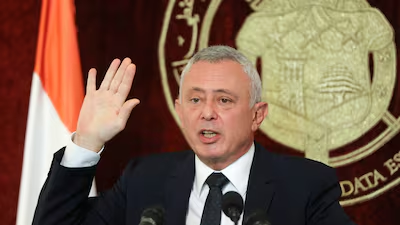
Sleiman Frangieh, identified as the scion of a prominent northern Lebanese political family, leads the Marada Movement. He was accused of leveraging his strategic alliance with Hezbollah to advance his political ambitions. Frangieh's political party reportedly draws virtually no support outside his hometown of Zgharta, a detail that further shows the alleged reliance on external support, including from Hezbollah, for his political standing. He is also a childhood friend of Syrian President Bashar Al Assad, a connection that has long been noted in regional political analyses. The Treasury stated that Frangieh accepted financial support from Hezbollah in exchange for supporting the group’s efforts to target the parliamentary seats of reformist and independent members of parliament in Lebanese parliamentary elections. This alleged quid pro quo arrangement illustrates the intricate web of political and financial dealings that the US Treasury aims to unravel with these sanctions. Hezbollah had previously backed Frangieh, a Maronite Christian, in a presidential contest, signaling the depth of their political alliance and shared objectives within the Lebanese political landscape. The targeting of such a prominent figure like Frangieh sends a clear message about the US determination to hold accountable those who facilitate Hezbollah’s agenda, regardless of their political stature.
Mahmoud Qamati, the deputy head of Hezbollah’s political council, was also named in the sanctions. Qamati stands accused of coordinating the smuggling of cash from Iran for Hezbollah. This accusation points to a direct channel of financial support from Iran to Hezbollah, which is a key component of the group's operational funding. He is further accused of advocating for Hezbollah's interests within Lebanon, indicating his role not only in financial illicit activities but also in shaping the political discourse and policy in favor of Hezbollah. As a high-ranking official within Hezbollah's political council, Qamati's designation notes the US strategy of targeting the leadership and operational facilitators of the organization. The Treasury's action against Qamati shows the belief that disrupting the flow of funds and the advocacy efforts of key leaders is essential to weakening Hezbollah's overall capabilities. The sanctions aim to impede his ability to coordinate such illicit financial transfers and to limit his capacity to further Hezbollah's agenda within the Lebanese state.
Business Networks and Front Companies
The sanctions also extended to a network of businesses and individuals accused of operating as front companies and financial conduits for Hezbollah. Entities named in the sanctions include Globe SARL. The U.S. Treasury identified Globe SARL as the technical arm of Al Ahd Company for Trade and Investment, a Syria-based company linked to Hezbollah. This connection reveals the cross-border nature of Hezbollah's financial operations and its reliance on seemingly legitimate businesses to mask its activities. Globe SARL maintains ties to the business network of Alaa Hamieh, who has also been sanctioned, further illustrating the interconnectedness of these illicit financial structures. The designation of Globe SARL is intended to sever a critical technical support component for Hezbollah's financial infrastructure, thereby impeding its ability to conduct transactions and move funds.
Al Shafa Administrative Services Ltd was also specified in the recent sanctions. Wael Constanteen serves as the chief executive of Al Shafa Administrative Services Ltd. The Treasury Department stated that Al Shafa Administrative Services Ltd has links to Alaa Hamieh, further connecting it to the broader financial network supporting Hezbollah. The involvement of administrative services companies like Al Shafa Administrative Services Ltd suggests a sophisticated approach by Hezbollah to manage its financial dealings, often using layers of corporate entities to obscure the true beneficiaries and origins of funds. The role of individuals like Wael Constanteen in leading such entities is critical in enabling these operations. By targeting these companies and their executives, the US Treasury aims to dismantle the corporate veil behind which Hezbollah operates, making it more difficult for the group to acquire resources and conduct its illicit financial activities. These designations are part of a broader strategy to expose and disrupt the complex web of businesses that provide financial and logistical support to Hezbollah, ensuring that those who facilitate these operations face significant consequences.
Broader Geopolitical Context
The sanctions come amidst a complex and volatile geopolitical backdrop in the Middle East. Joseph Aoun was elected Lebanese head of state last January, a development preceding recent regional tensions. His election was seen by some as a potential step towards stability, yet the underlying regional dynamics continue to present significant challenges. US President Donald Trump spoke to Syria's leader on Wednesday regarding efforts to combat Hezbollah in Lebanon. These discussions occurred alongside the signing of a US-Iranian interim memorandum of understanding this week, which represents a critical diplomatic effort to de-escalate tensions in the region.
The US-Iranian deal is anticipated to halt hostilities across various fronts, including Lebanon. This agreement follows a period of heightened regional conflict, demonstrating the urgent need for diplomatic solutions to prevent further escalation. Hezbollah fired at Israel on March 2, stating the action was in solidarity with Tehran. This specific act of aggression by Hezbollah triggered a severe response. That action ignited an Israeli offensive that resulted in thousands of deaths, marking a significant escalation in the long-standing conflict between the two entities. The Israeli offensive subsequently led to Israel invading southern Lebanon, further destabilizing the border region and causing widespread displacement and destruction. The timing of these sanctions, therefore, is not coincidental, as they are imposed in an environment where efforts are being made to establish a fragile peace, yet the actions of non-state actors like Hezbollah continue to pose significant threats to regional stability. The US-Iranian memorandum of understanding seeks to address these broader regional conflicts, and the sanctions against Hezbollah’s financial networks are an integral part of the US strategy to curb the group's ability to act as a spoiler in these peace efforts.
US Stance and Future Outlook
US Treasury Secretary Scott Bessent asserted that Hezbollah must disarm for Lebanon to achieve a secure future. This statement shows the US position that Hezbollah's continued armed presence and its financial networks are fundamental obstacles to Lebanon's stability and sovereignty. Bessent emphasized the Treasury's continued focus on disrupting the group's financial operations. "Treasury will continue to target Hezbollah's financial networks and hold accountable those who enable the group to undermine the Lebanese state and threaten prospects for lasting peace," Bessent stated. This strong declaration from the Treasury Secretary notes the unwavering commitment of the United States to apply sustained pressure on Hezbollah through financial means. The US Treasury also noted that Sleiman Frangieh accepted financial support from Hezbollah, reinforcing the specific justification for his designation. "Frangieh accepted financial support from Hizballah in exchange for supporting Hizballah’s efforts to target the parliamentary seats of reformist and independent members of parliament in Lebanese parliamentary elections," the Treasury said, reiterating the alleged political manipulation at play. The sanctions are a clear signal that the US will not tolerate actions that undermine democratic processes and fuel instability in Lebanon. The ongoing efforts to dismantle Hezbollah's financial infrastructure are seen as key for fostering an environment where a secure and peaceful future for Lebanon can be realized, free from the influence and coercive power of armed groups. The article was updated on June 18, 2026, at 8:14 PM.