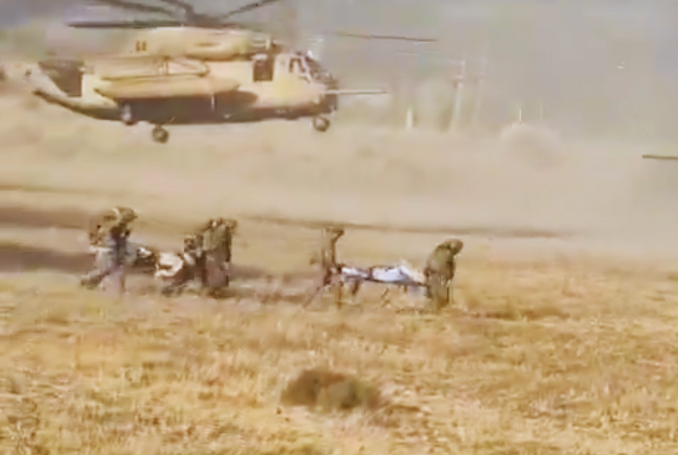
IDF Chief Sergeant First Class (res.) Alexander Filin, 29, from Haifa, was killed in southern Lebanon after a Hezbollah improvised explosive device (IED) detonated near his position. The incident, which occurred during combat operations, also resulted in injuries to at least seven other Israeli soldiers. The Israel Defense Forces confirmed Filin's death and the casualties sustained during the explosion. Chief Sergeant First Class (res.) Filin, who was aged 29, hailed from Haifa and served as a combat soldier within the Israel Defense Forces' 36th Division command post. His death marks a significant loss for the unit operating in the challenging southern Lebanon theater.
IED Attack Details
The explosion occurred as a team of soldiers from the 36th Division and the Givati Brigade traversed an area on foot near the Litani River. The improvised explosive device detonated at approximately 5 p.m. On Wednesday, striking the soldiers as they conducted their operational duties. The blast inflicted a range of injuries among the personnel present. Among the casualties, an Israel Defense Forces (IDF) officer, identified as the 36th Division's deputy commander with the rank of Colonel, sustained moderate wounds. This officer's involvement shows the senior leadership present during the engagement.
Additionally, a reserve officer, who commands the 556th Battalion and holds the rank of Lieutenant-Colonel, was also moderately wounded in the incident. This indicates that commanders from various levels were exposed to the immediate danger posed by the IED. An additional reserve soldier also suffered moderate injuries in the blast, bringing the total number of moderately wounded to three. Three reserve soldiers, one of whom is a woman, were lightly wounded, demonstrating the diverse composition of the forces involved. A combat NCO was also among those who sustained light injuries, bringing the total number of lightly wounded personnel to four. The Israel Defense Forces stated it is investigating the incident to understand the circumstances surrounding the detonation and to prevent future occurrences. The investigation aims to gather full details regarding the IED's placement, the timing of the explosion, and the operational procedures in place at the time.
Separate Drone Assault
In a separate incident on Wednesday morning, two Hezbollah explosive drones wounded five soldiers operating in southern Lebanon. This earlier assault noted the varied tactics employed by Hezbollah in the region. The first drone wounded four soldiers during the initial phase of the assault, causing immediate casualties. A second drone subsequently wounded a fifth soldier, indicating a coordinated or follow-up attack. One of the soldiers wounded by the drones was severely wounded, requiring urgent medical attention due to the gravity of their injuries. Two other soldiers sustained moderate wounds, while two soldiers were lightly wounded in the drone attack, according to reports. The drone attacks occurred earlier on Wednesday, preceding the IED detonation that claimed the life of Chief Sergeant First Class (res.) Filin. These separate incidents show the persistent threat faced by Israeli forces in southern Lebanon from various forms of weaponry.
IDF Retaliation
The Israel Defense Forces (IDF) responded to the IED attack by targeting terror infrastructure in the area with artillery fire. This response followed the detonation of the improvised explosive device near the Litani River, which killed Chief Sergeant First Class (res.) Alexander Filin and wounded seven other Israeli soldiers. The artillery fire was directed at specific targets identified as integral to Hezbollah's operational capabilities in the vicinity where the IED exploded. The retaliatory strikes are part of the IDF's established protocol for responding to attacks that cause casualties among its ranks.
Separately, the IDF also launched artillery fire targeting terror infrastructure in response to the drone incident earlier on Wednesday. That assault involved two Hezbollah explosive drones, which wounded five soldiers operating in southern Lebanon. One soldier was severely wounded, two moderately, and two lightly in the drone attack. The IDF's dual responses to both the IED and drone attacks signal a firm stance against the ongoing hostilities emanating from southern Lebanon. These actions are intended to degrade Hezbollah's capabilities and deter further aggression against Israeli forces.
Broader Conflict Context
Chief Sergeant First Class (res.) Alexander Filin was a combat soldier within the Israel Defense Forces' 36th Division command post. His role placed him directly within an active operational unit in southern Lebanon, noting the constant danger faced by personnel in the region. The 36th Division and the Givati Brigade were engaged in combat operations when the improvised explosive device detonated, showing the dynamic and perilous environment in which these units operate. The incident involving Filin and seven wounded soldiers contributes to the ongoing hostilities in the region, which have seen frequent exchanges of fire and various forms of attacks. The proximity of the incident to the Litani River, a significant geographical feature in southern Lebanon, further contextualizes the operational area. The IDF's investigation into the IED incident is expected to provide more clarity on the specifics of the attack and inform future operational planning.