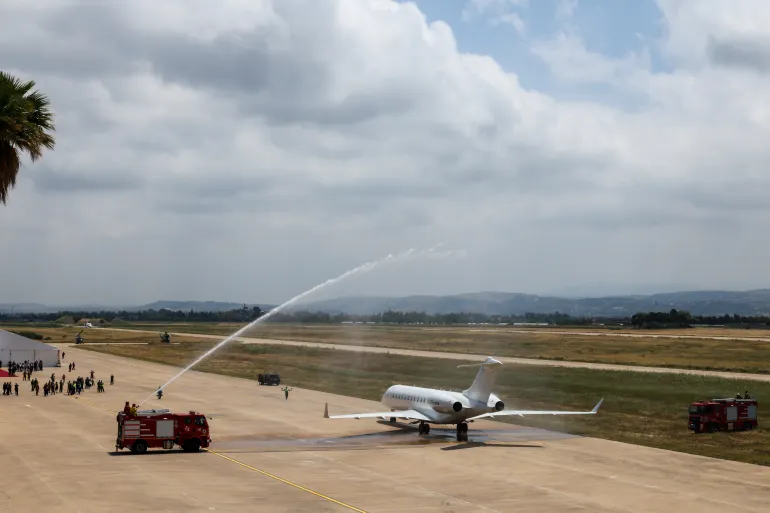
Lebanon’s Rene Mouawad Airport in the northern town of Qlayaat received a flight carrying officials, including Prime Minister Nawaf Salam, on June 6, 2026. This significant event officially marked the reopening of Rene Mouawad Airport for civilian use, a move long anticipated by the Lebanese government. The Lebanese government had announced its intention to reopen the airport for civilian use in 2026, with initial plans to begin receiving passengers around midyear. The airport, located in Qlayaat, northern Lebanon, is being positioned to serve as the country's second international hub. This reopening marks a significant development for the region, aimed at bolstering economic activity and providing an alternative air travel gateway. The arrival of Prime Minister Salam noted the government's commitment to the airport's renewed operations, showing the strategic importance placed on this infrastructure project for Lebanon's future.
The decision to reactivate Rene Mouawad Airport is part of a broader strategy to decentralize air travel infrastructure and stimulate economic growth in Lebanon's northern regions, which have historically been underserved compared to the capital. The airport is named after former Lebanese President Rene Mouawad, whose vision for a more connected and prosperous Lebanon continues to resonate. The government's push for the airport's revival gained significant momentum after Nawaf Salam came to power in Lebanon in 2025, with his administration making it a priority. This initiative is seen as key for diversifying Lebanon's air travel infrastructure beyond Beirut's Rafic Hariri International Airport, which has long been the country's sole international gateway. The establishment of a second international airport is expected to alleviate pressure on Beirut and open up new avenues for trade, tourism, and investment in the north.
Revival and Future Prospects
The Rene Mouawad Airport is anticipated to begin serving smaller planes and low-cost airlines within approximately three months. This initial operational phase is critical for building confidence and establishing regular flight schedules. The rehabilitation phase, including installing a temporary terminal, baggage handling, security screening, and check-in counters, should take around three months from the article's publication date. This rapid deployment of essential infrastructure is designed to get the airport operational as quickly as possible, allowing it to start contributing to the local economy. This infrastructure development is key for facilitating the airport's renewed operations, ensuring safety and efficiency for passengers and airlines alike. The focus on smaller planes and low-cost airlines in the initial stages is a pragmatic approach, aiming to attract a diverse range of carriers and travelers while the airport gradually expands its capabilities.
Projections indicate that the airport could handle around 115,000 passengers within its first year of operation. This figure, though modest for an international airport, represents a significant boost for northern Lebanon and a testament to the potential demand for air travel from the region. Looking further ahead, by its fourth year, the Rene Mouawad Airport is expected to significantly increase its capacity, potentially serving up to 600,000 passengers annually. These figures show the anticipated growth in air travel through the northern Lebanese hub, reflecting optimistic forecasts for regional connectivity and economic revitalization. The long-term vision includes attracting a wider array of international carriers and expanding the network of destinations, further cementing its role as a vital transportation hub.
Prospective flights from the facility are planned for key regional and international destinations. Three specific destinations have been confirmed to land at Qlayaat: Istanbul, Dubai, and Mersin in Turkiye. These routes are intended to connect northern Lebanon with significant economic and travel hubs, providing direct links to major commercial centers and facilitating both business and leisure travel. The choice of Istanbul, Dubai, and Mersin is strategic, as these cities serve as key connectors to broader international networks, opening up northern Lebanon to a global audience. The availability of direct flights to these destinations is expected to attract foreign investment, boost local tourism, and create new economic opportunities for the communities surrounding Qlayaat.
Regional Context and Challenges
The Rene Mouawad Airport's location places it approximately six kilometers (3.7 miles) from the Syrian border, a proximity that notes its role within the wider regional context. This geographical positioning became particularly relevant following the change of regime in Syria in December 2024, which provided an impetus for the airport project's progression. The stability, or lack thereof, in neighboring Syria has always had a direct impact on Lebanon, and the recent political shifts have influenced strategic decisions regarding infrastructure development. The airport's proximity to the border also positions it as a potential gateway for humanitarian aid and reconstruction efforts in the wider Levant region, should circumstances allow.
The broader security situation in the region presents significant challenges for Lebanon, making the successful and sustained operation of a new international airport a complex undertaking. Since March 2, Israel has reportedly killed 3,826 people in Lebanon, leading to the displacement of more more than 1.2 million individuals. This ongoing conflict has had a devastating impact on the country's infrastructure, economy, and social fabric. The constant threat of regional instability casts a long shadow over any large-scale development project in Lebanon, including the Rene Mouawad Airport. The memory of past conflicts, such as the 2006 war with Hezbollah during which Israel struck Beirut airport, serves as a stark reminder of the vulnerability of critical infrastructure to geopolitical tensions.
Economically, Lebanon is facing immense pressure. In November 2024, the World Bank estimated Lebanon needed about $11 billion for reconstruction and recovery, a staggering sum that shows the depth of the country's economic crisis. Lebanon has suffered at least another $3 billion in war-related losses during Israel’s latest intensification of the conflict since March. These figures highlight the urgent need for economic revitalization and diversification, which the Rene Mouawad Airport is intended to support. However, the scale of the destruction and the ongoing financial strain pose significant hurdles to achieving sustained economic recovery. The success of the airport project is thus intrinsically linked to the broader stability and economic health of the nation, requiring strong security measures and a conducive political environment to flourish.
Expert Concerns and Operational Hurdles
The June 6 flight officially marked the reopening of Rene Mouawad Airport for civilian use. The airport is named after former Lebanese President Rene Mouawad. Prospective flights from the facility are planned for key regional and international destinations. Three specific destinations have been confirmed to land at Qlayaat: Istanbul, Dubai, and Mersin in Turkiye. These routes are intended to connect northern Lebanon with significant economic and travel hubs. The reopening comes after Nawaf Salam came to power in Lebanon in 2025, with his administration pushing for the airport's revival. The project aims to diversify Lebanon's air travel infrastructure beyond Beirut, supporting economic development in the northern regions. However, the operational hurdles of establishing consistent international services from a newly reactivated airport, particularly given the broader regional security context, remain a significant challenge for the Lebanese authorities and the airport's long-term viability.
Ensuring the safety and security of passengers, airline personnel, and aircraft will be critical, requiring advanced security systems and rigorous protocols. The proximity to the Syrian border, while offering potential strategic advantages, also necessitates heightened vigilance and coordination with international security agencies. Beyond security, the airport will need to attract a steady stream of airlines and maintain competitive pricing to sustain its operations and meet its ambitious passenger targets. Developing the necessary ground infrastructure, including transportation links to surrounding cities and tourist destinations, will also be key for maximizing its appeal.
The long-term success of Rene Mouawad Airport hinges on Lebanon's ability to navigate these complex challenges. It represents a beacon of hope for economic recovery and regional development, but its journey will undoubtedly be fraught with obstacles. The government's commitment, coupled with international support and a stable security environment, will be essential in transforming this ambitious project into a lasting success that benefits all of Lebanon. The airport's reopening is not merely about flights and passengers; it is a symbol of resilience and a strategic investment in the future of a nation striving for stability and prosperity amidst ongoing regional turmoil.