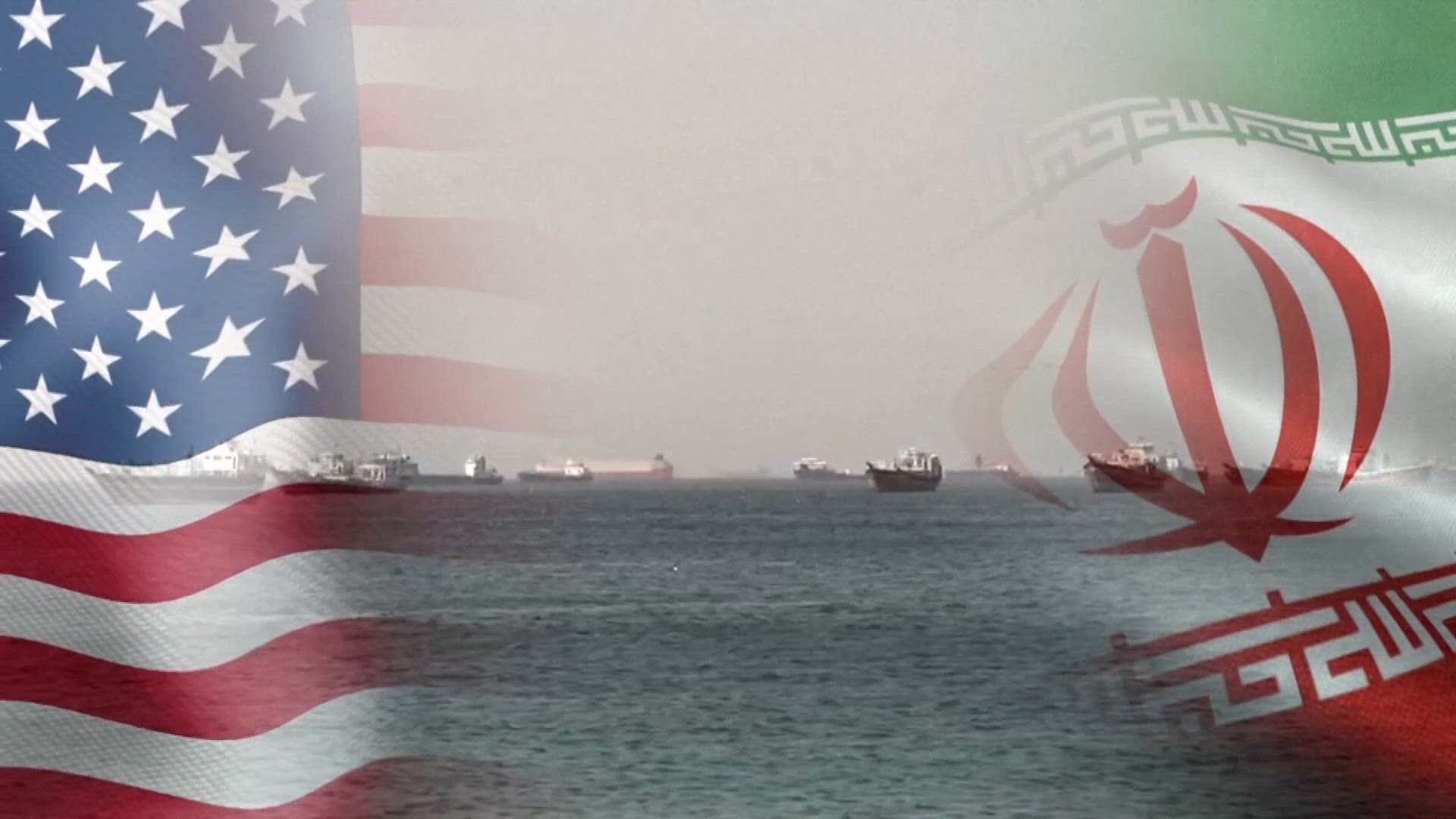
Optimism surrounding a potential deal between the United States and Iran to reopen the Strait of Hormuz has diminished, as Tehran suspended talks on Monday amidst escalating regional tensions. Simultaneously, President Trump sent varying messages as he scrambled to secure a truce between Israel and Hezbollah. Trump declared on TruthSocial that talks with Iran are continuing "at a rapid pace," contradicting reports of their suspension.
The U.S. And Iran exchanged fire over the weekend, with the U.S. Military striking Iranian radar and command and control sites for drones. During the engagement, the U.S. Shot down two Iranian one-way attack drones, while Iran downed an American MQ-1 Predator drone. Iran stated that transit through the critical Strait of Hormuz would resume once the conflict with the U.S. And Israel concludes. President Trump emphasized his stance on Iran, asserting, "he feels strongly that they can't have a nuclear weapon--said that very strongly, they can't have a nuclear weapon--and he wants them to open up the strait." He added, "But as he said, they close it and you close them. And it's true, we (US) control the strait, and they (Iran) have done no business in the last two and a half weeks, which is approximately 500 million dollars a day."
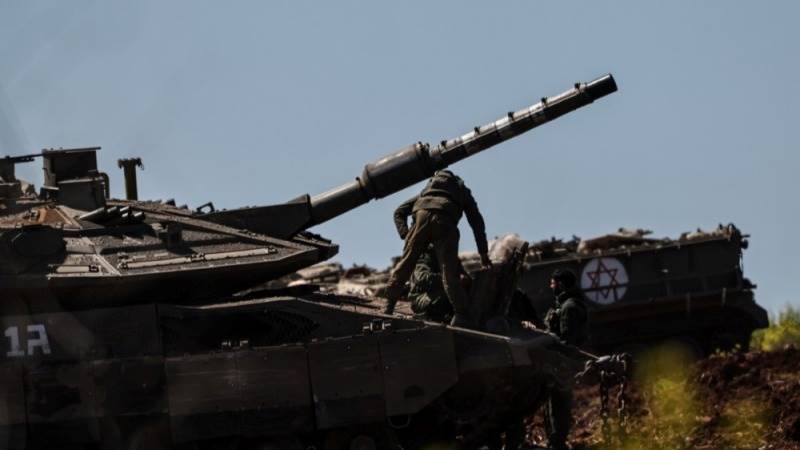
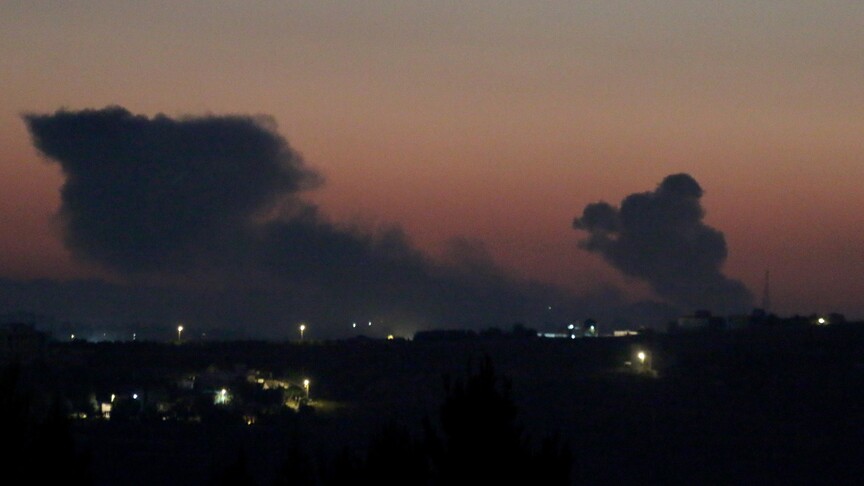
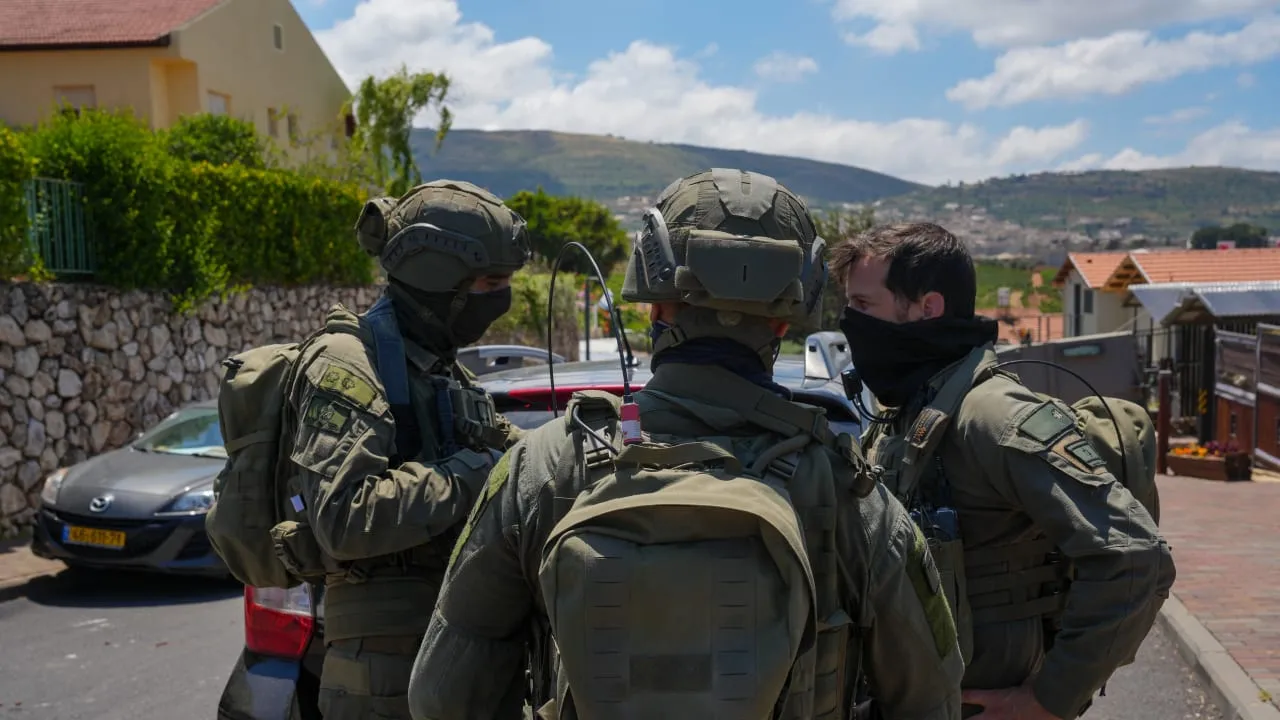
Tensions between Israel and Lebanon significantly escalated over the weekend after Israeli Prime Minister Benjamin Netanyahu ordered troops to advance deeper into Lebanon, marking Israel’s deepest penetration into the country in over a decade. Israeli troops seized Beaufort Castle. On Monday, Trump announced on Truth Social that Israeli troops would retreat from Beirut following a call with Netanyahu, claiming Hezbollah agreed to cease all shooting. However, Netanyahu's readout stated Israel’s stance "remains unchanged" and the IDF would continue to operate "as planned" in southern Lebanon, threatening attacks on terror targets in Beirut if Hezbollah did not stop attacking Israeli cities.
Iran Talks Stall Amid Conflicting Messages
President Trump told CNBC in an interview that he did not care if negotiations ended and expressed boredom with efforts to conclude the three-month war in the Middle East. He also informed NBC News that he had not been briefed on reports of Iran pausing ceasefire talks, but stated he was not surprised, remarking that "they’re better negotiators than they are fighters." Trump clarified to NBC News that stalled talks would not lead to military escalation, asserting, "It doesn’t mean we’re going to go and start dropping bombs all over there. We’ll keep the blockade."
Iran, for its part, affirmed that it would maintain the closure of the Strait of Hormuz while negotiations remained stalled. Following Iran's decision to halt talks, the cost of oil experienced another jump on Monday. Middle East experts indicated that the setback showed significant disagreements between the two sides, particularly concerning the reopening of the Strait of Hormuz and the future of Iran's nuclear program.
Over the weekend, President Trump had considered a preliminary deal aimed at ending the conflict. This tentative agreement would have extended the ceasefire for an additional 60 days. It also proposed opening the Strait of Hormuz and laying the groundwork for subsequent discussions regarding Iran’s nuclear program. However, US Central Command has reported that the US military has "redirected" 78 commercial ships as part of its ongoing blockade of Iranian ports, indicating continued pressure despite potential deal considerations.
According to Brian Katulis, the 2026 Iran war has caused considerable damage to President Trump's domestic political standing. Katulis stated, "The 2026 Iran war has done considerable damage to his domestic political standing because it has hurt all Americans economically and it hasn’t produced a tangible sign of success for U.S. National security."
Israel-Hezbollah Truce Efforts Intensify
Despite a 45-day extension of the truce in Lebanon, Israel and Hezbollah have continued to attack and launch strikes against each other. Iran’s Parliament Speaker Mohammad Bagher Ghalibaf stated on X that the “escalation of war crimes in Lebanon by the genocidal Zionist regime are clear evidence of U.S. Noncompliance with the ceasefire.” The Israeli Defence Forces confirmed they intercepted several rockets fired from Hezbollah territory in Lebanon. Hezbollah, for its part, reported striking a military objective in northern Israel. Reports indicated Israel continued its strikes on Lebanon the day after the ceasefire extension was put in place.
In an effort to facilitate peace talks, a Pakistani minister arrived in Tehran, according to state media. Iran’s interior minister also held discussions with his Pakistani counterpart, focusing on prospects for resuming peace negotiations with the United States. Meanwhile, the USS Ford returned to America after its deployment in the ongoing conflict. Russian President Vladimir Putin and UAE President Sheikh Mohamed bin Zayed Al Nahyan discussed the West Asia crisis, the Kremlin reported.
An expert suggested that the current Israel-Lebanon ceasefire talks are fundamentally flawed. Separately, reports indicated that a US-Iran ceasefire was agreed "as a favour to Pakistan." The United Kingdom has deployed new low-cost anti-drone systems in the Middle East. Speaker Ghalibaf added that "Every choice has a price, and the bill comes due. It will all fall into place," reflecting the complex dynamics surrounding the ongoing conflict and diplomatic efforts.
Broader Regional Dynamics and Economic Impact
Iran's Foreign Ministry condemned Israel’s assassination of Hamas’s Qassam Brigades leader Izz al-Din al-Haddad in Gaza, calling the action a “terrorist act.” Amidst these regional tensions, reports indicated Iran's FIFA team traveled to Turkey for training. Domestically, Iran announced it would reopen its stock markets next week. President Trump, meanwhile, warned Iran of a “very bad time” if a peace deal is not agreed upon. The Trump administration also allowed a waiver to lapse, which had previously permitted countries to purchase seaborne Russian oil. Separately, a fire broke out in an engine oil plant in Iran.
Reports indicated that European nations were in talks with Tehran concerning passage through the Strait of Hormuz. President Trump stated he was “not going to be much more patient” regarding Iran. An Iranian Member of Parliament also indicated that Iran would soon announce a Strait of Hormuz transit system and begin collecting fees for passage. In a related development, the UAE stated its OPEC exit was a sovereign and strategic decision, and the country rejected claims of its involvement in any war roles concerning Iran. While there has been no reported progress with Iran, President Trump and President Xi Jinping projected alignment on the Strait of Hormuz.
International Perspectives and Future Outlook
Internationally, President Trump stated that both the United States and China agreed Iran could not possess nuclear weapons. Trump also claimed Chinese President Xi Jinping concurred that Iran must reopen the Strait of Hormuz, though China called for a rapid reopening of the Strait of Hormuz and criticized the ongoing conflict, asserting the war should not have started. Separately, a report indicated Iran was suspected in a cyber breach targeting U.S. Gas station tank monitoring systems. Trump also warned Taiwan against independence, prompting a response from Taipei.
Iran's top diplomat, Abbas Araghchi, stated that a lack of trust was impeding talks to end the war with the U.S. Adding that "contradictory messages have 'made us reluctant about the real intentions of Americans.'" Araghchi noted the Pakistan mediation process was in a difficult course and called for India to play a "greater role" for peace in West Asia, emphasizing that Iran had every reason not to trust the U.S. He also described ties with India as "good" and "strong." The UAE rejected claims of its direct involvement in the West Asia conflict, stating such allegations would not shake its "principled positions." Iran confirmed more ships were passing through the Strait of Hormuz.