The United States is awaiting Iran's response to a proposal aimed at reopening the Strait of Hormuz and concluding a war that has brought international traffic through the critical waterway to a standstill. Before the conflict, a fifth of the world's oil and liquefied natural gas flowed through the Strait of Hormuz. Iran has halted the flow of international traffic through the Strait of Hormuz, leading to significant global concern. Washington has relayed a one-page memorandum to Iran outlining terms that could facilitate the strait's reopening and lift the U.S. Blockade on Iranian ports. This proposal reportedly initiates a month of discussions intended to secure a final agreement to end the 10-week conflict.
Meanwhile, tensions remain high in the region, particularly between Israel and Hezbollah. Israel stated it killed a Hezbollah commander in a southern suburb of Beirut. The Israel Defense Forces (IDF) further reported killing Ali Youssef Harshi, identified as Hezbollah Secretary General Naim Qassem’s personal secretary, in an airstrike in Beirut on April 8. Despite these incidents, Iran, the United States, and Israel have not exchanged fire since April 8. Prime Minister Benjamin Netanyahu affirmed that Israel is maintaining close coordination with the United States on peace efforts, stating there are "no surprises" between the two nations.
Diplomatic Push and Regional Flashpoints
The United States is currently maintaining a blockade on ships attempting to transit to and from Iranian ports. This action follows an earlier initiative by U.S. President Donald Trump, who had announced 'Project Freedom' to facilitate ship transit through the Strait of Hormuz but then abruptly suspended it. In a related development, Saudi Arabia and Kuwait have lifted restrictions on the U.S. Military's use of regional bases.
On the diplomatic front, Iran's President Masoud Pezeshkian recently held a meeting with Supreme Leader Ayatollah Mojtaba Khamenei, which lasted for nearly two and a half hours. Supreme Leader Ayatollah Mojtaba Khamenei succeeded his father, Ali, who was killed by an Israeli strike on the first day of the war. The U.S. Government stated on April 8 that Iran had submitted a "new" and "modified" proposal, which will serve as the foundation for upcoming U.S.-Iran negotiations. This new proposal is expected to shape the dialogue between the two nations. Iran is anticipated to send its response to the U.S. Proposal within the next two days, with Pakistan acting as a mediator in the process.
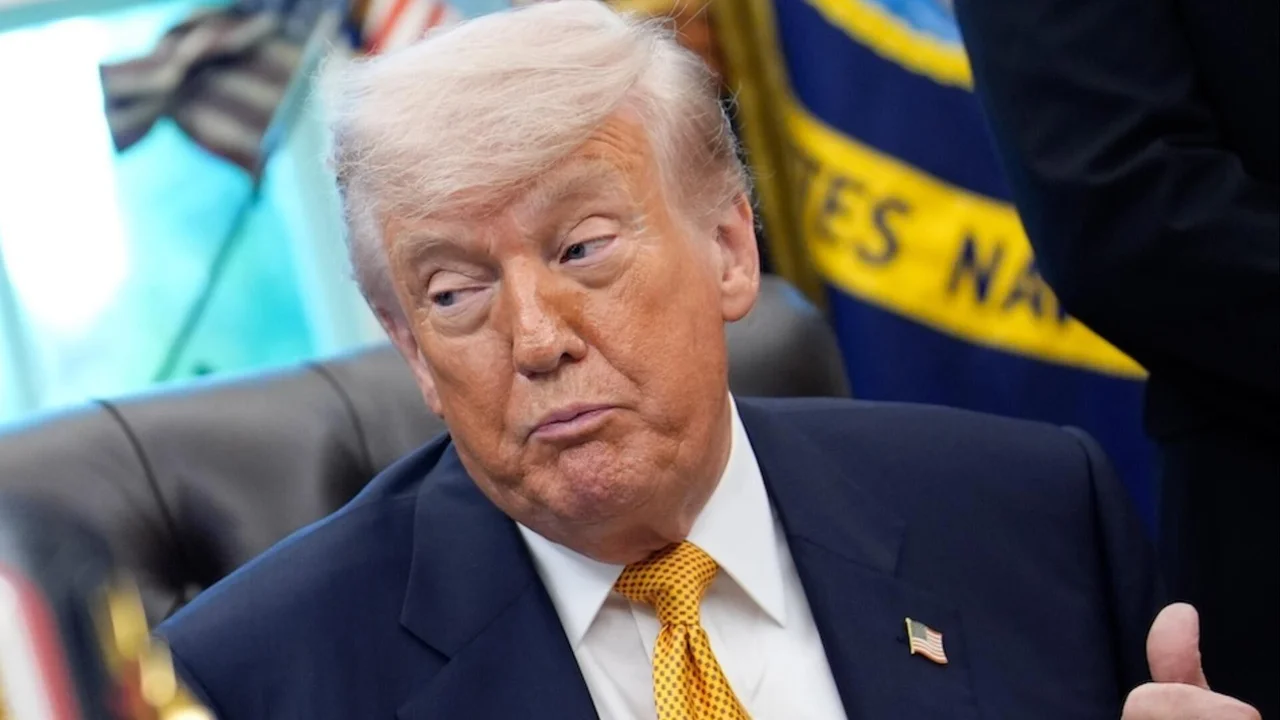
President Trump has indicated that the U.S. Expects to acquire the Islamic Republic's stockpile of highly enriched uranium as part of any agreement, stating the U.S. Is 'going to get' it. He also warned that the U.S. Would initiate a broader and more intense bombing campaign if Iran rejects the initial 14-point peace plan. However, Iran's state-affiliated news agency ISNA dismissed reports regarding specific elements of the proposal, characterizing them as "media speculation and atmosphere-building." ISNA also clarified that nuclear enrichment is not a component of the current discussions. The Wall Street Journal noted disagreements over the ceasefire scope, noting the US does not consider Lebanon part of the agreement despite Iran including it in its proposed terms.
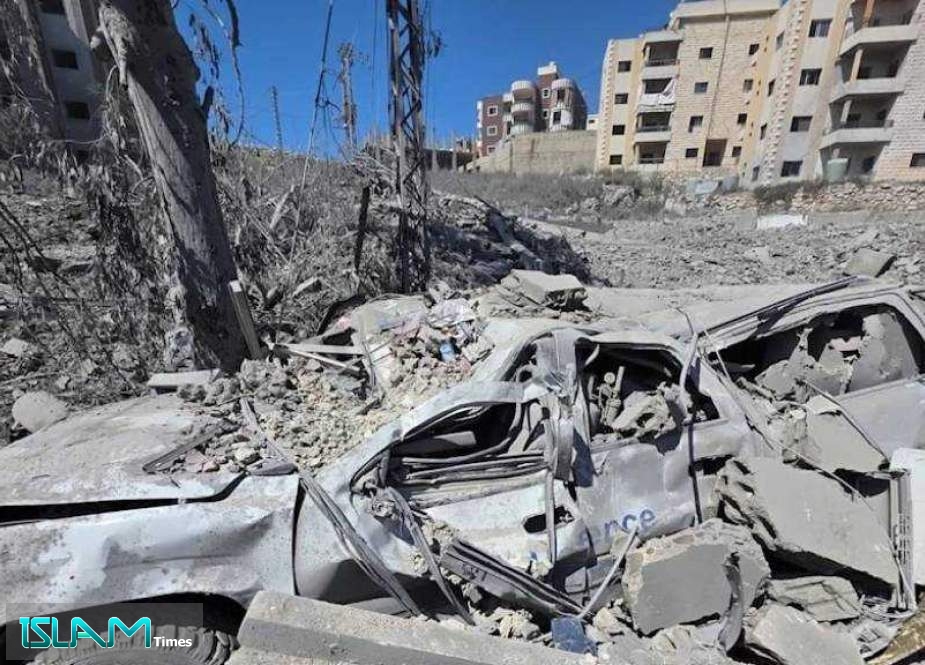
Meanwhile, tensions in the region remain elevated. Israel reported killing a Hezbollah commander in a southern suburb of Beirut. Lebanon's health ministry confirmed that at least 11 other individuals were killed in strikes across southern and eastern Lebanon.
The U.S. State Department reported on April 8 that the combined force’s campaign has significantly degraded Iran’s military capabilities. This campaign has resulted in the destruction of more than 85 percent of Iran’s defense industrial base. The combined force destroyed 150 Iranian warships, all Iranian submarines, and 97 percent of Iran’s naval mine stockpile. The combined force also destroyed or degraded 70 percent of Iran’s launch facilities and ground control stations for its space program. In total, the combined force struck more than 13,000 targets during the campaign. The Institute for Science and International Security reported on April 8 that combined force strikes damaged buildings at a former nuclear weapons components production site at the Parchin Military Complex in Tehran Province. Chairman of the Joint Chiefs of Staff General Dan Caine stated on April 8 that combined force strikes hit 80 percent of Iran’s nuclear industrial base.
Hezbollah Responds to Israeli Strikes
Hezbollah has resumed attacks on Israeli forces and positions in northern Israel and southern Lebanon, according to reports. The group stated it restarted operations against Israeli targets on April 8, alleging Israel violated the ceasefire agreement. Hezbollah claimed it launched mortar rounds and rockets, and directly engaged Israel Defense Forces (IDF) forces in Bint Jbeil, located in the Bint Jbeil District. Between 2:00 PM ET on April 8 and 2:00 PM ET on April 9, Hezbollah reportedly conducted 26 attacks against IDF infrastructure and Israeli communities in northern Israel.
The IDF reported that Hezbollah fired approximately 70 rockets from Lebanon at northern Israel within the past 24 hours. Hezbollah, for its part, claimed to have fired at least eight rocket barrages targeting Kiryat Shmona. The group also stated it launched rocket barrages and drones toward the northern Israeli towns of Shlomi and Nahariya.
Israeli Defense Minister Israel Katz stated that the IDF killed about 200 Hezbollah fighters in Lebanon on April 8. The IDF further reported killing Shebaa “Lebanese Brigades” Commander Maher Qassem Hamedan and seven other Hezbollah fighters in an airstrike in Sidon, southwestern Lebanon, on April 8. Additionally, the 215th Artillery Brigade killed more than 70 Hezbollah fighters and directed an IAF strike in Yater, southwestern Lebanon, on April 9. The 215th Artillery Brigade also destroyed Hezbollah anti-tank missile launch sites, observation posts, and command centers in southern Lebanon. The IDF 933rd (Nahal) Infantry Brigade located large quantities of Hezbollah weapons and destroyed Hezbollah infrastructure, including anti-tank shell launchers. The IDF 35th Paratrooper Brigade located weapons depots and killed dozens of Hezbollah fighters on April 9. This brigade also destroyed a Hezbollah building in Bint Jbeil, southeastern Lebanon, on April 9.
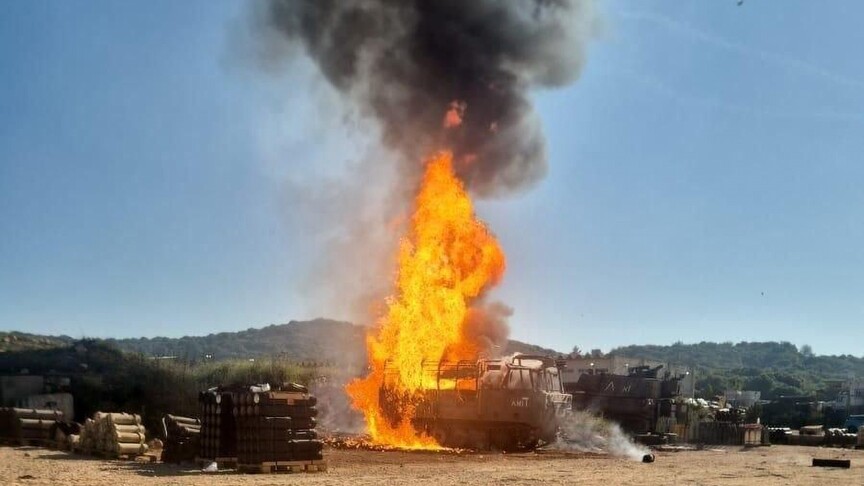
Reports indicated the IDF struck two additional bridges along the Litani River overnight between April 8 and 9, which Hezbollah had used to transport weapons and fighters. The IDF also reportedly struck approximately 10 Hezbollah weapons depots, launchers, and headquarters in southern Lebanon. On April 9, the IDF 401st Armored Brigade engaged in direct combat with Hezbollah fighters and destroyed several Hezbollah-affiliated sites in southern Lebanon.
Broader Context and International Pressure
Ambassador to the United Nations Danny Danon told Army Radio on Thursday that "we need to wait and not come out with declarations and headlines" regarding a potential deal. China on Wednesday added its voice to global pressure, telling Iran that a continuation of hostilities is "inadvisable." U.S. President Donald Trump is scheduled to meet with Chinese President Xi Jinping on May 14-15. These diplomatic efforts occur as gasoline prices in the United States breached $4.50 a gallon for the first time since July 2022.
Meanwhile, Gulf states continue to report drone attacks against them. Bahrain’s Defense Ministry stated on April 9 that it has intercepted seven Iranian drones since April 8. The Kuwaiti Armed Forces announced on April 9 that an unspecified number of drones entered Kuwaiti airspace, with one targeting a Kuwaiti National Guard site. An unnamed senior Iranian source told Russian state media on April 9 that Iran will not allow more than 15 vessels per day to transit through the Strait of Hormuz during the ceasefire. The Iranian Ports and Maritime Organization published a graphic on April 8 instructing ships to follow designated entry and exit routes in coordination with the IRGC Navy to transit the strait.
Unspecified U.S. Officials told Western media on March 23 that at least a dozen Iranian mines are present in the Strait of Hormuz. Commercial maritime tracking data showed three cargo ships and one oil tanker entered the Strait of Hormuz, while six cargo ships and four oil tankers exited between 2:00 PM ET on April 8 and 2:00 PM ET on April 9. Unspecified mediators told the Wall Street Journal on April 8 that Iran has softened demands related to nuclear enrichment, U.S. Troop withdrawal from the Middle East, and war reparations. In a separate development, Israeli and Lebanese officials will reportedly begin direct negotiations under US auspices next week in Washington, DC, signaling another track of diplomatic engagement in the region.