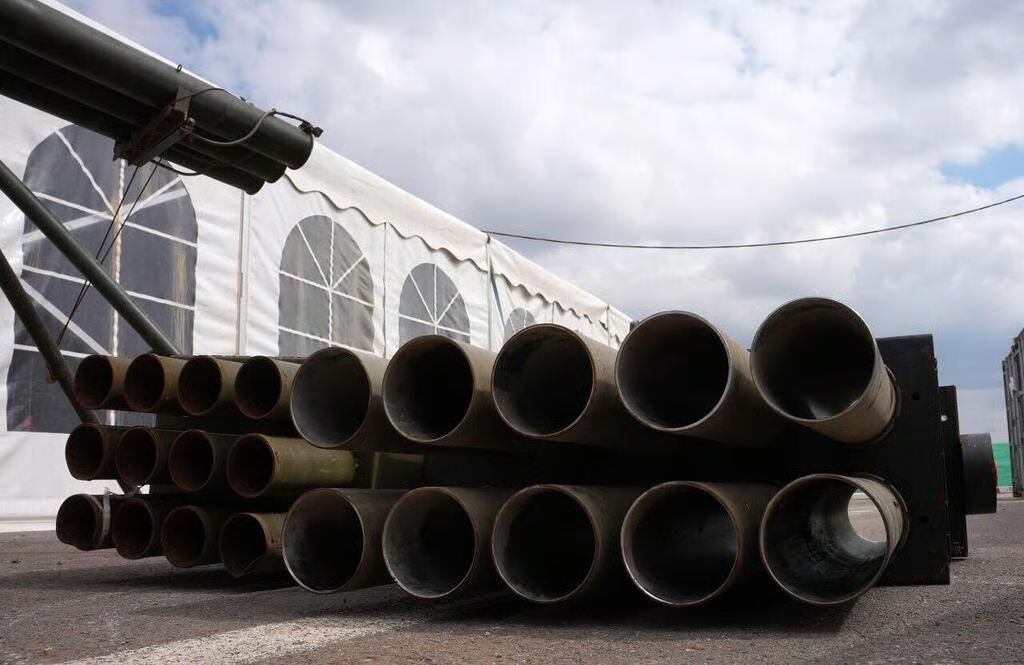
The Israel Defense Forces (IDF) recently displayed an array of Hezbollah's weaponry confiscated from southern Lebanon, revealing the extent of the group's rearmament efforts. This public display by the IDF served to show the significant quantity and variety of armaments that have been uncovered during ongoing operations in the region. Since the launch of Operation Roaring Lion, Israeli forces have collected more than 7,500 items, ranging from rockets to drones, which have been transferred for intelligence exploitation and investigation. The sheer volume of these seizures points to a well-established and continuously replenished supply chain supporting Hezbollah's military capabilities. The collection process involves careful documentation and secure transport of these diverse materials to facilities where they can be thoroughly analyzed by military intelligence experts. This analysis aims to provide a deeper understanding of Hezbollah's strategic intentions and operational methodologies.
Reports indicated that the IDF stated these weapons were confiscated during operations. The confiscation process is a critical component of the broader military objectives in southern Lebanon, aiming to dismantle Hezbollah's infrastructure and reduce its offensive capabilities. Specifically, Israeli Defense Forces operating in Bint Jbeil, southern Lebanon, uncovered a substantial stockpile of weapons hidden within a local school. This discovery included more than 130 weapons, with the Givati Brigade alone finding over 1,000 enemy weapons items in the Bint Jbeil area. The operations in Bint Jbeil highlight the intensity of the engagement and the systematic approach taken by the IDF in locating and seizing these armaments. The scale of the findings in this single locality suggests that Hezbollah has established extensive hidden caches throughout the region. The ongoing efforts are not merely about seizing weapons but also about disrupting the logistical networks that sustain Hezbollah's military presence.
Arsenal Details and Concealment
The items collected by the Israel Defense Forces (IDF) from southern Lebanon include a diverse range of armaments, according to the military. Over 1,000 ammunition crates were found, alongside 750 small arms, 140 mortar shells, and 60 explosive belts. The confiscated arsenal also featured advanced anti-tank missiles, specifically Kornet and Fagot systems, in addition to explosive drones. These seizures show the breadth of Hezbollah's military capabilities discovered during operations in the region. The presence of such a wide array of weaponry, from basic small arms to sophisticated anti-tank systems and unmanned aerial vehicles, demonstrates a full military buildup. The explosive drones, in particular, represent a modern and potent threat, capable of delivering precise strikes. The discovery of numerous ammunition crates indicates that Hezbollah possesses not only the weapons themselves but also a substantial supply of munitions to sustain prolonged engagements. This detailed inventory provides a clear picture of the group's operational readiness and the types of threats it poses.
In addition to the weaponry, the IDF collected and transferred more than 3,300 technical items to its intelligence directorate. These items include communication devices, computers, and other electronic equipment that could contain vital information. These items are expected to undergo further analysis to glean insights into Hezbollah's operational methods, communication networks, and overall strategic planning. The technical intelligence gathered from these devices could provide a detailed understanding of the group's infrastructure and rearmament efforts. The analysis of these technical items is a highly specialized process, often involving decryption and forensic examination to extract actionable intelligence. Such information is key for understanding Hezbollah's command and control structures, its financing, and its external support networks. The intelligence directorate's work on these items is a long-term endeavor that promises to yield significant strategic advantages.
Many of the weapons were reportedly concealed within civilian structures, including residential homes and hospitals. This pattern of concealment within densely populated civilian areas has been a recurring concern for military observers. Such practices raise questions about the protection of non-combatant populations and the adherence to international humanitarian law. The deliberate placement of military assets within civilian infrastructure is a tactic that significantly complicates military operations and puts civilian lives at risk. The IDF has consistently noted this aspect of Hezbollah's strategy as a violation of international norms. The discovery of weapons in homes and hospitals suggests a calculated effort by Hezbollah to embed itself within the civilian fabric, thereby blurring the lines between combatants and non-combatants.
Hezbollah flags and organizational insignia were discovered alongside the munitions, providing direct evidence of the group's ownership and control over the seized weapons. The presence of these markers helps to attribute the discovered arsenal specifically to Hezbollah, reinforcing claims made by the IDF regarding the group's activities in southern Lebanon. The flags and insignia were found in close proximity to the various weapon caches, including those hidden in civilian locations. These identifying markers leave no doubt as to the origin and affiliation of the seized armaments, directly linking them to Hezbollah's command. This tangible evidence is important for countering any potential denials of ownership or responsibility for the caches.
Military officials commented on the discovery of a significant cache within a school, describing it as a "systematic exploitation" of Lebanese civilian infrastructure. This statement notes the IDF's perspective on Hezbollah's operational tactics, suggesting a deliberate strategy to use civilian sites for military purposes. The officials' remarks indicate that the placement of such a substantial quantity of weapons in an educational institution is not seen as an isolated incident but rather as part of a broader, organized pattern. The implication is that Hezbollah intentionally leverages civilian buildings to store its military assets, thereby potentially endangering non-combatants and complicating military responses. This systematic approach to using civilian sites extends beyond schools to include other public and private buildings, as evidenced by the discoveries in homes and hospitals. The IDF views this as a deliberate strategy to create human shields and to operate with impunity from international scrutiny.
Historical and Modern Weaponry
The arsenal seized by the Israel Defense Forces (IDF) in southern Lebanon includes a mix of historical and modern armaments, ranging from a Nazi-era MG34 machine gun to contemporary Iranian weapons. This collection notes the diverse origins and varied technological generations within Hezbollah's inventory. Reports indicated that among the confiscated items were dozens of Kalashnikov rifles, numerous handguns, and various other tactical weapons, further illustrating the breadth of the group's light arms caches. The presence of both vintage and advanced armaments suggests a pragmatic approach to procurement, utilizing whatever means are available to bolster their fighting capabilities. The Iranian weapons, in particular, point to a significant state sponsor that provides modern military technology to Hezbollah, enhancing its offensive and defensive capacities.
A notable piece recovered was the MG34 weapon, which bears an 'X' marking over its serial number. This marking typically indicates that the weapon was captured as spoils by the Russian army, suggesting the machine gun has been seized twice throughout its operational history. The presence of such a historical artifact alongside more recent weaponry shows the eclectic nature of the armaments Hezbollah has accumulated. The IDF's findings point to a supply chain that incorporates both older, readily available firearms and more advanced, possibly state-sponsored, materiel. The combination of these items suggests a full rearmament strategy by Hezbollah, utilizing various sources to bolster its military capabilities in the region. The journey of the MG34, from Nazi Germany to Russian capture, and eventually into the hands of Hezbollah, exemplifies the complex and often illicit global arms trade that fuels non-state actors. This specific item provides a unique historical dimension to the broader narrative of Hezbollah's arming.
Operational Context and Implications
Hezbollah utilizes Lebanese civilian infrastructure to launch strikes against Israeli civilians and troops, using the population as a shield, according to a claim made by the Israel Defense Forces. This assertion suggests a deliberate strategy by the group to operate within residential areas. This tactic not only endangers the local population but also makes it exceedingly difficult for the IDF to target military assets without risking civilian casualties, a situation that draws significant international condemnation. The IDF's repeated emphasis on this point shows its view of Hezbollah's disregard for civilian safety and international humanitarian law.
However, Lebanese officials had previously stated that southern Lebanon had been cleared of weapons in accordance with agreements signed with the United States. This prior declaration from Lebanese officials contrasts sharply with the recent discoveries made by the IDF. The discrepancy between these statements notes the persistent challenges in enforcing disarmament agreements and maintaining stability in the region. It also raises questions about the effectiveness of previous efforts to demilitarize southern Lebanon and the extent to which Hezbollah operates independently of official Lebanese state control. The agreements with the United States were intended to create a buffer zone free of unauthorized weaponry, a goal that appears to have been severely undermined by Hezbollah's continued rearmament.
Despite such agreements, Hezbollah continued to acquire equipment, including body armor, knee pads, and new combat gear, in the months leading up to Operation Roaring Lion. This ongoing rearmament indicates sustained efforts to bolster its military capabilities. The acquisition of personal protective equipment and modern combat gear suggests a focus on enhancing the survivability and effectiveness of its fighters in sustained engagements. This continuous procurement of supplies, even in the face of international agreements, demonstrates Hezbollah's commitment to maintaining and expanding its military strength. The current activities follow a previous Israeli military campaign, Operation Northern Arrows, which ended without achieving the goals set by the Israeli government. The failure of that operation shows the persistent challenges faced in disarming Hezbollah. The objectives of Operation Northern Arrows included the destruction of Hezbollah's cross-border tunnel network and the reduction of its missile capabilities, but these goals were not fully met, allowing the group to rebuild and rearm. Operational activity is ongoing to sweep the surrounding area for remaining insurgents, as forces continue to secure the affected zones in southern Lebanon. These ongoing sweeps are critical for ensuring that any remaining hidden caches or operational cells are neutralized, preventing future threats.