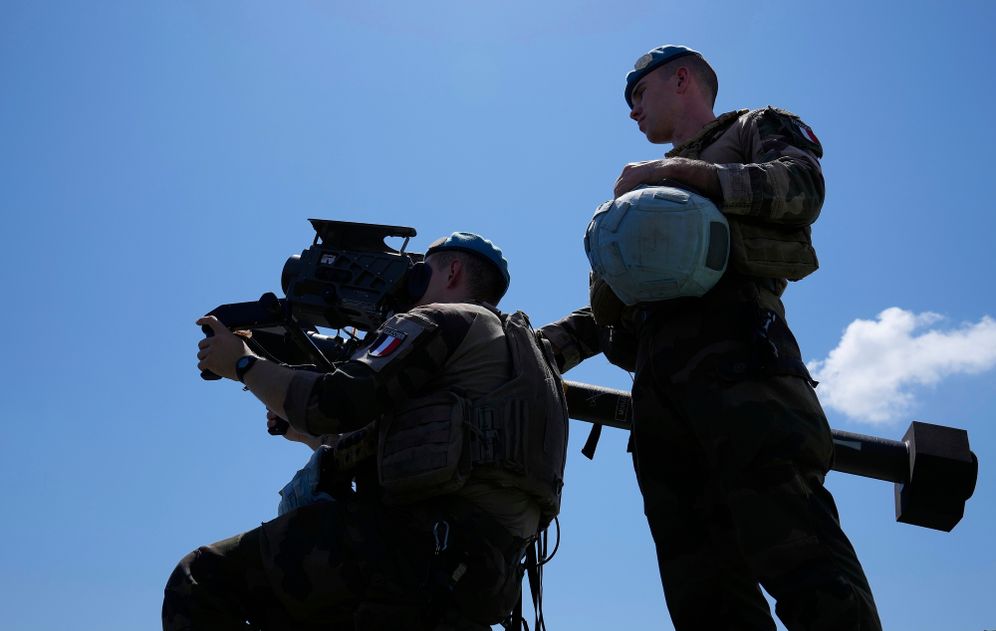
UN Secretary-General Antonio Guterres has formally proposed to the UN Security Council the establishment of a new force to succeed the United Nations Interim Force in Lebanon (UNIFIL). This significant proposal comes as the international community prepares for a major shift in peacekeeping operations in the volatile Middle East region. The proposal follows the Security Council's decision in 2025, after a vote last August, to terminate UNIFIL's mandate on December 31, 2026. This decision marked a key moment for the long-standing mission. UNIFIL, which has been operating in southern Lebanon since 1978, currently maintains approximately 7,500 peacekeepers from nearly 50 countries deployed along the Blue Line. The new force aims to address the ongoing security needs in the region as the long-standing mission prepares for its conclusion, ensuring a continued international presence despite the upcoming cessation of UNIFIL's operations.
Details of the Proposed Force
The Secretary-General's letter, submitted to the UN Security Council, outlines three possible models for the new force, each designed to provide varying levels of military presence and operational capabilities. All three options are based on an extensive assistance system, which would include critical support elements such as medical evacuation helicopters, essential for rapid response and personnel safety, as well as engineering and demining units, vital for maintaining safe passage and infrastructure. The proposed systems incorporate advanced surveillance technologies, including drones, radars, and satellite imagery, to enhance monitoring capabilities along the sensitive border area. These technological components are intended to provide full situational awareness and support the new force's objectives.
The proposed new force would comprise hundreds or even thousands of troops, depending on the chosen model, reflecting the perceived security requirements of the region. One option suggests a limited force consisting of 215 unarmed military observers, whose primary role would be monitoring and reporting. These observers would be protected by two battalions of 450 soldiers each, providing a security perimeter, and supplemented by a rapid reaction force of 350 soldiers, capable of responding swiftly to incidents. A second, more full option proposes approximately 350 UN military observers, assisted by four infantry battalions of 750 soldiers each, forming a strong ground presence. This larger force would also include a reserve force of 700 soldiers, offering additional operational flexibility and reinforcement capabilities. An intermediate option includes 285 military observers, two battalions of 750 troops each, and a reserve force of 450 soldiers. These models present varying scales of military presence and operational capabilities to succeed UNIFIL, each tailored to different assessments of the security landscape and potential challenges.
Context and UNIFIL's Mandate
The Blue Line, stretching approximately 120 kilometers, serves as the de facto border between Lebanon and Israel, a critically important demarcation line that UNIFIL has been tasked with overseeing. UN Secretary-General Antonio Guterres's report does not include an option for a complete cessation of the UN military presence in southern Lebanon. Instead, it offers various alternatives for the continued deployment of an international force in the region, showing the perceived ongoing need for international monitoring and peacekeeping. The plan outlined in the report stipulated that UNIFIL personnel would withdraw from Lebanon over the course of 2027, marking the end of the mission's physical presence. The resolution to terminate UNIFIL's mandate passed unanimously, with all 15 members of the UN Security Council voting in favor, signaling a collective decision to transition from the existing framework.
Israeli Concerns and UNIFIL's History
The proposed new force would be tasked with ensuring the ceasefire between Hezbollah and Israel is maintained, according to reports, a critical function previously held by UNIFIL. For nearly 50 years, the United Nations Interim Force in Lebanon (UNIFIL) was responsible for enforcing the ceasefire between Israel and Lebanon. This mandate was central to maintaining stability in the area. UNIFIL's mandate also included monitoring the prohibition on Hezbollah's armed presence south of the Litani River, a key provision aimed at preventing military buildup in the border zone. The current proposal appears to offer a workaround for the Security Council's decision last year to terminate UNIFIL, rather than leaving a security void. This new mission would operate under a different framework, aiming to continue international monitoring in the region after UNIFIL's withdrawal, thereby ensuring that vital peacekeeping functions are not abandoned. The establishment of this new force would represent a strategic evolution in the international community's approach to maintaining peace and security along the Blue Line, adapting to the changing geopolitical landscape while upholding the commitment to prevent conflict between the parties.