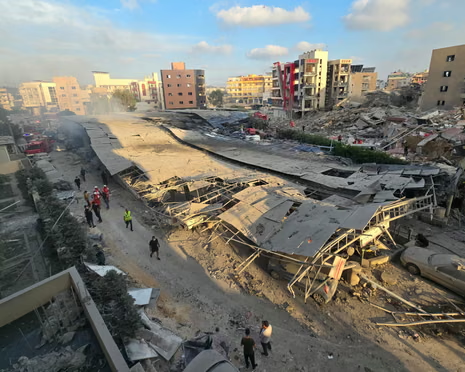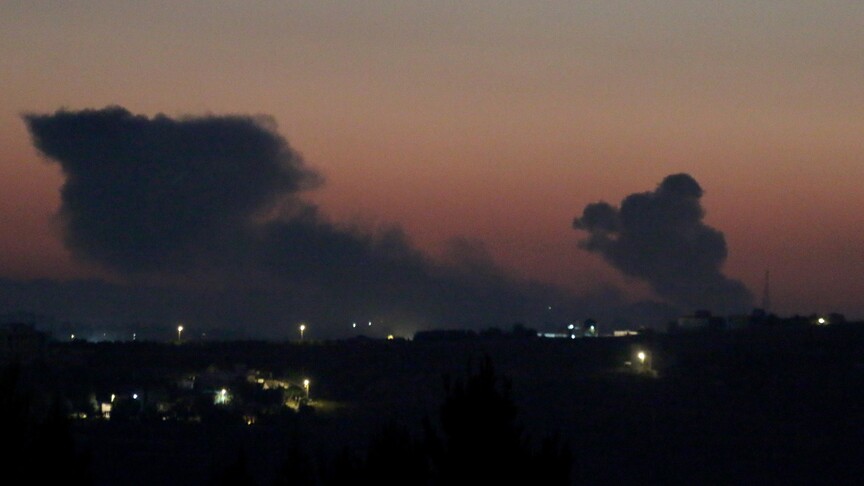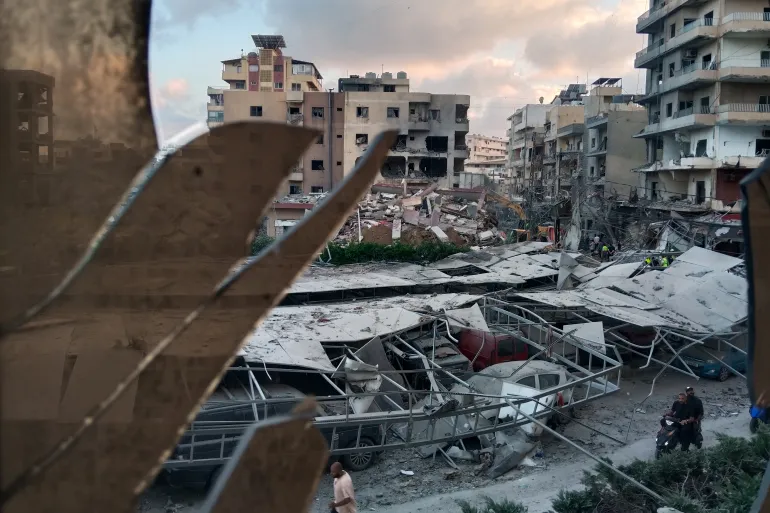
Israeli attacks in southern Lebanon killed at least five people, Lebanese state media reported, just hours after US President Donald Trump announced an agreement to de-escalate hostilities between Israel and Hezbollah. The latest wave of violence shows the persistent fragility of the situation, even amidst diplomatic efforts to quell the rising tensions. Two Syrians died in an Israeli attack on a plant nursery in Jebchit, Nabatieh governorate. This strike, targeting agricultural infrastructure, notes the broad impact of the ongoing conflict on civilian life and livelihoods in the region. Additionally, Israeli drone strikes on a motorcycle on Martyr Sabra Street in Toul and a car in the Dhi’at al-Arab neighbourhood of Ansar killed two individuals. These precise, targeted attacks by drones indicate a continued operational tempo despite the declared de-escalation. A separate drone attack in Nabatieh killed the driver of a car, adding to the civilian casualty count and further escalating the volatile security situation.
The Israeli military reported its air defences intercepted two projectiles that crossed from Lebanon into northern Israel amidst the escalating situation. These interceptions signal ongoing cross-border exchanges, challenging any notion of a sustained cessation of hostilities. Earlier, President Donald Trump stated he had spoken with both sides and that they agreed "all shooting will stop." Trump indicated, "Likewise, through highly placed representatives, I had a very good call with Hezbollah, and they agreed that all shooting will stop – that Israel will not attack them, and they will not attack Israel." This statement suggested a direct line of communication and a mutual understanding had been reached to halt the violence. He also expressed hope that "hopefully Israel and Hezbollah would stop fighting 'for ETERNITY!'" This aspirational remark underlined the significant diplomatic push behind the agreement. According to the office of Lebanese President Joseph Aoun, the agreement stipulated Hezbollah would cease firing into Israel, and the Israeli military would stop striking the southern suburbs of Beirut. This specific detailing of terms provided a framework for the proposed de-escalation, focusing on key areas of contention. Trump affirmed, "There will be no troops going to Beirut, and any troops that are on their way have already been turned back." This assurance aimed to prevent a deeper ground incursion and reduce fears of a wider conflict engulfing the Lebanese capital.
Escalation Amidst Peace Efforts
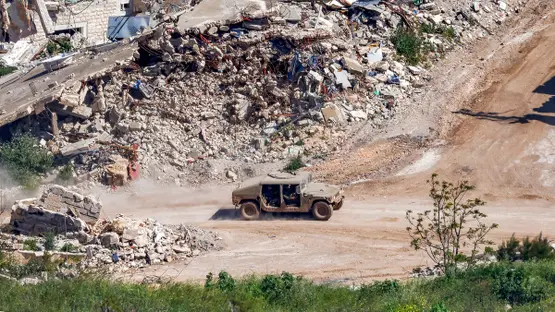
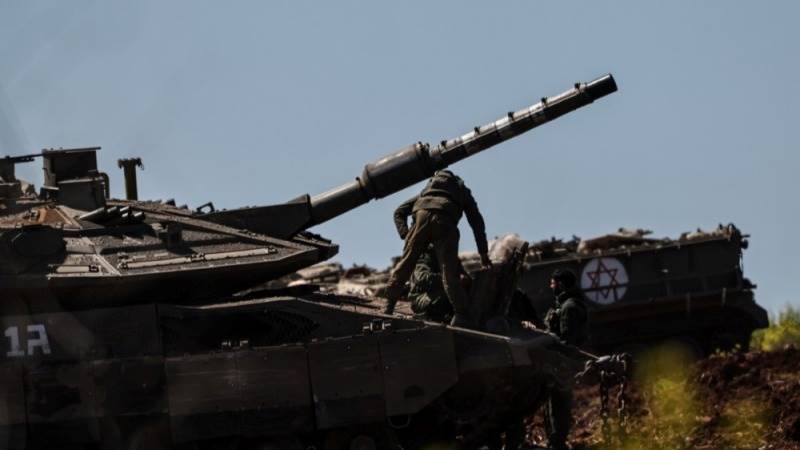
The recent attacks occurred after Israeli troops conducted their deepest incursion into Lebanon in more than two decades, according to reports. This significant military movement marked a dangerous escalation, pushing the boundaries of previous engagements and raising concerns about the potential for a full-scale conflict. Israel and Lebanon had agreed to a ceasefire on April 17, but neither Israel nor Hezbollah has observed the terms of that agreement. The failure to adhere to the previous ceasefire shows the deep-seated mistrust and the difficulty in enforcing diplomatic resolutions in the region. The Israeli military launched new strikes in Lebanon on Tuesday, with reports indicating ongoing hostilities, demonstrating a continued pattern of engagement despite the declared de-escalation efforts.
The Israeli military confirmed launching a strike in Nabatieh, stating it targeted Hezbollah infrastructure. This justification for the strike aligns with Israel's stated objective of degrading Hezbollah's military capabilities. The military also accused Hezbollah of initiating attacks overnight, presenting a narrative of defensive action in response to aggression. Separately, reports indicated that six people were killed in an Israeli strike Monday night in the village of Marwaniyeh in southern Lebanon. This incident further notes the human cost of the conflict and the continued targeting of locations within Lebanese territory. A Lebanese Civil Defense center in Nabatieh, also in southern Lebanon, sustained damage from an Israeli airstrike, according to reports. The damage to emergency services infrastructure raises concerns about the humanitarian impact and the ability of local authorities to respond to crises. Two Lebanese soldiers were wounded by an Israeli drone in Nabatieh, officials said. The targeting of Lebanese military personnel adds another layer of complexity to the conflict, potentially drawing the Lebanese state more directly into the hostilities.
The depth of the Israeli incursion, extending further into Lebanese territory than seen in over two decades, signals a significant shift in military strategy and a heightened level of engagement. This move alone was a major contributing factor to the subsequent escalation, creating a more volatile environment that made any de-escalation agreement difficult to sustain. The repeated failure to observe the April 17 ceasefire agreement between Israel and Lebanon serves as a stark reminder of the challenges inherent in achieving lasting peace in the region. Both sides have consistently accused the other of violating the terms, leading to a cycle of retaliatory actions that undermine any diplomatic progress. The Israeli military's continued launch of new strikes in Lebanon, even after the announced de-escalation agreement, indicates a clear disconnect between diplomatic pronouncements and on-the-ground military operations. This ongoing activity suggests that the underlying tensions and strategic objectives of both parties remain largely unchanged, making a true cessation of hostilities elusive.
Diplomatic Maneuvers and Reactions
According to Iran's Tasnim News Agency, Iran was no longer engaging in talks with Washington due to Israel’s offensive, and the Iranian negotiating team would suspend "talks and the exchange of texts through mediators." This announcement from a key regional player added a significant complication to broader diplomatic efforts, linking the regional conflict directly to international negotiations. However, President Donald Trump later stated on Truth Social that "Talks are continuing, at a rapid pace, with the Islamic Republic of Iran." This contradictory statement from Trump aimed to reassure the public that diplomatic channels remained open, despite Iran's public stance. Reports indicated Iran had threatened to pull out of peace talks amidst the escalating situation, using the ongoing violence as leverage in its negotiations with international powers.
The Lebanese Embassy in Washington stated that Hezbollah had accepted the terms of a U.S. Proposal for a "mutual cessation of attacks." This public declaration by the embassy provided a credible endorsement of the agreement from the Lebanese side, indicating a willingness from Hezbollah to engage in de-escalation through diplomatic channels. Meanwhile, President Trump stated on his Truth Social platform Monday that he had a "very productive" call with Israeli Prime Minister Benjamin Netanyahu. This characterization aimed to project an image of strong bilateral cooperation and effective crisis management. This characterization contrasted sharply with a report by Axios, which indicated Trump called Netanyahu "crazy" in an "expletive-laden" call. The Axios report, citing anonymous sources, painted a picture of significant tension and frustration between the two leaders, undermining the official narrative of a "very productive" exchange.
Netanyahu had reportedly ordered strikes on "terror targets" in Beirut's southern suburbs. This directive from the Israeli Prime Minister signaled a clear intent to target Hezbollah's operational heartland, even at the risk of further escalation. He also posted on X that Israel would strike Beirut "that if Hezbollah does not cease attacking our towns and our citizens, Israel will strike terrorist targets in Beirut." This public warning showed Israel's determination to deter Hezbollah attacks and its readiness to expand the scope of its military operations. Iranian Parliament Speaker Mohammad Bagher Ghalibaf told Lebanese Parliament Speaker Nabih Berri that Iran might retaliate if Israeli attacks in Lebanon continued. This direct communication between high-ranking officials noted the regional interconnectedness of the conflict and the potential for a wider conflagration involving Iran. Ghalibaf stated, "Over the past two days, we have seriously pursued efforts to stop Israel’s attacks. If these crimes continue, we will not only suspend the negotiation process, but we will also stand against the Zionist regime." This strong warning from Iran indicated a clear red line and a potential shift in its diplomatic and military posture. Trump told NBC News that he was not informed of Iran's decision to suspend negotiations ahead of time, suggesting a lack of coordination or communication breakdown in the diplomatic efforts.
The discrepancy between Trump's public statements on the continuation of talks with Iran and Iran's official announcement of their suspension notes the complex and often opaque nature of international diplomacy in times of crisis. Such conflicting accounts can create confusion and uncertainty, making it harder to gauge the true state of negotiations and the likelihood of a diplomatic breakthrough. The report by Axios, detailing an "expletive-laden" call between Trump and Netanyahu, provides a rare glimpse into the often-strained relationship between allies, especially when dealing with high-stakes security issues. This kind of friction at the highest levels can complicate joint efforts to de-escalate conflicts and project a unified front. Netanyahu's public post on X, threatening to strike Beirut if Hezbollah attacks continued, serves as a powerful example of real-time public diplomacy and deterrence. This direct warning, delivered through social media, aims to influence the adversary's decision-making by clearly outlining potential consequences. The communication between Iranian Parliament Speaker Mohammad Bagher Ghalibaf and Lebanese Parliament Speaker Nabih Berri further illustrates the intricate web of alliances and influence in the Middle East. Iran's explicit threat of retaliation and suspension of negotiations signals its deep involvement in the regional dynamics and its willingness to exert pressure to protect its allies and interests. Trump's admission to NBC News that he was not informed of Iran's decision to suspend negotiations ahead of time shows the challenges of multilateral diplomacy and the potential for miscommunication or lack of transparency, even among parties supposedly engaged in dialogue. This lack of prior notification could indicate a deliberate move by Iran to surprise or pressure the U.S. Or simply a breakdown in communication channels during a rapidly evolving crisis.
Broader Context and Casualties
Hezbollah has not claimed responsibility for any cross-border attacks since President Donald Trump’s announcement of a de-escalation agreement. This silence from Hezbollah, while not a definitive confirmation of compliance, could be interpreted as a cautious adherence to the terms of the agreement, at least publicly. Meanwhile, the conflict has continued to exact a toll on both sides. At least two Israeli soldiers have been killed in the last 24 hours in the area of Beaufort Castle. These casualties show the ongoing nature of the conflict, even as diplomatic efforts are underway, and highlight the dangers faced by military personnel in the contested border regions.
Israeli troops seized the 900-year-old Beaufort Castle and the strategic ridge it sits on in southern Lebanon on Saturday. This military maneuver is significant not only for its historical implications, given the castle's age, but also for its strategic importance. The ridge offers a commanding view of the surrounding terrain, providing a tactical advantage to the occupying force. The seizure of Beaufort Castle occurred a day after the Israeli army reported one of the heaviest days of fire towards northern Israel from Lebanon since the April ceasefire. This sequence of events suggests a direct correlation between the intensity of cross-border attacks and Israel's decision to undertake a deeper ground operation, potentially as a retaliatory or preemptive measure. The strategic value of Beaufort Castle, historically a formidable stronghold, makes its seizure a notable military achievement for Israel and a significant loss for Lebanese forces. Its elevated position provides an excellent vantage point for observation and control over key routes and areas in southern Lebanon, thereby enhancing Israel's operational capabilities in the region. The reporting of "one of the heaviest days of fire" preceding the castle's seizure indicates the deteriorating security situation along the border and the escalating cycle of violence that prompted Israel's deeper incursion. This level of sustained fire from Lebanon likely put significant pressure on Israeli communities and military installations, contributing to the decision for a more aggressive response.
The broader conflict has resulted in significant casualties. Israeli attacks since March 2 have killed at least 3,433 people in Lebanon, according to Lebanon’s Ministry of Public Health. This staggering number reflects the widespread impact of the Israeli military operations on the Lebanese population, encompassing both combatants and civilians. The number of Israeli military deaths since early March stands at 27. These casualties, though lower than those reported in Lebanon, represent a significant loss for Israel and highlight the dangers faced by its forces in the ongoing conflict. The disparity in casualty figures between Lebanon and Israel shows the asymmetric nature of the conflict, where one side often bears a disproportionately higher human cost. The ongoing toll on both sides, despite diplomatic interventions, illustrates the deep-seated nature of the conflict and the immense challenges in achieving a lasting peace. The continued loss of life serves as a grim reminder of the urgent need for a durable resolution to the hostilities.