Donald Trump recently announced an agreement to de-escalate fighting in Lebanon, claiming that "all shooting will stop." This declaration by Mr. Trump, hailing an agreement to de-escalate the fighting, came amidst ongoing military actions. The Israeli military, however, reported intercepting two projectiles that crossed from Lebanon into northern Israel this morning, followed by at least two more projectiles overnight. No injuries were reported from these intercepted projectiles, providing a measure of relief amidst the continued cross-border exchanges.
According to Lebanon’s embassy in Washington, the agreement would not end the conflict in the country, suggesting a more limited scope than Mr. Trump's initial announcement implied. Reports indicated the arrangement calls for Israel to refrain from strikes on Beirut and its suburbs, which are controlled by Hezbollah, in exchange for Hezbollah halting its attacks on Israel. This specific framework notes the targeted nature of the proposed de-escalation, focusing on key areas of contention. Mr. Trump stated that Hezbollah, through intermediaries, had pledged not to attack Israel, adding, "Let’s see how long that lasts – Hopefully it will be for ETERNITY!" This statement showed the fragile nature of the agreement and the deep-seated distrust between the parties.
Israeli prime minister Benjamin Netanyahu reportedly agreed to withdraw any troops preparing to attack Beirut, a significant concession if the agreement holds. However, Mr. Netanyahu also stated, "Iran has paid a very heavy price and is destined to fall," indicating that broader geopolitical tensions and objectives remain central to Israel's strategy despite any localized de-escalation efforts. The complex interplay between immediate tactical agreements and long-term strategic goals continues to define the conflict landscape in the region.
Continued Fighting on the Ground
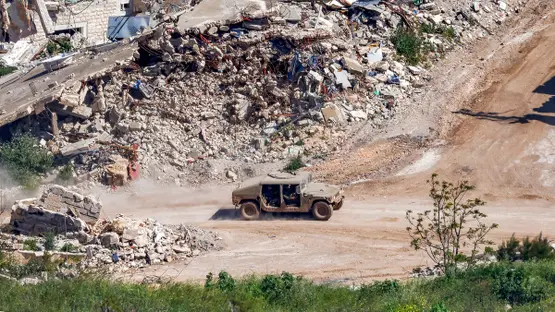
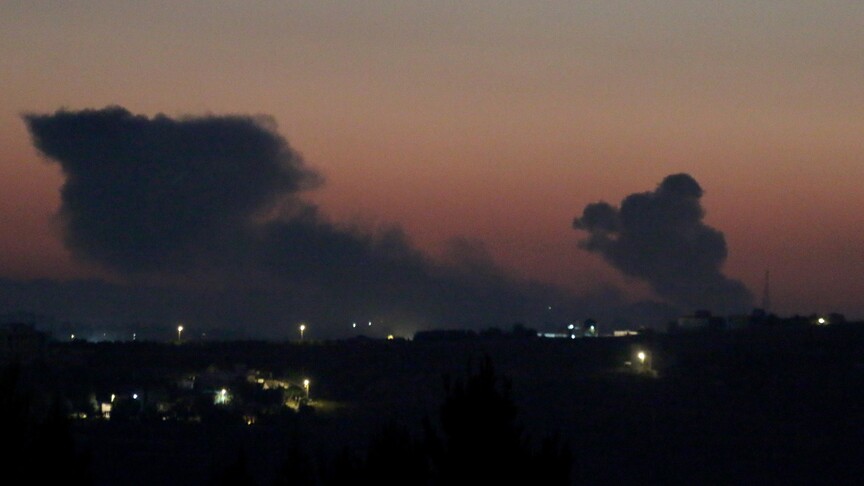
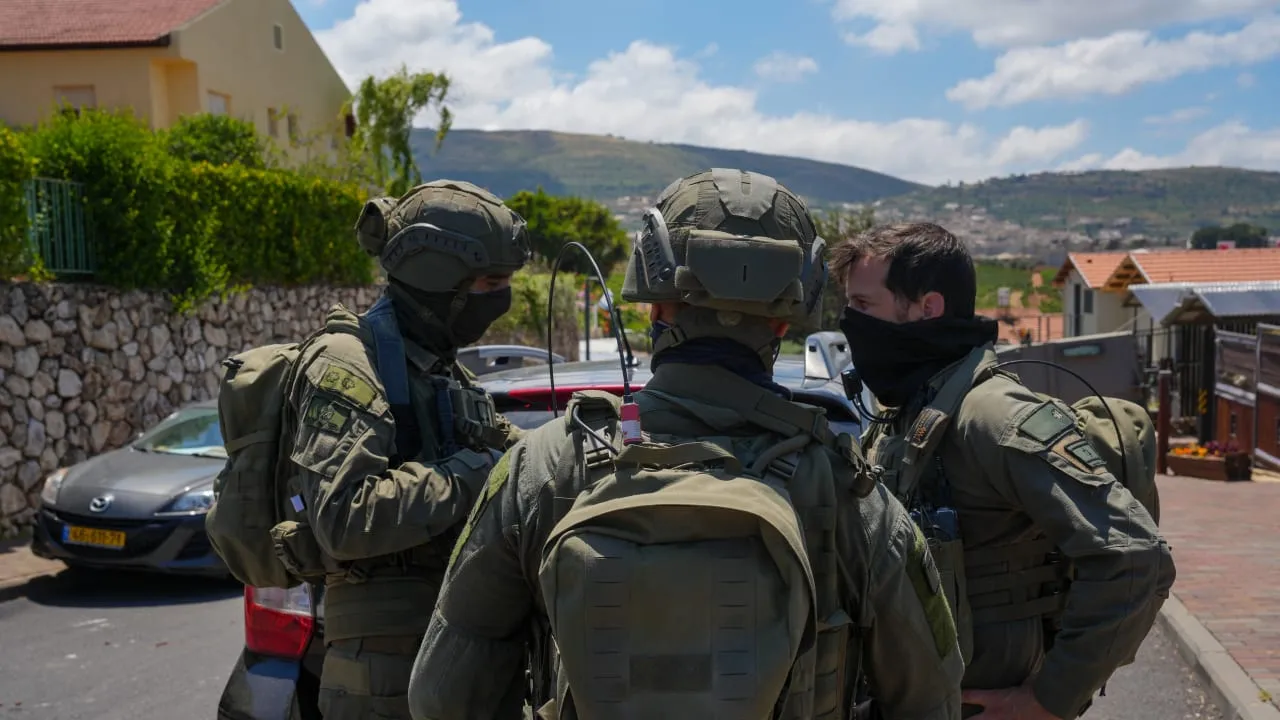
Despite the announced de-escalation efforts, the reality on the ground demonstrated persistent hostilities. The Israeli military launched new deadly strikes in Lebanon on Tuesday, signaling a continuation of its campaign. Concurrently, Hezbollah also conducted attacks overnight, showing the reciprocal nature of the violence.
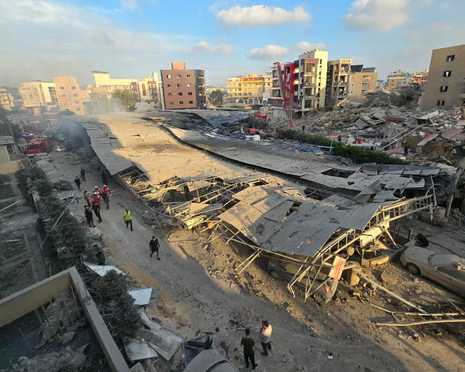
A particularly tragic incident occurred on Monday night, when six people were killed in an Israeli strike in Marwaniyeh, southern Lebanon. This strike added to the growing civilian toll of the conflict. In another significant development, an Israeli airstrike also targeted a Lebanese Civil Defense center in Nabatieh, raising concerns about the targeting of humanitarian infrastructure. An Israeli drone wounded two Lebanese soldiers in Nabatieh, noting the direct impact on Lebanese armed forces. The Israeli military confirmed a strike in Nabatieh, stating it specifically targeted Hezbollah infrastructure, thus framing their actions within the context of combating the militant group.
Sirens sounded in northern Israel after a suspicious aerial target was identified, prompting alerts and demonstrating the ongoing threat perceived by Israeli communities. Israeli Prime Minister Benjamin Netanyahu stated that Israel would continue military operations in southern Lebanon, directly contradicting the spirit of de-escalation and emphasizing Israel's determination to pursue its security objectives.
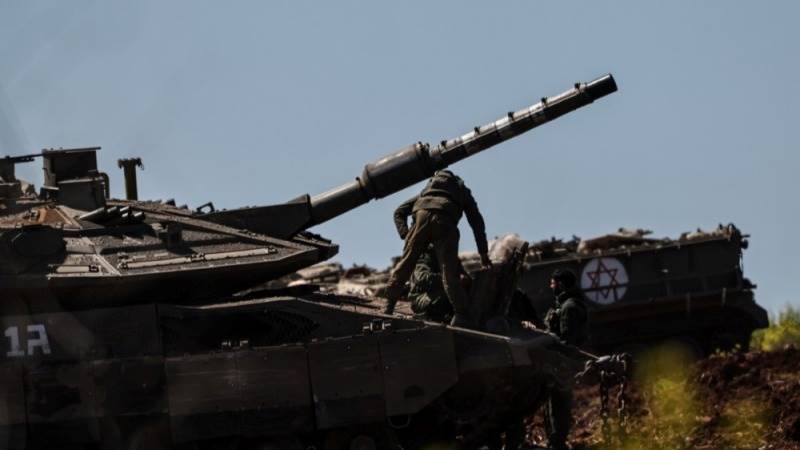
The Israeli ground forces in southern Lebanon are pushing toward the Zahrani River, marking their deepest incursion into Lebanon in 25 years. This significant advancement suggests a substantial military operation aimed at establishing a deeper presence or creating a buffer zone. This follows Israel's invasion of Lebanon in March, an event that marked a severe escalation in the long-standing tensions between the two nations. The current ground offensive builds upon the precedent set by that earlier invasion, indicating a sustained and aggressive military posture.
The humanitarian cost of the conflict has been severe. A three-month war in southern Lebanon with Hezbollah has resulted in the deaths of more than 3,400 people and displaced over 1.2 million individuals. These figures paint a stark picture of the widespread human suffering and societal disruption caused by the prolonged hostilities, creating an urgent humanitarian crisis alongside the military conflict.
Diplomatic Maneuvers and International Reactions
Amidst the ongoing violence and de-escalation claims, diplomatic efforts continued, albeit with mixed results. Lebanon said it would seek to expand the ceasefire in talks with Israel in Washington tomorrow, according to reports. This move indicates Lebanon's desire for a more full cessation of hostilities beyond the limited scope of the agreement announced by Mr. Trump. Hezbollah lawmaker Hassan Fadlallah stated the group would support a full ceasefire across all Lebanon as a precursor to the withdrawal of Israeli troops, outlining a clear condition for a broader peace. This position from Hezbollah notes their demand for an end to the Israeli military presence as a fundamental step towards stability.
The regional implications of the conflict also came to the forefront. Iran’s Revolutionary Guards (IRGC) threatened to open “new fronts” and keep the Strait of Hormuz closed over Israel’s offensive in Lebanon. This threat shows the potential for the conflict to expand beyond Lebanon's borders and impact global commerce, particularly oil shipments. Iran’s foreign minister Abbas Araghchi, however, stated that the ceasefire already in place between Iran and the U.S. Is unequivocally a ceasefire on all fronts, including in Lebanon. This statement from Iran's foreign minister offered a contrasting perspective, suggesting a broader, pre-existing agreement that should encompass the Lebanese conflict.
Financial markets reacted sharply to the unfolding events. Crude futures shot more than 5% higher yesterday, reports indicated, as an Iranian news agency announced Tehran had suspended negotiations with the U.S. Via mediators. This suspension of talks by Iran, reported by Iran's semiofficial news agency Tasnim, which stated that the Iranian negotiating team would suspend talks, immediately impacted global oil prices, reflecting the market's sensitivity to Middle East tensions. Iran threatened to pull out of peace talks with the U.S. A move that could further destabilize the region and complicate efforts to de-escalate.
International leaders also weighed in, urging restraint. German chancellor Friedrich Merz called on Israel to exercise restraint in its campaign in southern Lebanon, reflecting a growing international concern over the intensity and scope of the Israeli operations.
In the United Kingdom, Emily Thornberry, Labour chair of the foreign affairs select committee, expressed strong criticism of her government's approach to the crisis. Thornberry said the UK government has let the Palestinian people down, noting a perceived failure in diplomatic support. Thornberry accused her government of lacking ambition and wringing its hands on the Palestinian crisis, suggesting a lack of proactive engagement. Thornberry also chastised Donald Trump for declaring a ceasefire in Gaza and then walking away, pointing to a pattern of unfulfilled promises in the region. The decision to recognise Palestine as a state, taken more than eight months ago, should have been the first step of many, but nothing further has been done, according to Thornberry, indicating a stagnation in policy. Mr. Trump had claimed that "all shooting will stop" in Lebanon, adding in a social media post, “Let’s see how long that lasts – Hopefully it will be for ETERNITY!” This public statement, while expressing hope, also carried an undertone of skepticism regarding the durability of the agreement.
Escalation Threats and Broader Tensions
The potential for further escalation remains a significant concern, with various parties issuing warnings and outlining contingencies. Israeli defence minister Israel Katz stated that the United States has backed plans to strike Beirut’s southern suburbs if Hezbollah attacks northern Israel. This revelation shows a pre-arranged military understanding between the U.S. And Israel regarding potential retaliatory actions against Hezbollah's strongholds.
Mr. Katz acknowledged that the Israel Defense Forces (IDF) had issued warnings for people to flee their homes, leading to the evacuation of 600,000 out of 950,000 residents by yesterday evening. This large-scale evacuation demonstrates the serious nature of the threats and the anticipated intensity of future military operations. The IDF also issued a warning for people in Nabatieh to flee their homes and move north ahead of impending strikes, further illustrating the widespread impact of the conflict on civilian populations. Reports indicated that Israeli Prime Minister Benjamin Netanyahu ordered strikes on "terror targets" in Beirut’s southern suburbs, reinforcing the Israeli military's focus on areas controlled by Hezbollah.
The broader context of the conflict involves deep-seated tensions between the U.S. Israel, and Iran. The war began with US and Israeli attacks on Iran, according to reports, setting a wide stage for the current hostilities. US forces intercepted two Iranian ballistic missiles targeting American forces based in Kuwait late on Sunday, an incident that directly involved American military assets and noted the direct confrontation between the U.S. And Iran. Oil prices jumped and equities slid as Middle East peace talks stumbled and tensions mounted between Iran and the U.S. Reflecting the global economic ramifications of the regional instability. Prime Minister Netanyahu reiterated his stance on Iran, stating that Iran has paid a “very heavy” price and is destined to fall, indicating a long-term strategic objective against the Islamic Republic.
Amidst these escalating tensions, Israel’s weapons exports reached an all-time high for a fifth year running, reflecting a strong and expanding defense industry. Reports indicated that Israel’s defence export record reached $19.2 billion in 2025, a substantial figure. This $19.2 billion figure for 2025 represents a nearly 30% surge compared to the previous year, showcasing a significant increase in Israel's arms trade. The international community continues to monitor the situation closely, with key diplomatic figures engaging in discussions. US secretary of state Marco Rubio is scheduled to face questions at Congress today for the first time since the Iran war began, a critical moment for accountability and policy review regarding the U.S. Role in the escalating regional conflict.