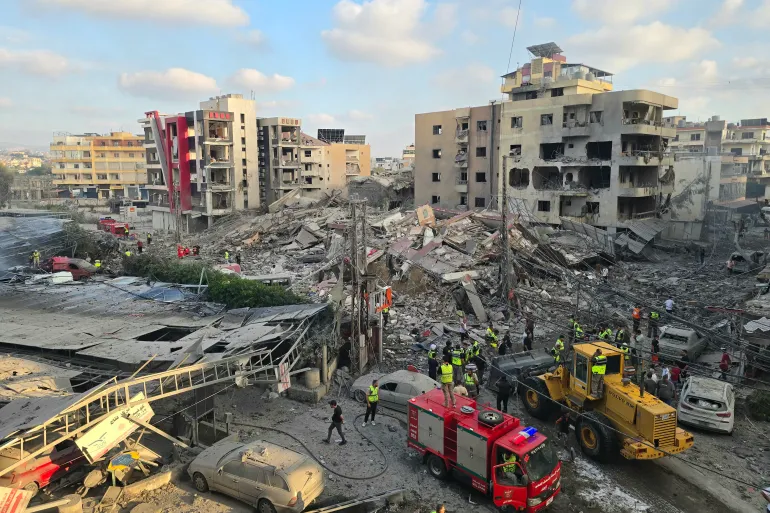
Former U.S. President Donald Trump announced on Monday that a ceasefire had been reached between Israel and the Lebanese group Hezbollah, following a call with Israeli Prime Minister Benjamin Netanyahu. Writing on Truth Social, Mr. Trump stated that he also spoke with "Hezbollah representatives" and secured an agreement for a halt in all shooting. The former president posted on Truth Social on Monday about these conversations with both Israeli Prime Minister Benjamin Netanyahu and representatives of Hezbollah. He claimed Hezbollah consented to cease attacks on Israel once the ceasefire was signed in mid-April. This assertion from Mr. Trump on Truth Social provided the initial public notification of the alleged agreement, noting his direct involvement in the diplomatic efforts.
Mr. Trump further asserted that Prime Minister Netanyahu agreed to withdraw Israeli troops that were reportedly preparing to attack Beirut, adding that any troops en route had already been turned back. He specifically stated that there would be no Israeli troops going to Beirut. However, Mr. Netanyahu contradicted this, stating, "If Hezbollah does not cease attacking our cities and citizens … Israel will attack terror targets in Beirut." Prime Minister Netanyahu’s statement indicated that Israel would proceed with plans to strike Beirut if Hezbollah continued its attacks against Israel. A nominal ceasefire has been in place since April 17. The former president's announcement comes after Israeli and Lebanese officials held their first direct negotiations since 1983, with talks between the two sides beginning in April in Washington. Mr. Trump quoted Hezbollah as saying, "I had a very good call with Hezbollah, and they agreed that all shooting will stop – that Israel will not attack them, and they will not attack Israel." This statement from Mr. Trump on Truth Social directly attributed the ceasefire commitment to Hezbollah representatives.
Escalation and Diplomatic Efforts
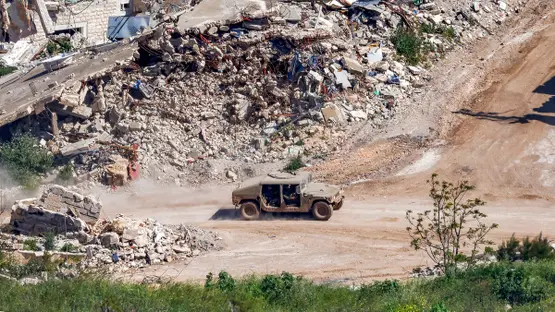
Hezbollah began firing on northern Israel after the first US-Israeli strikes on Tehran at the end of February, according to reports. Since early March, Israel has occupied approximately one-fifth of Lebanon. This occupation has significantly altered the ground situation in southern Lebanon, creating a buffer zone of strategic importance for Israeli forces. Reports from the Lebanese Ministry of Public Health indicate that Israeli attacks on Lebanon have resulted in more than 3,412 people killed and 10,269 wounded since March 2. The latest round of fighting between Israel and Hezbollah has killed 3,433 people in Lebanon, showing the severe human cost of the ongoing conflict. The escalation has also displaced over one million people within Lebanon, creating a significant humanitarian crisis as these individuals seek safety and shelter from the hostilities. This large-scale displacement places immense strain on Lebanon's resources and infrastructure.
A 10-day truce announced on April 22 failed to halt the fighting, with reports indicating continued military actions. This truce did not produce a cessation of hostilities, as fighting persisted, demonstrating the fragility of temporary agreements amidst entrenched conflict. Israel's military issued new forced displacement orders for residents of southern Beirut suburbs on Monday, further exacerbating the humanitarian situation and signaling potential for expanded military operations. On Tuesday morning, Israel continued attacks on southern Lebanon, firing artillery near Nabatieh and striking the villages of Choukine and Kfar Tibnit. These ongoing military operations highlight the persistent nature of the conflict despite diplomatic efforts, with daily exchanges of fire continuing to impact civilian areas. Israel's "Yellow Line" is a military zone stretching roughly 10 kilometers (six miles) north of the border inside southern Lebanon, marking a critical area of military activity and strategic importance where clashes frequently occur.
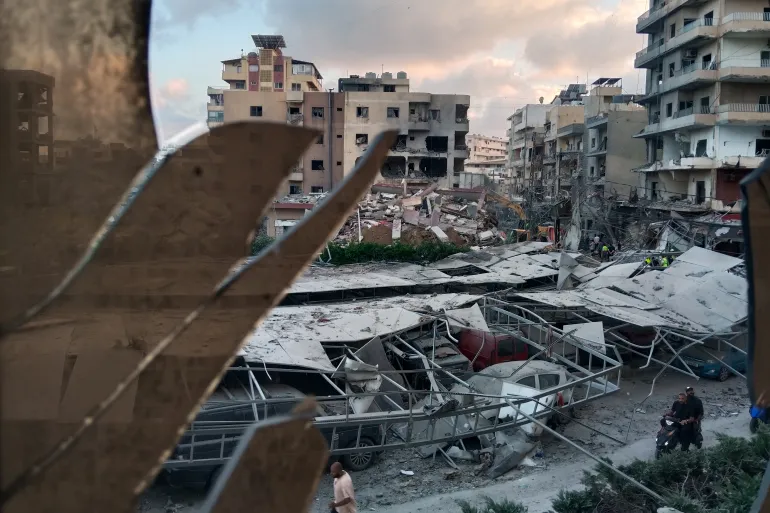
In November 2024, the United States relied on Nabih Berri to help secure a ceasefire agreement between Hezbollah and Israel, showing the complex web of regional actors involved in mediation attempts. This notes the reliance on established political figures within Lebanon to facilitate dialogue. However, moments after former U.S. President Donald Trump's message claiming a ceasefire, Israel detected missile launches from Lebanon, according to reports. This immediate response from Lebanon cast doubt on the validity of the ceasefire announcement, indicating a disconnect between stated agreements and on-the-ground realities. Israel's government subsequently ordered strikes on the southern suburbs of Beirut in retaliation for the missile launches, directly responding to the perceived breach of any potential ceasefire. Hezbollah, in turn, fired rockets at northern Israel, including the outskirts of the coastal city of Haifa, demonstrating a clear escalation following Mr. Trump's statement and illustrating the tit-for-tat nature of the conflict.
Conflicting Claims and Stated Terms
Lebanon's embassy in Washington claimed Hezbollah would cease its attacks on Israel if Israel halted strikes on Beirut and its southern suburbs. This conditional offer from Hezbollah, relayed through diplomatic channels, outlined specific terms for de-escalation, suggesting a reciprocal agreement was necessary for a lasting truce. Iranian state media reported on Sunday that Tehran had suspended message exchanges with Washington, indicating a potential breakdown in broader diplomatic efforts concerning regional stability and casting a shadow over any U.S.-led peace initiatives. Lebanon’s UN Ambassador Ahmad Arafa commended the Trump administration for “constructive efforts aimed at giving diplomacy a chance,” acknowledging the role of the U.S. In attempting to broker peace despite the immediate challenges. On April 24, Donald Trump demanded that Iran stop funding Hezbollah as part of a broader regional settlement, linking the conflict directly to Iranian support for the group and framing it within a larger geopolitical context.
A joint statement from Prime Minister Benjamin Netanyahu and Israeli Defense Minister Israel Katz indicated that orders to attack targets in Beirut’s southern suburbs were issued following repeated violations of the ceasefire by Hezbollah and “attacks against our cities and citizens.” This statement provided Israel's official justification for its military actions, citing ongoing aggression from Hezbollah as the primary driver for its retaliatory strikes. The Israeli military reported its air force intercepted two projectiles launched from Lebanon toward Israeli territory, further substantiating claims of continued attacks from the Lebanese side. Hezbollah stated it carried out rocket and missile attacks on northern Israel on Sunday, taking responsibility for its actions and detailing the specific nature of its operations. Early Monday, Hezbollah also claimed it attacked Israeli troops in Zawtar al-Sharqieh and struck Israeli military infrastructure in Tiberius, providing further specific examples of its military engagements.
Israel’s military confirmed a soldier was killed in southern Lebanon overnight in a drone attack by Hezbollah, noting the direct casualties suffered by Israeli forces in these ongoing skirmishes. Prime Minister Netanyahu had previously stated, "If Hezbollah does not cease attacking our cities and citizens … Israel will attack terror targets in Beirut," reiterating his government's resolve to respond to threats with military force. Lebanon and Israel were scheduled to hold their next round of direct talks in Washington, beginning Tuesday, indicating that despite the ongoing conflict and conflicting claims, diplomatic channels remain open for future negotiations and a potential path to de-escalation.
Humanitarian Toll and Broader Context
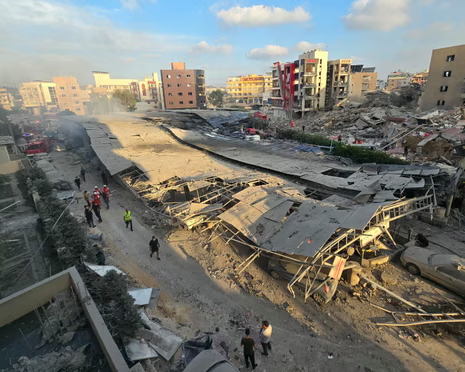
Hezbollah was established in 1982 with the stated purpose of resisting Israel’s occupation of southern Lebanon, providing historical context for the group's formation and its core mission of confronting Israeli military presence. Recent events have showed the human cost of the ongoing conflict, impacting both civilians and military personnel. Israeli airstrikes carried out overnight in southern Lebanon resulted in the deaths of six individuals, including a Syrian citizen, in a village located near the city of Nabatiyeh. These strikes exemplify the immediate and tragic impact of the hostilities on civilian populations, who often bear the brunt of military actions.
Further exacerbating the humanitarian situation, an airstrike on Monday afternoon in the port city of Tyre inflicted extensive damage on the Jabal Amel Hospital. The damage to a medical facility notes the wide-ranging consequences of the conflict, affecting critical infrastructure and healthcare services vital for the affected communities. The impact of the hostilities extends to both sides of the border. According to an announcement from Prime Minister Benjamin Netanyahu’s office, at least 26 Israeli soldiers and one defense contractor have been killed in or around southern Lebanon, illustrating the toll on military personnel engaged in the conflict. Additionally, two civilians have died in northern Israel due to the conflict, demonstrating that civilian populations on both sides are tragically affected by the violence and the cross-border exchanges of fire.
Prime Minister Netanyahu has previously issued a warning regarding potential Israeli military actions. "If Hezbollah does not cease attacking our cities and citizens … Israel will attack terror targets in Beirut," he stated, showing the Israeli government's position and its commitment to defending its territory and citizens through military responses. The ongoing exchanges of fire, coupled with the significant loss of life and displacement, paint a grim picture of the current situation along the Israel-Lebanon border, despite intermittent diplomatic efforts, indicating a deeply volatile and unstable environment.