President Donald Trump expressed optimism that the United States could soon reach an interim peace deal with Iran, despite threats from Tehran to suspend talks due to Israel's escalating military actions in Lebanon. Reports from Iranian state media had indicated a suspension of negotiations, but President Trump disputed these claims, stating that the U.S. And Iran have been "continuously" having conversations, including "today." He told ABC News late Monday that Washington and Tehran might finalize a memorandum of understanding to reopen the Strait of Hormuz "over the next week."
Oil prices and government bond yields increased after Iran reacted to Israel's deepening invasion of Lebanon, threatening to increase restrictions on maritime traffic through the Strait of Hormuz and close the Bab el-Mandeb strait at the southern end of the Red Sea. President Trump called Israeli Prime Minister Benjamin Netanyahu and accused him of ingratitude, as the Israeli military intercepted at least three projectiles from Lebanon early Tuesday, with air sirens sounding in northern Israel. The United States and Iran had previously established a ceasefire on April 8, 2026, following a monthslong conflict initiated by a U.S. Attack on Iran on February 28, 2026.
Escalating Lebanon Conflict
Israel is engaged in conflict with Tehran-backed Hezbollah militants in Lebanon, a situation that has complicated peace prospects. Israeli Prime Minister Benjamin Netanyahu stated that Israel's position in Lebanon "remains unchanged" and affirmed his military will "continue to operate as planned in southern Lebanon." Netanyahu also indicated that Israel would refrain from hitting "terrorist targets" in Beirut if Hezbollah ceased firing on Israeli cities.
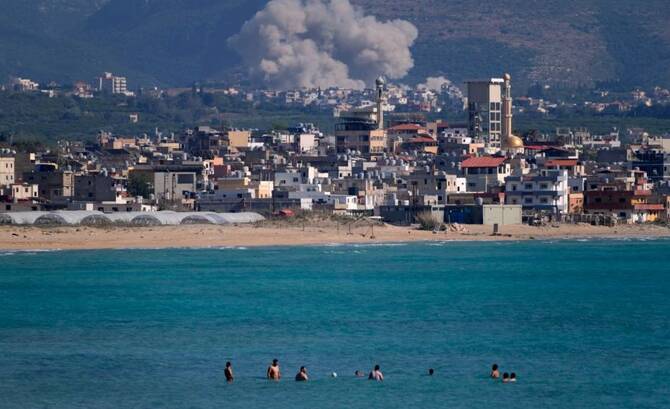
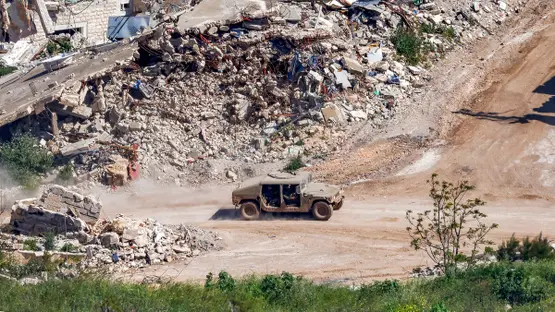
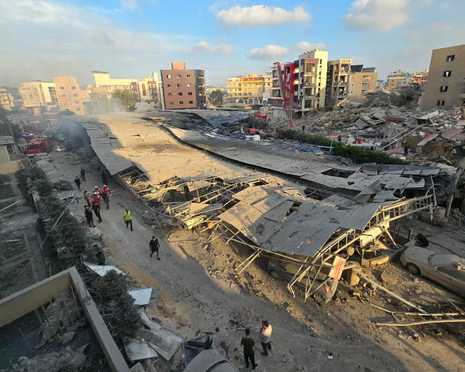
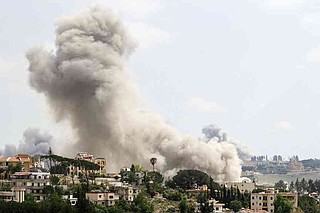
Early Tuesday, Israel struck the southern town of Tyre and a car in Nabatieh. Hezbollah reported it fired rockets at an Israeli tank, following an earlier attack in early March when it targeted northern Israel with drones. Israeli troops have advanced further into Lebanon than at any point in a quarter century. Over the weekend, Israeli forces captured the Crusader-era Beaufort Castle, which is approximately 60 kilometers (37 miles) from Beirut. The ongoing Israeli attacks have resulted in the deaths of more than 3,000 Lebanese and displaced over a million individuals.
US-Iran Negotiations and Sticking Points
Officials in Tehran are discussing their "final text" to send to the U.S. According to Iran's Mehr news agency. A person close to the Iranian negotiating team stated that this "final text" is under review. Iran has insisted on a ceasefire in Lebanon as part of the proposed memorandum of understanding with the U.S. This agreement is intended to extend a truce by approximately two months and lead to the U.S. Lifting a blockade of Iranian ports. An agreement would also allow more petroleum tankers to move through the Strait of Hormuz.
The U.S. And Israel had previously initiated bombing campaigns against Iran, adding a layer of complexity to the ongoing discussions. Key sticking points in the negotiations include whether Iran will allow free passage of ships through the Strait of Hormuz. U.S. Secretary of State Marco Rubio stated that Iran had mined large sections of the Strait of Hormuz, complicating maritime traffic. Another key point of contention is how many billions of dollars of Iranian funds held in countries like Qatar will be unfrozen.
President Donald Trump is currently under pressure to end a war that is now in its fourth month. Brent crude oil was trading around $94.90 a barrel on Tuesday. Oil prices have slumped around 8 percent in the past 10 days, reflecting market reactions to regional developments and potential diplomatic shifts.
Diplomatic Maneuvers and Threats
Iran threatened to strike Israel, according to reports. President Trump stated he had spoken to representatives of Hezbollah. Trump claimed that Israel and Hezbollah had agreed to cease firing on one another, and that Israeli forces had backed off on raiding Beirut, Lebanon's capital. Washington fears Iran's ambition to develop an atomic weapon, as Tehran has enriched uranium to almost military-grade levels, reports indicated.
American forces conducted self-defense strikes in southern Iran on Wednesday, May 27, 2026, including airstrikes against a drone ground-control station in the port city of Bandar Abbas. Iran's Islamic Revolutionary Guards Corps responded early Thursday, May 28, 2026, targeting the American base from which those strikes were launched. The U.S. Also knocked down four one-way attack drones that Iran launched over the Strait of Hormuz. Reports indicated these strikes were the latest in multiple attacks that have ratcheted up hostilities and threatened a fragile cease-fire.
President Trump signaled he was open to protracted peace talks with Iran during a cabinet meeting on Wednesday, May 27, 2026. He reiterated that he did not want the Strait of Hormuz to be under Iranian control. "Nobody’s going to control it; we’re going to watch over it,” President Trump said. He added, “The strait is going to be open to everybody,” and “We’ll watch over it, but nobody’s going to control it.” The White House dismissed an Iranian state television report claiming to have obtained a draft of a preliminary deal with the United States as a "complete fabrication." President Trump stated that Iranian officials "thought they were going to outwait me." He also remarked, "I don’t care about the midterms." Regarding Iranian funds, President Trump said, “We have control of money that they claim is theirs. We’ll keep control of that money. When they behave properly, and when they do what’s right, we’ll let them have their money. But right now, we’re not doing that.” He also issued a warning, stating: "Oman will behave just like everybody else, or we’ll have to blow them up,” adding, “They understand that. They’ll be fine.”
Regional Implications and Future Outlook
A reported draft agreement suggests Iran would reopen the Strait of Hormuz to commercial marine traffic if the United States lifts its naval blockade. Under this draft, Iran would manage and route ship traffic through the Strait of Hormuz in cooperation with Oman. The draft also stipulates the United States would withdraw an unspecified number of military forces from areas surrounding Iran. On Monday, May 25, 2026, the United States struck missile launch sites and Iranian boats attempting to place mines in the Strait of Hormuz.
Iran's Islamic Revolutionary Guards Corps has vowed a "decisive reciprocal response" to any ceasefire violations, with Mojtaba Khamenei suggesting Iran could renew strikes on U.S. Military installations in the Persian Gulf. Iranian officials have indicated recent talks have focused on the Strait of Hormuz, leaving Iran's stockpile of highly enriched uranium for later discussions. President Trump stated he would not be "comfortable" with Iran's highly enriched uranium stockpile being handed over to Russia or China. He also reiterated that "Nobody’s going to control it; we’re going to watch over it,” adding, “The strait is going to be open to everybody,” and “We’ll watch over it, but nobody’s going to control it.”
Israel pounded southern Lebanon for a second day on Wednesday, May 27, 2026. Tuesday's Israeli strikes in southern Lebanon killed at least 31 people, including four children, according to the Lebanese health ministry. Mohammed Odeh, the leader of Hamas’s military wing, was killed in an Israeli airstrike in northern Gaza on Tuesday, May 26, 2026. Iran began restoring internet access after an 88-day nationwide internet shutdown, the longest in modern history. President Trump remarked that Iranian officials “thought they were going to outwait me,” and added, “I don’t care about the midterms.” Regarding Iranian funds, President Trump stated, “We have control of money that they claim is theirs. We’ll keep control of that money. When they behave properly, and when they do what’s right, we’ll let them have their money. But right now, we’re not doing that.” He also issued a warning, stating: "Oman will behave just like everybody else, or we’ll have to blow them up,” adding, “They understand that. They’ll be fine.”