Lebanon’s Parliament Speaker Nabih Berri has been working through Iranian channels to secure Hezbollah’s commitment to a ceasefire, as Israel had threatened to resume strikes on Beirut’s southern suburbs. This diplomatic push comes amidst heightened regional tensions, prompting various international and regional actors to engage in mediation. Lebanese President Joseph Aoun emphasized the urgency of these efforts, stating, "Those who care about Lebanon must work to ensure the success of the negotiations." Aoun further elaborated on the philosophical underpinning of these efforts, stating, "Strength does not lie in waging war but in having the courage and wisdom to end the war through negotiations in the interest of the country."
Several countries have spearheaded mediation initiatives to de-escalate the situation. Saudi Arabia, Egypt, and Qatar led Arab mediation efforts, aiming to find a path towards a resolution. Simultaneously, officials from Iran, America, Europe, and Pakistan worked through parallel channels, indicating a broad international engagement in the crisis. These multiple diplomatic avenues highlight the complex geopolitical landscape surrounding the conflict and the widespread desire to prevent further escalation. The direct engagement of Parliament Speaker Berri with Iranian channels shows the key role Tehran plays in influencing Hezbollah's decisions.
Diplomatic Push Via Tehran
Political sources informed Arab News about the diplomatic initiatives underway. These sources provided detailed insights into the intense behind-the-scenes efforts to prevent a wider conflict. Iran has maintained daily contact with Nabih Berri, particularly over the past two days, as Israeli threats against Beirut intensified. These frequent communications show the critical role Iran plays in mediating with Hezbollah and its importance in the broader regional power dynamics. A political official closely involved in Berri’s consultations told Arab News that a broader US-Iran deal would significantly improve the prospects of securing a ceasefire. The official stated, "What is needed is for Iran to pressure Hezbollah to halt its attacks and for the United States to pressure Israel to do the same." This statement notes the perception that a full resolution requires engagement from both major powers influencing the respective parties.
Axios reported that Lebanese Parliament Speaker Nabih Berri conveyed to the Trump administration on Sunday that Hezbollah was prepared for a full and immediate ceasefire with Israel and would guarantee its implementation. This message was delivered to U.S. Ambassador to Lebanon Michel Issa by Berri’s senior adviser, Ali Hamdan. Hamdan indicated that Berri advocated for a full ceasefire covering land, sea, and air, rather than the narrower arrangement initially proposed by the U.S. This broader scope for the ceasefire reflects the desire to ensure a complete cessation of hostilities across all fronts, preventing any potential loopholes or escalations.
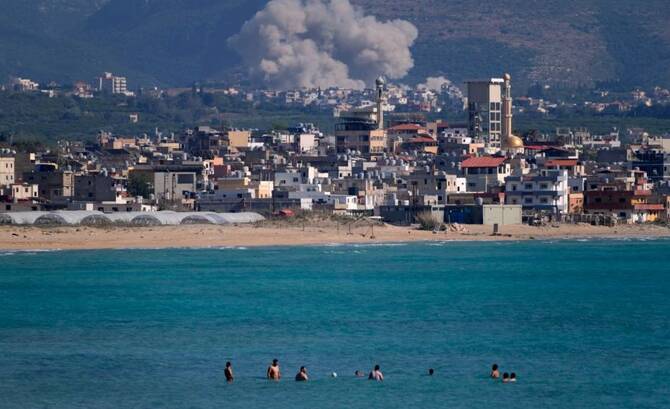
Meanwhile, Iran’s semi-official Tasnim News Agency reported on Monday that Tehran’s negotiating team was suspending indirect exchanges with the United States, conducted through mediators, in protest of Israeli actions in Lebanon. This suspension signals Iran's strong disapproval of the ongoing Israeli military activities and its intent to leverage diplomatic channels to pressure for a de-escalation. Amidst these diplomatic maneuvers, residents were seen swimming on a public beach as smoke rose from an Israeli airstrike on Qlaileh village, visible from the southern port city of Tyre, Lebanon, on Tuesday, June 2, 2026. This stark image served as a powerful reminder of the immediate and tangible impact of the conflict on civilian life, even as high-level diplomatic efforts were underway.
Hezbollah's Stance and Denials
Hezbollah had prepared attacks intended to strike deeper inside Israeli territory, indicating a readiness for significant escalation if the conflict were to intensify. An Israeli official confirmed to Axios that Hezbollah had expressed readiness for a full ceasefire without demanding an immediate Israeli withdrawal from southern Lebanon. This concession from Hezbollah was viewed as a potential breakthrough in the negotiations, suggesting a willingness to de-escalate under certain conditions. However, Hezbollah denied any direct communication with Washington, maintaining its stance of not engaging directly with the U.S. Government. Lawmaker Ihab Hamadeh stated on Tuesday that Hezbollah had not communicated with any party other than Iran, reinforcing the perception that Tehran remains its primary diplomatic conduit.
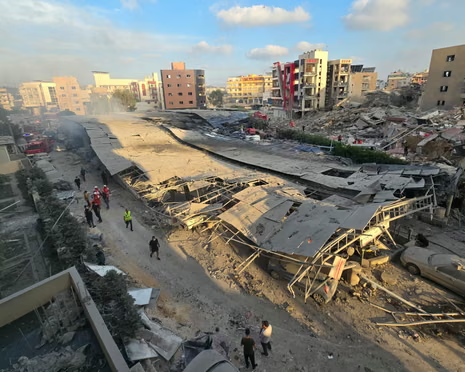
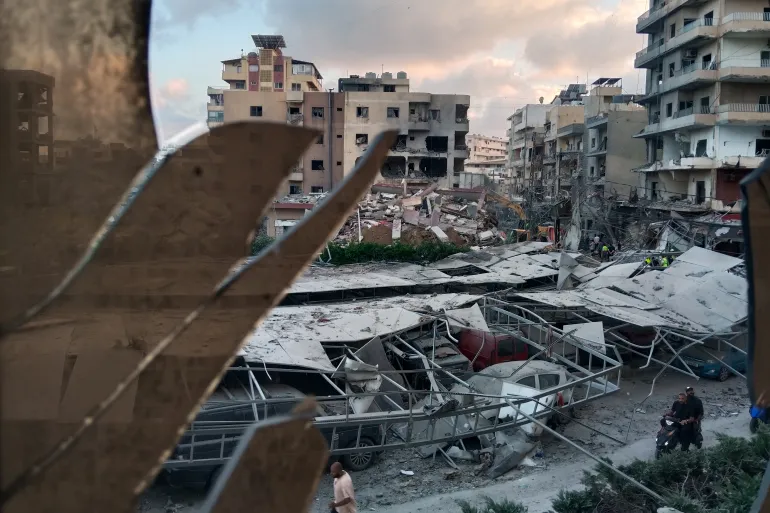
On Monday, Israeli Prime Minister Benjamin Netanyahu and Defense Minister Israel Katz threatened to strike Hezbollah targets in Dahieh, referring to the area as a "terrorist headquarters," following what they described as repeated violations of the ceasefire by the Shiite group. This strong rhetoric from Israeli leadership showed the seriousness of their warnings and the potential for military action. The Israel Defense Forces (IDF) subsequently issued an Arabic-language warning urging residents of Dahieh to leave for their safety. The IDF stated, "Should Hezbollah continue to fire toward our cities and communities, the IDF will respond by striking terrorist targets in Dahieh." This public warning served to both inform and pressure the civilian population in Dahieh, while also signaling Israel's intent to respond forcefully to any further attacks.
A report also indicated that Iran and its "Axis of Resistance" were prepared to retaliate in the Strait of Hormuz and activate other fronts, including the Bab el-Mandeb Strait in the Red Sea. This broader threat of retaliation noted the potential for the conflict to expand beyond the immediate Lebanese-Israeli border, drawing in other strategic maritime chokepoints and regional actors. Such a development would undoubtedly have significant global implications for trade and security.
US Involvement and Israeli Threats
U.S. President Donald Trump stated that understandings had been reached with Hezbollah to halt exchanges of fire, asserting through "highly placed representatives" and on Truth Social that "all shooting will stop." Trump described a "very good call" conducted through senior representatives regarding the ceasefire, indicating active U.S. Involvement in the mediation efforts. He also held a "very productive" call with Prime Minister Benjamin Netanyahu, signaling direct engagement with the Israeli leadership to manage the crisis. According to reports, Trump affirmed no troops would be sent to Beirut, stating that "any troops that are on their way have already been turned back." This assurance aimed to allay fears of direct U.S. Military intervention in Lebanon and emphasized a diplomatic approach to the conflict.
Despite these developments, Iranian Foreign Minister Abbas Araghchi warned on X that Israeli operations in Lebanon violated the U.S.-Iran ceasefire. Araghchi stated Washington and Israel would bear "the consequences of any violation." This warning from Iran showed its position that any Israeli military action in Lebanon was a breach of existing understandings and would not go unanswered. Tasnim, Iran's semi-official news agency, quoted Iranian officials who indicated no talks with the United States would take place until Israel halted its attacks in Lebanon. This firm stance from Tehran reinforced its leverage in the diplomatic process and its demand for a cessation of hostilities as a precondition for further engagement.
An Israeli official confirmed that Israel postponed its planned strike in Beirut’s Dahieh district at Washington’s request. This move appeared to signal that an immediate Israeli operation in the Lebanese capital had been put on hold amid a U.S.-led ceasefire push. This postponement demonstrated the influence of U.S. Diplomatic pressure on Israeli military decisions, at least in the short term. However, Iranian Parliament Speaker Mohammad-Bagher Ghalibaf told Nabih Berri during a call that if Israeli aggression against Lebanon continues, Iran would halt negotiations and confront the enemy directly. This direct warning from a high-ranking Iranian official to the Lebanese Parliament Speaker emphasized Iran's commitment to its allies and its readiness to escalate if diplomatic efforts fail. Meanwhile, meetings hosted by the Pentagon last week between Lebanese and Israeli military delegations reportedly failed to yield a meaningful breakthrough. This lack of progress in direct military-to-military talks noted the deep divisions and mistrust that persist between the two sides, making broader political and diplomatic intervention all the more key.
Lebanese State Authority
Lebanese President Joseph Aoun called on Hezbollah to present its points of strength at the Presidential Palace and place them under state authority. Aoun urged Hezbollah to engage directly with the presidency and support negotiations with Israel, emphasizing that such engagement should not obstruct diplomatic efforts. He stated, "Strength does not lie in waging war but in having the courage and wisdom to end the war through negotiations in the interest of the country." This call from the Lebanese President showed the importance of national unity and state sovereignty in managing the crisis, advocating for Hezbollah to integrate its capabilities under the national umbrella. A political official closely involved in Nabih Berri’s consultations showed the need for state leadership in these talks. The official emphasized, "The Lebanese state must remain the negotiating party. That principle is beyond question. But Iranian pressure on Hezbollah remains essential because it can help create the conditions necessary for a ceasefire." This perspective notes the dual necessity of maintaining Lebanese state authority in negotiations while acknowledging the practical reality of Iran's influence over Hezbollah. The ongoing diplomatic efforts, therefore, navigate a complex landscape of regional powers, internal Lebanese dynamics, and the immediate imperative to prevent further loss of life and wider conflict.