Israeli Prime Minister Benjamin Netanyahu stated Thursday that the Israeli army will not withdraw from territory occupied in southern Lebanon, despite a US-Iran agreement that includes provisions guaranteeing Lebanon’s sovereignty. Netanyahu's remarks come as the first clause of the agreement, signed by Tehran and Washington, calls for an "immediate and permanent cessation of military operations on all fronts, including in Lebanon," and pledges to "guarantee Lebanon’s territorial integrity and sovereignty."
Netanyahu asserted that Israel "will restore security to the north," according to statements carried by the daily Yedioth Ahronoth. He added, "This requires maintaining the security strip in southern Lebanon, and that requires that we not withdraw as long as Israel's security needs require it." The Prime Minister also mentioned the broader goal "to prevent Iran from acquiring a nuclear weapon."
Israeli Stance on Southern Lebanon
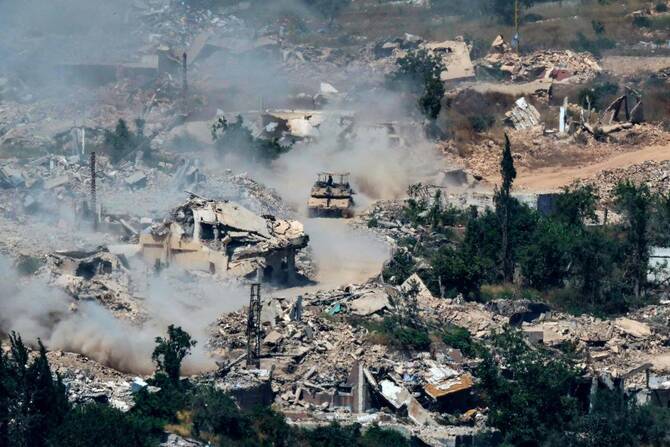
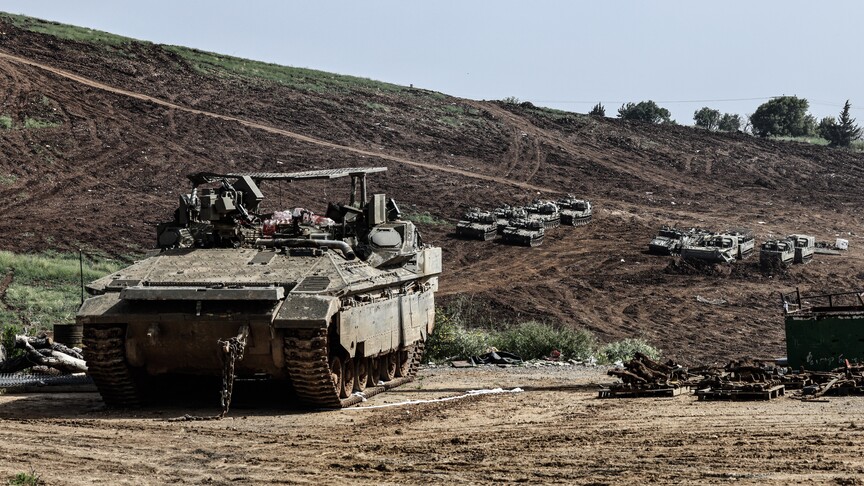
Earlier Thursday, the Israeli army published a map detailing its occupation of a strip extending up to 10 kilometers inside Lebanese territory. The military indicated its intention to maintain this presence, referring to it as a 'security zone' in the south. According to the map, Israel’s deployment inside southern Lebanon spans wide border sectors encompassing several southern towns. The depth of this incursion ranges from approximately 6 to 10 kilometers. In some western and central areas, the incursion reaches nearly 10 kilometers, with the occupied zone extending northward toward the Litani River in limited sections. This prolonged presence is part of Israel's strategic approach to its northern border.
Israel also continues to occupy areas in Lebanon, some of which have been held for decades, while others were seized during the 2023-2024 war. This ongoing occupation forms a significant point of contention in the region, particularly given the recent US-Iran agreement. Prime Minister Benjamin Netanyahu reiterated Israel "will restore security to the north," according to reports. Netanyahu also asserted a broader objective "to prevent Iran from acquiring a nuclear weapon," a claim that has been a consistent element of Israeli foreign policy.
US-Iran Agreement Details
On Wednesday evening, US President Donald Trump and Iranian President Masoud Pezeshkian electronically signed the 'Islamabad Memorandum of Understanding.' This agreement aims to pave the way for ending the war launched by Washington and Tel Aviv against Iran on February 28. The memorandum signifies a significant diplomatic effort to de-escalate tensions and establish a framework for future relations between the involved parties.
The Pakistani mediator officially announced that the memorandum had entered into force, with Iran scheduled to begin reopening the Strait of Hormuz to maritime traffic. In exchange, the United States is set to start lifting its naval blockade on Tehran. This reciprocal action is a cornerstone of the agreement, designed to facilitate economic and navigational freedoms while addressing security concerns. A meeting at Switzerland’s Burgenstock resort was anticipated for Friday, where representatives from the US and Iran would hold preliminary talks on implementing the memorandum. These talks are expected to iron out the finer details of the agreement's execution and ensure a smooth transition to its full implementation.
Pakistan’s state television reported early Thursday that Prime Minister Shehbaz Sharif postponed his planned trip to Switzerland for a signing ceremony. The report indicated that the deal had already been signed and was under implementation, suggesting that the initial ceremonial aspects were superseded by the immediate operationalization of the agreement. The electronic signing facilitated this prompt entry into force, bypassing the need for an in-person ceremony for the initial stages.
Lebanese Impact and Context
Israeli Prime Minister Benjamin Netanyahu stated that Israel's continued presence in southern Lebanon was necessary for security. "This requires maintaining the security strip in southern Lebanon, and that requires that we not withdraw as long as Israel's security needs require it," Netanyahu said. This position directly contradicts the provisions of the US-Iran agreement that guarantee Lebanon’s territorial integrity and sovereignty, setting up a potential diplomatic clash.
Israel currently occupies areas in Lebanon, some of which have been held for decades, while others were seized during the 2023-2024 conflict. This ongoing occupation has had severe humanitarian consequences. Since March 2, Israel has carried out a large-scale offensive in Lebanon that has killed 3,912 people and injured 11,873 others, while displacing more than one million, according to official Lebanese figures. This offensive has also displaced more than one million people within Lebanon, exacerbating an already fragile humanitarian situation. Netanyahu also claimed that a central goal of Israel's policy is "to prevent Iran from acquiring a nuclear weapon," linking Israel's actions in Lebanon to broader regional security concerns. The Israeli Prime Minister's statements show the complex and interconnected nature of security, territorial claims, and international agreements in the Middle East.