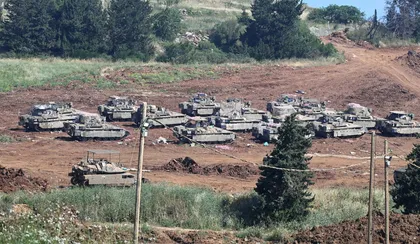
Israeli Prime Minister Benjamin Netanyahu stated on Thursday that Israel does not intend to withdraw from southern Lebanon in the foreseeable future, even as Hezbollah militants and Israeli soldiers continued to exchange fire across the volatile border region. This declaration comes amidst heightened tensions and ongoing military engagements. The United States had announced on Wednesday that Lebanon and Israel agreed to a ceasefire, contingent on Iran-backed Hezbollah ceasing fire and evacuating its fighters from southern Lebanon border areas. This proposed ceasefire, however, appears to be facing significant challenges in its implementation.
Further showing the precarious security situation, an Israel Defense Forces (IDF) soldier, 21-year-old Eitan Shmuel Lemberg, was tragically killed north of the Litani River by an anti-tank missile strike on Thursday. This incident immediately prompted a strong response from Israeli forces, with IDF air force and artillery units attacking Hezbollah targets in retaliation for the deadly missile strike. The death of Corporal Lemberg notes the continued danger faced by Israeli personnel operating in the northern sector and the ongoing nature of the conflict.
Prime Minister Netanyahu indicated that any reconsideration of Israel's current posture would only occur "perhaps when Hezbollah is dismantled." He detailed Israel's strategic objectives, emphasizing the necessity of establishing strong security measures along its northern frontier. "To truly stop this, we have concluded that we need security zones: separation and security areas on the other side of the border," Netanyahu explained to reporters. The Prime Minister showed the profound shift in Israeli defense doctrine following recent events, stating, "This is a fundamental change. Since October 7, there have been several fundamental changes we are implementing: initiative, attack, stratagem and buffer zones." These changes reflect a more proactive and assertive approach to perceived threats emanating from Lebanon.
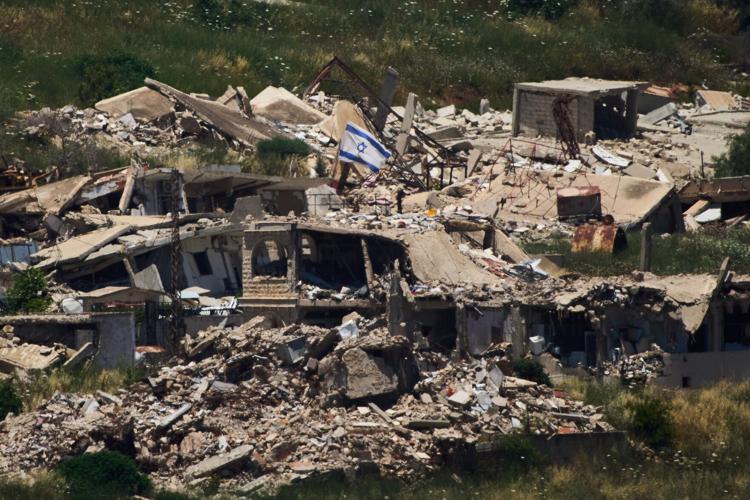
Netanyahu also linked the current situation directly to Iranian strategy, asserting, "The Iranians believe this will be a fundamental component of the destruction plan; it is based on an invasion of the territory." He described a specific Hezbollah fortification, adding, "floors upon floors of such a strange fortress. We haven't seen anything like it in Lebanon, in Gaza, anywhere. It is in our hands and is about to be eliminated." This description suggests a significant and previously unseen level of infrastructure developed by Hezbollah, which Israel views as a direct threat. The Prime Minister's remarks indicate a clear intention to neutralize such strategic assets.
Iran's Invasion Plot Claim and Buffer Zone Strategy
Prime Minister Benjamin Netanyahu claimed Iran is attempting to advance a plan for a Hezbollah invasion of Israeli territory. This assertion forms a core part of Israel's justification for its current military operations and its long-term strategic planning in the region. Netanyahu informed the heads of northern Israeli municipalities that Israel would maintain a "buffer zone" extending from Ras al-Bayada in Lebanon to Mount Hermon and into Syrian territory towards the Yarmouk. This extensive buffer zone, he asserted, was a necessary measure to counter perceived threats and ensure the security of Israeli communities. The Prime Minister's detailed description of the buffer zone's geographical scope shows the full nature of Israel's security considerations.
Separately, reports indicated that the United Nations Interim Force in Lebanon (UNIFIL) did not observe the razing of buildings in southern Lebanon by Israel Defense Forces (IDF) on Thursday. This observation contrasts sharply with reports from recent weeks, where such activities had been frequently documented and reported. The absence of such observations on Thursday might suggest a temporary shift in IDF operational tactics or a period of reduced activity in specific areas, though the overall military engagement remains high.
Hezbollah Rejects Ceasefire and Issues Warnings
Hezbollah Secretary-General Naim Qassem unequivocally rejected the cease-fire agreement on Thursday, stating that Israel must cease fire across all of Lebanon. Qassem's declaration directly contradicted the earlier announcement from the United States regarding a potential ceasefire. Qassem proclaimed that Israel Defense Forces (IDF) must withdraw completely from Lebanese territory, setting clear preconditions for any de-escalation from Hezbollah's side. "As long as our villages are bombed – northern Israel will not be safe," Qassem declared, issuing a direct threat that links Israeli actions to the security of its own northern communities. He further asserted, "We have not committed to anyone not to resist aggression and not to respond to it," signaling Hezbollah's continued intent to engage militarily.
Less than an hour after Qassem's speech, sirens blared across northern Israel due to a drone infiltration, indicating an immediate and tangible response to the ongoing tensions. Later on Thursday, additional sirens were activated in the country's north, signaling further potential aerial threats and demonstrating the persistent nature of cross-border incidents. These alerts show the constant state of readiness required for Israeli civilians and military forces in the northern region.
Separately, reports indicated that two rockets were fired at fighters in southern Lebanon. One of these rockets was successfully intercepted by Israeli defense systems, while the second fell near the operating forces, noting the continued danger faced by troops on the ground. The military later reported several impacts in the area where soldiers were conducting operations in southern Lebanon, further confirming the intensity of the exchanges. These incidents illustrate the dynamic and dangerous nature of the conflict, with both sides actively engaged in offensive and defensive operations.
Security Zones and Future Stance
The Prime Minister stated that the military aims to destroy a fortress deep within Lebanon that had previously posed a significant threat to Metula and is now under Israel Defense Forces (IDF) control, according to reports. This objective aligns with Netanyahu's broader strategy of establishing security zones and eliminating perceived threats beyond Israel's immediate border. An Israeli source indicated that Israel had agreed not to attack Hezbollah in exchange for the organization halting its attacks against Israeli forces. This reported understanding, if accurate, suggests a delicate and temporary form of de-escalation, even as broader conflict continues.
In the hours following this understanding, a United Nations Interim Force in Lebanon (UNIFIL) official informed Haaretz that no Hezbollah attacks were recorded until 4:00 P.M. This period of quiet suggests that the understanding, however brief or limited, had some immediate effect on Hezbollah's operational tempo. Similarly, IDF attacks were noted with reduced intensity during the same period, also until 4:00 P.M. Indicating a reciprocal, albeit temporary, reduction in military activity from the Israeli side. This period of de-escalation followed earlier intense exchanges of fire, including the anti-tank missile strike that tragically killed IDF soldier Eitan Shmuel Lemberg north of the Litani River. The IDF had subsequently responded with air force and artillery strikes against Hezbollah targets, showing the cycle of action and reaction that characterizes the current conflict. The brief lull observed by UNIFIL notes the fragility of any attempts at de-escalation in the absence of a full and mutually accepted ceasefire.
Article Publication Date
This article was published on June 05, 2026.