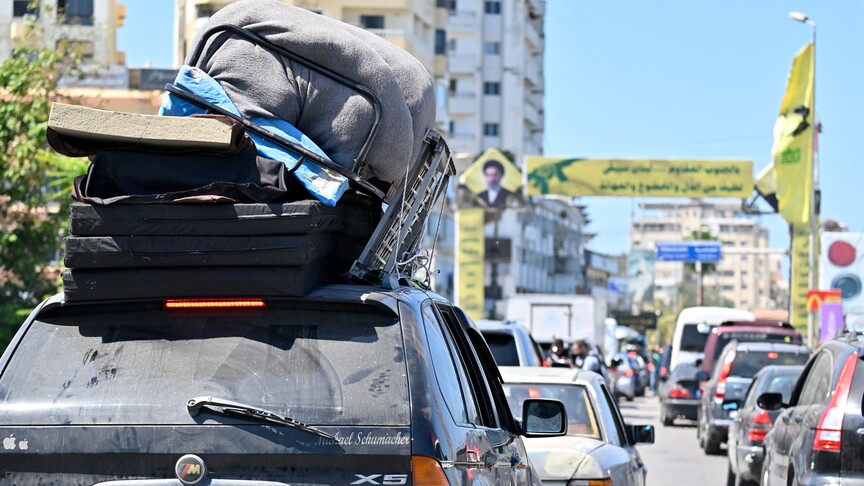
Nearly 50,000 people have returned to their homes in Lebanon's Nabatieh and South governorates, according to recent reports. This movement marks a significant return for displaced individuals in southern Lebanon, despite persistent security concerns in the region. The return of these nearly 50,000 individuals offers a glimpse of hope for stability in areas heavily impacted by recent hostilities. However, the broader context of displacement remains a critical issue for the country.
Escalating Cross-Border Fire
The UN Interim Force in Lebanon (UNIFIL) observed 143 trajectories of projectiles on Thursday, with 19 attributed to Israeli forces. This level of activity shows the volatile nature of the border region. This follows a significantly higher number of incidents recorded on Wednesday, when UNIFIL reported 364 trajectories. Of these, a substantial 330 projectiles were attributed to Israeli forces, while the Hezbollah group was responsible for 34 projectiles. UNIFIL also documented 32 violations of Lebanese airspace on Wednesday, indicating continued aerial activity over the border region. These violations highlight the complex security environment peacekeepers are operating within. The frequent exchange of fire and airspace incursions contribute to the ongoing instability and pose a threat to civilian populations in the area.
UNIFIL Encounters and Activity
More than 106,000 people remain in collective sites across the country, indicating continued displacement within Lebanon. This figure points to the substantial portion of the population still unable to return to their homes due to the prevailing conditions. Peacekeepers from the UN Interim Force in Lebanon observed "extensive" ground activity by the Israeli military throughout the mission's area of operations. This extensive military presence on the ground further complicates the security landscape and can heighten tensions. On Wednesday, a UNIFIL convoy experienced obstruction by two Israeli tanks north of Tyre. During this concerning incident, one of the Israeli tanks aimed its weapon at a UNIFIL vehicle, an act that raises serious questions about the safety and freedom of movement for international peacekeepers. Earlier figures had stated that over 1 million people in Lebanon had been displaced by Israeli attacks, noting the scale of previous movements and the immense challenge of facilitating widespread returns.
Obstacles to Full Return
Humanitarian partners have warned that persistent insecurity, extensive destruction, and restricted access to essential services are hindering the return of many displaced individuals to their homes. These factors contribute significantly to the ongoing displacement crisis in southern Lebanon. The widespread destruction of infrastructure and homes means that even if security improves, many areas are not immediately habitable. Limited access to basic services such as water, electricity, and healthcare further deters families from returning. The continued presence of these obstacles means that a complete return for all displaced populations remains challenging, and sustained efforts are needed to address these critical issues. On Thursday, the UN Interim Force in Lebanon (UNIFIL) reported no violations of Lebanese airspace within its area of operations, a change from previous days that saw multiple such incidents. This specific reporting from UNIFIL indicates a temporary cessation of aerial activity in the mission's zone on that particular day, though other ground-level security concerns persist, particularly regarding ground movements and projectile trajectories.
Broader Regional Context
The United States and Iran electronically signed a deal aimed at halting military operations across all fronts in the Middle East conflict, a pact that includes efforts to de-escalate hostilities in Lebanon. This agreement seeks to reduce broader regional tensions, which have a direct impact on the security situation in southern Lebanon. The diplomatic efforts to de-escalate regional conflicts are seen as key for fostering a more stable environment that could eventually allow for the safe and voluntary return of all displaced persons. The success of this deal in translating into tangible peace on the ground remains to be seen, but it represents a significant diplomatic development amidst ongoing regional strife.