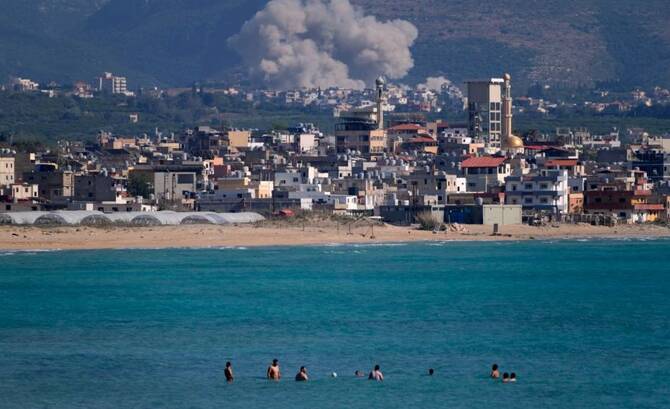
Lebanon is seeking direct talks with the United States to de-escalate tensions and avert a full-scale invasion by Israel, following months of cross-border hostilities. Yechiel Leiter, the Israeli ambassador to the US, and Nada Hamadeh, the Lebanese ambassador to the US, met at the State Department in Washington on Tuesday, June 2, 2026, for US-hosted discussions. This key meeting occurred amidst an escalating conflict that has seen significant casualties and displacement in Lebanon, prompting urgent diplomatic efforts.
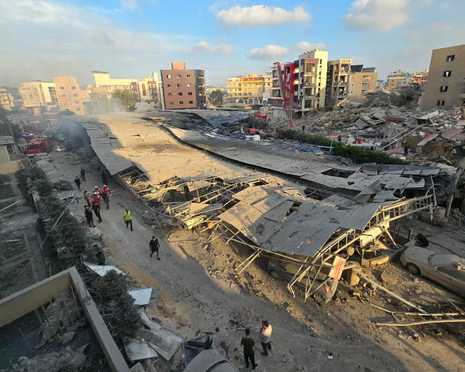
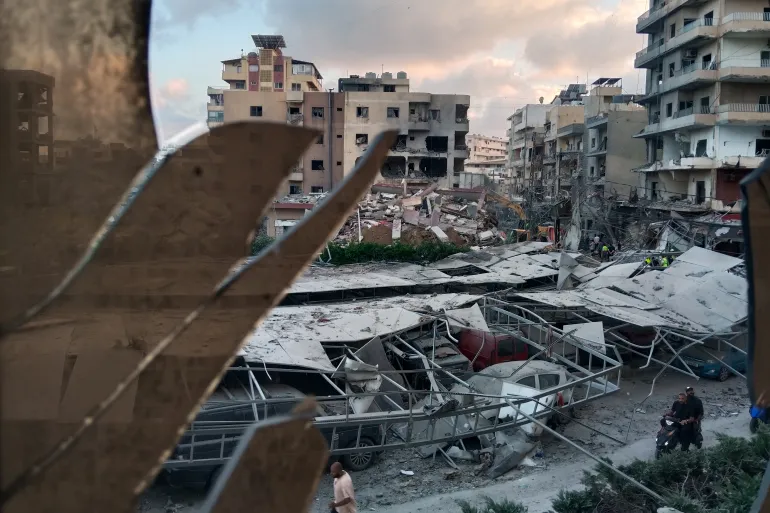
A three-month conflict in southern Lebanon involving Hezbollah has resulted in more than 3,400 deaths and displaced over 1.2 million people. Lebanon’s Ministry of Public Health reported that Israel has killed 3,468 people in Lebanon since March 2, showing the severity of the humanitarian toll. The widespread violence has led to the displacement of over 1.2 million people within Lebanon alone, creating an acute humanitarian crisis. Israeli Prime Minister Benjamin Netanyahu stated on Monday that his country’s military would continue its attacks on Lebanon, announcing that strikes on Beirut’s southern suburbs would resume. The United States has indicated its backing for plans to strike Beirut’s southern suburbs if Hezbollah targets northern Israel. This recent escalation follows an attack by Israel and the US on Iran on February 28, which resulted in the death of Ayatollah Ali Khamenei. In response to this significant event, Hezbollah fired six rockets towards Israel on March 2, further intensifying the regional tensions.
Roots of the Conflict
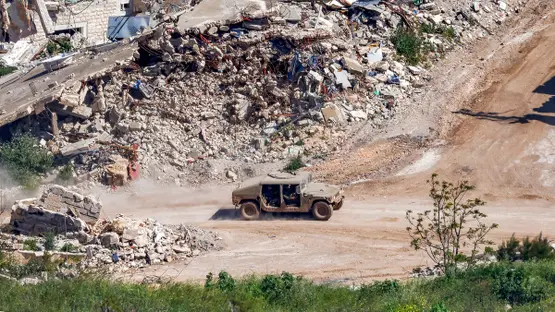
Israel’s invasion of Lebanon has extended deeper into Lebanese territory than at any point since the year 2000, signaling a significant escalation in the long-standing conflict. This ongoing conflict has resulted in the displacement of more than 1.2 million people within Lebanon, noting the severe impact on the civilian population. Israeli forces have crossed the Litani River, advancing towards the Zahrani River, indicating a substantial ground incursion.
Despite a ceasefire established in 2024, Israel has continued its attacks on Lebanon, undermining efforts to maintain peace. Hezbollah responded to these actions once in December 2024, demonstrating its continued engagement in the hostilities. German Chancellor Friedrich Merz called on Israel to exercise restraint in its campaign in southern Lebanon, urging a de-escalation of military operations. The Israel Defense Forces (IDF) issued a warning for residents in Nabatieh to evacuate their homes and move north in anticipation of impending strikes, causing further disruption and fear among civilians.
The human cost of the conflict was further illustrated when a hostile Israeli drone injured two Lebanese soldiers on a road situated between Habbouch and Deir ez-Zahrani. Lebanon’s official National News Agency (NNA) reported at least eight deaths resulting from Israeli bombings in southern Lebanon, providing a snapshot of the daily casualties.
Diplomatic Maneuvers and Sticking Points
The current negotiations represent a two-day round of discussions between the involved parties, signifying a concerted diplomatic effort. These talks commenced promptly at 9am local time (13:00 GMT), indicating the urgency of the situation. An initial meeting between Israel and Lebanon’s ambassadors to the United States had previously taken place in April, setting a precedent for direct diplomatic engagement between the two nations. This was followed by a second round in May, which included a larger delegation from both nations, suggesting an expansion of the diplomatic channels. Adding to these diplomatic efforts, Lebanese and Israeli military representatives also met on Friday, indicating communication at multiple levels of government and defense.
According to reports, Hezbollah is not involved in these particular meetings, which focuses the discussions on state-level actors. Israel, however, claimed that both sides agreed on the need to disarm Hezbollah as a key outcome of the discussions, presenting a significant sticking point for any potential resolution. Israeli Prime Minister Benjamin Netanyahu stated that his country’s military would continue attacking Lebanon, indicating a persistent military stance despite ongoing diplomatic overtures. This declaration by Prime Minister Netanyahu shows the challenges faced by negotiators attempting to find a peaceful solution.
US President Donald Trump intervened to stop Israel’s attacks on Lebanon, demonstrating a high-level commitment from the United States to de-escalate the conflict. Trump announced a ceasefire between Israel and Lebanon on April 16, aiming to bring an immediate halt to hostilities. Following his intervention, Trump stated, "There will be no troops going to Beirut, and any troops that are on their way have already been turned back," emphasizing a commitment to preventing further military engagement and ensuring the ceasefire holds. He also mentioned a key figure involved in managing sensitive matters, stating, "William has deep experience managing the most sensitive matters in America," referring to Bill Pulte, whom he appointed as acting director of national intelligence.
Alongside these direct talks, Saudi Arabia is working to align Lebanon’s leadership, specifically naming Joseph Aoun, Nawaf Salam, and Nabih Berri, in an effort to foster national unity and a unified diplomatic front. This regional initiative aims to strengthen Lebanon's internal coherence, which is seen as vital for effective negotiation and stability. Saudi Arabia and Qatar have also engaged the Trump administration to prevent further escalation of the conflict in Lebanon, noting broader regional diplomatic efforts to stabilize the situation and prevent a wider war. These interventions show a concerted international push to manage the ongoing tensions and avert a broader regional conflict, with multiple nations recognizing the potential for widespread destabilization.
Regional and International Dynamics
The fourth round of negotiations between Israeli and Lebanese officials has commenced in Washington, reflecting sustained diplomatic engagement. This diplomatic activity unfolds as Lebanon’s health ministry reported that Israeli strikes a day earlier near a hospital in Tyre killed four people and wounded 127 others, including 39 staff, showing the ongoing human cost of the conflict even amidst peace talks. Meanwhile, US Secretary of State Marco Rubio indicated that Iran has agreed to negotiate aspects of its nuclear program that it previously refused to discuss, opening a new avenue for diplomatic progress on a separate, but related, regional issue. Rubio also stated that Iran’s Supreme Leader Mojtaba Khamenei is alive and "increasingly engaging," expressing optimism about potential nuclear talks with Iran. "“I would imagine, given what’s happened to multiple leaders in that system, being very public is probably not something that’s recommended for them internally,” he said. “But that said, I think there are indications out there that he is increasingly engaging at some level, although all of his communications have been in writing and through intermediaries.”" This assessment from Secretary Rubio suggests a potential shift in Iran's approach to international engagement.
Rubio further noted that Iran will not receive sanctions relief for reopening the Strait of Hormuz, emphasizing that any relief must be "conditions-based." He clarified that Iran must very clearly announce the Strait of Hormuz is open as the first condition for any talks and must commit to specific negotiations on the disposition of highly-enriched uranium. This firm stance from the US outlines clear expectations for Iran's compliance and commitment to transparency. "“What they tried to do is they were going to try to build a conventional shield and hide behind that conventional shield,” he said, explaining why US president Donald Trump felt it was imperative to launch the war." This statement provides insight into the strategic thinking behind US actions in the region. Hezbollah, for its part, stated it would not accept a "partial ceasefire" with Israel, indicating its demand for a full and lasting cessation of hostilities.
Donald Trump, previously intervening to halt Israeli attacks on Lebanon, appointed Bill Pulte, the head of the Federal Housing Finance Agency (FHFA), as acting director of national intelligence. This appointment notes the administration's focus on national security and intelligence matters amidst the escalating regional tensions. Trump had announced a ceasefire between Israel and Lebanon on April 16, stating at the time, "There will be no troops going to Beirut, and any troops that are on their way have already been turned back." He added that "“William has deep experience managing the most sensitive matters in America,” Trump said on his Truth Social Platform," reiterating his confidence in Pulte's capabilities for handling delicate situations. The ongoing diplomatic efforts, coupled with the persistent military actions and regional complexities, show the challenging path towards achieving lasting peace and stability in Lebanon and the broader Middle East.