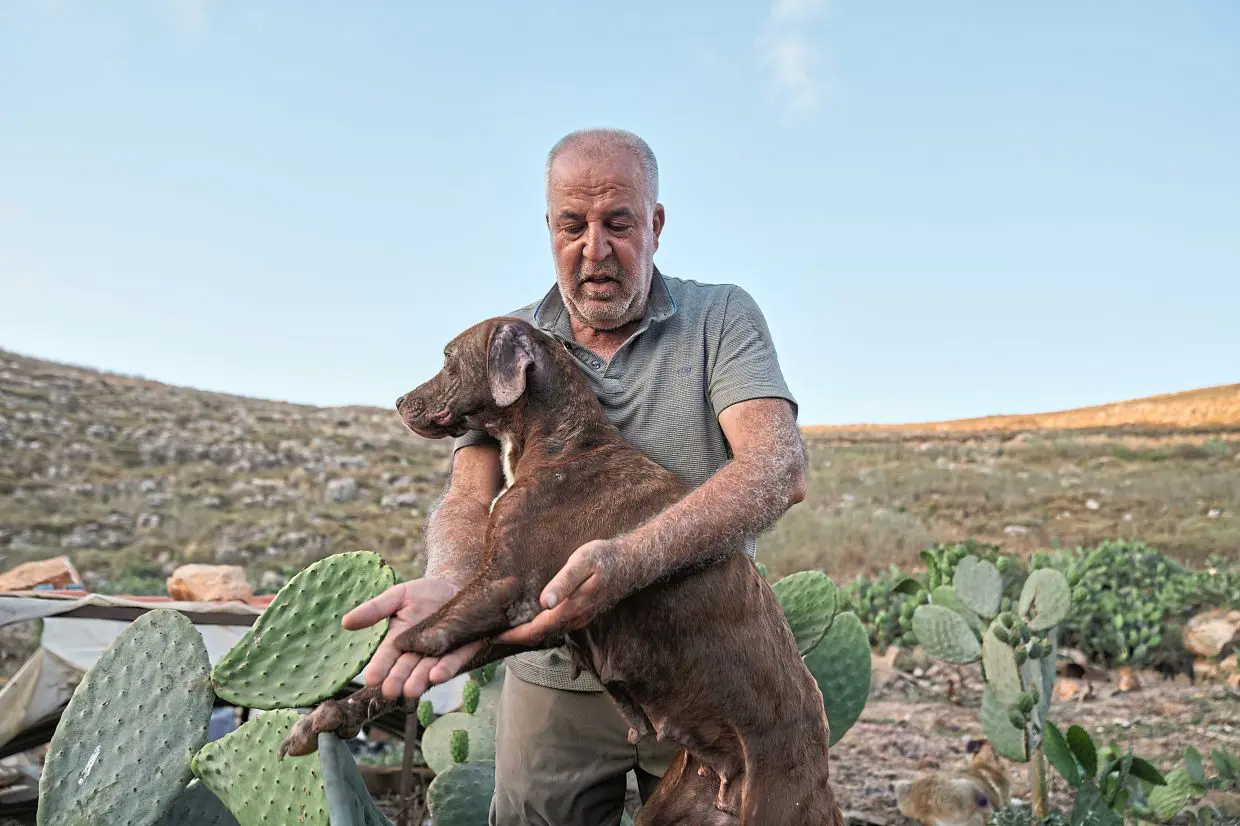
Hussein Hamza, an animal rescuer in Kfaroue, southern Lebanon, is caring for pets and livestock abandoned due to the ongoing Israel-Hezbollah war. Many residents fled their homes, leaving animals behind. Hamza stated, "During the war, people contacted us and told us they had left their chickens behind because everyone had to evacuate suddenly." He added that people requested intervention "because if they were left roaming free, foxes might eat them, and otherwise they would die from hunger and thirst." Hamza noted, "We managed to rescue only the chickens we could reach – not all of them. There were areas where the fighting was too intense and we couldn’t get there." He emphasized, "We shouldn’t neglect these responsibilities because of wars or because of the poverty we face." His efforts highlight the often-overlooked animal welfare crisis that accompanies human displacement during conflict.
A Rescuer's Lifelong Mission
Hussein Hamza has cared for animals since 2006, dedicating years to their welfare. He stated, "When I first started, I paid for everything myself. I had an agricultural business, and I kept spending from my own money until I went bankrupt." Hamza now spends between US$400 and US$500 daily on animal care, staff wages, fuel, and repairs. This amount is equivalent to RM2,037 when considering the upper end of the daily expenditure. His unwavering commitment despite personal financial struggles shows the deep sense of responsibility he feels towards vulnerable animals. He emphasized that responsibilities towards animals should not be neglected due to conflict or economic hardship. Hamza noted, "We shouldn’t neglect these responsibilities because of wars or because of the poverty we face." These daily costs are a constant challenge, but Hamza continues to operate, driven by the urgent needs of the abandoned animals.
The War's Human and Animal Toll
The war in Lebanon commenced on March 2, when Hezbollah launched missiles into Israel. The missile launches followed attacks on Iran by the United States and Israel. This escalation has prompted many residents of southern Lebanon to evacuate their homes, leaving behind pets and livestock. Animal rescuer Hussein Hamza, based in Kfaroue, has been working to retrieve abandoned animals amidst the ongoing conflict. He noted difficulties in accessing certain areas due to intense fighting, which often leaves animals stranded without food or water. The humanitarian and animal welfare challenges in the region have been exacerbated by the hostilities, forcing many to abandon their livelihoods and animals as they seek safety. The suddenness of evacuations often means owners have no time to make arrangements for their pets and livestock, leading to a surge in abandoned animals in need of care.
Stories of Rescue and Resilience
Hundreds of thousands of residents fled southern Lebanon due to the ongoing conflict, often unable to take their animals with them. Amidst these evacuations, some individuals have stepped forward to provide care. Abbas Shoeib, for instance, adopted a pit bull mix whose previous owners died in an airstrike in Nabatiyeh. This act of compassion illustrates the profound bond between humans and animals, even in the direst circumstances. Shoeib emphasized the reciprocal nature of the bond between humans and animals. "A dog needs someone to take care of him, and when you take care of him, he will take care of you," Shoeib stated. The displacement of residents has created a significant challenge for animal welfare organizations and individual rescuers operating in the affected areas, who are often overwhelmed by the sheer volume of animals requiring assistance.
Commitment Amidst Hardship
Hussein Hamza's animal shelter, Mashala, has operated from its current location for seven years, providing a sanctuary for animals in distress. The facility provides care for abandoned animals amidst the ongoing conflict in southern Lebanon. Hamza, who manages the shelter, faces significant financial challenges to maintain operations. The daily cost to care for the animals, pay staff wages, and cover fuel and repair expenses is between US$400 and US$500. A sum of US$400 is equivalent to RM1,630, according to current conversions, noting the substantial financial burden. These expenses persist as Hamza continues his rescue efforts, often navigating areas affected by intense fighting to reach animals in need. Despite the economic pressures and the dangers posed by the conflict, Hamza remains dedicated to his mission, embodying a steadfast commitment to animal welfare in a region grappling with war.