Israel currently occupies parts of southern Lebanon, establishing a buffer zone it designates as the "Yellow Line." This occupation occurs as Israel's military operations appear to focus on specific objectives within the region. According to reports, Israel's primary goal is to maintain control over this buffer zone. The strategy also includes efforts to prevent Hezbollah from reinforcing its existing positions in southern Lebanon, particularly within the sensitive border areas. Israel aims to weaken Hezbollah's strategic infrastructure located north of the Litani River, suggesting a broader campaign to degrade the group's capabilities and influence throughout the area. This multifaceted approach shows Israel's determination to secure its northern border and neutralize perceived threats emanating from Lebanese territory.
Devastation and Displacement
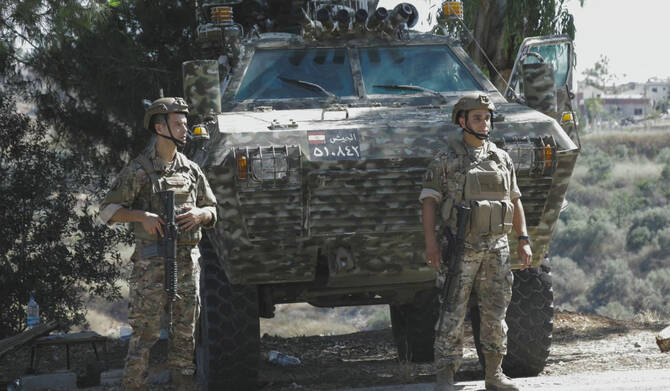
Israel occupied southern Lebanon from 1982 to 2000, during which it maintained control with thousands of soldiers and a network of reinforced military outposts. This period saw Israeli forces establishing and holding positions across the southern part of the country, significantly impacting the local population and landscape. The protracted military presence, lasting nearly two decades, shaped the geopolitical realities of the region and left a lasting legacy of conflict and instability. During this time, the Israeli Defense Forces (IDF) operated extensively within Lebanese territory, engaging with various armed groups and establishing a security zone to protect its northern settlements.
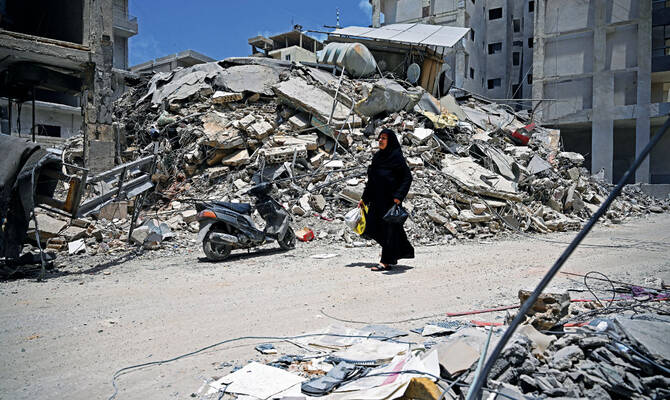
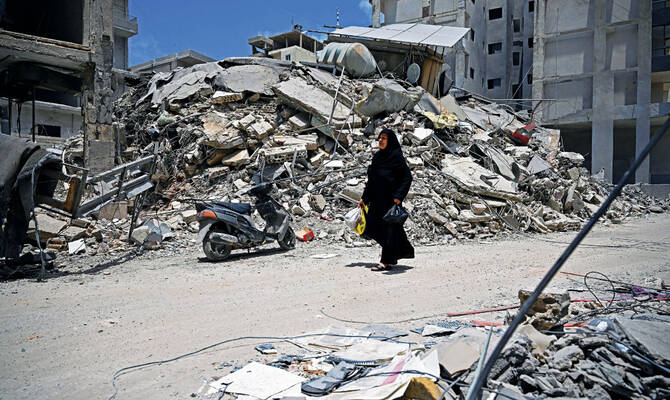
The ongoing conflict has resulted in widespread devastation and mass displacement. Entire border towns and villages in southern Lebanon have been razed by military actions, leaving behind scenes of widespread destruction. Homes, businesses, and essential public infrastructure have been severely damaged or completely destroyed. Hundreds of thousands of locals from these areas remain displaced, unable to return to their homes and communities due to the persistent threat of hostilities and the extensive damage that has rendered many areas uninhabitable. The destruction of residential areas and critical infrastructure, such as roads, bridges, and utility networks, has left many without shelter or access to essential services, exacerbating the humanitarian crisis. The impact of these actions extends beyond physical damage, profoundly affecting the social fabric and economic stability of the region as displaced populations seek refuge elsewhere, often in already strained urban centers or temporary camps. The psychological toll on communities that have endured repeated cycles of conflict and displacement is immense, creating long-term challenges for recovery and reconstruction.
Israel's Evolving Strategy
Israel's current military strategy in Southern Lebanon appears to have shifted from a permanent ground presence to one heavily reliant on advanced technology. This approach prioritizes surveillance drones, artificial intelligence, and precision intelligence to inform rapid strike capabilities. Rather than maintaining a large, static military footprint with thousands of soldiers and numerous outposts, the focus is now on dynamic, targeted operations that leverage technological superiority. This strategic pivot allows Israel to project power and respond to threats without the continuous resource drain and risks associated with a large-scale ground occupation. The emphasis is on achieving military objectives through a combination of remote sensing, data analysis, and swift, decisive actions.
The Israeli military's technological superiority is central to this evolving strategy. It incorporates AI-assisted intelligence gathering, which processes vast amounts of data from various sources, including aerial reconnaissance and electronic intercepts, to identify potential threats and targets more efficiently. This AI capability allows for rapid analysis of complex information, enabling the military to discern patterns and predict movements that might be missed by human analysts alone. Surveillance drones are deployed extensively to monitor activity across the region, providing real-time visual and electronic intelligence to ground forces and command centers. These unmanned aerial vehicles offer persistent oversight, capable of loitering over target areas for extended periods, gathering key information without risking human pilots. These advanced capabilities are then integrated to facilitate precision strikes, aiming to neutralize specific targets with minimal collateral damage to surrounding areas. The use of guided munitions and sophisticated targeting systems ensures that strikes are accurate and effective. The emphasis on these technological assets allows Israel to project power and respond to perceived threats without the need for a continuous, large-scale troop deployment on the ground in Southern Lebanon. This strategic pivot reflects an adaptation to contemporary warfare, where information advantage, rapid response, and targeted force application are key components for maintaining security and achieving operational objectives in a complex environment. This strategy is also designed to minimize direct exposure of Israeli forces to hostile engagements, thereby reducing casualties and political costs associated with prolonged ground operations.
Hezbollah's Decentralized Response
Hezbollah is favoring decentralized, clandestine cells that utilize FPV (First Person View) drones and anti-tank missiles, marking a return to guerrilla warfare tactics. This shift occurs as the group has experienced unprecedented losses to its leadership, weapons stockpiles, and militant infrastructure over the past two years. These significant setbacks have compelled Hezbollah to re-evaluate its operational methods and adapt its strategy to counter Israel's technological dominance. The assassination of much of Hezbollah's senior command structure and the destruction of significant parts of its missile arsenal have altered the group’s capabilities, according to Nasser Khdour, Middle East assistant research manager at the Armed Conflict Location & Event Data Project (ACLED). These losses have forced the group to become more agile, less centralized, and more reliant on unconventional methods to sustain its resistance.
Hezbollah's decentralized structure, increased operational secrecy, and reliance on smaller combat cells suggest an adjustment to Israel's intelligence dominance. By breaking down larger units into smaller, more autonomous cells, Hezbollah aims to make itself a more elusive target for Israeli surveillance and intelligence gathering. This approach significantly complicates Israel's ability to track, target, and neutralize the group's operatives and assets. Khdour stated that Israel is not only responding to individual Hezbollah attacks now, but "it appears to be seeking a broader campaign aimed at maintaining the buffer zone, preventing Hezbollah from reinforcing its positions in southern Lebanon, and weakening Hezbollah's strategic infrastructure north of the Litani." This indicates a full Israeli strategy that goes beyond mere retaliation, aiming for a sustained degradation of Hezbollah's capabilities. He added, "I don't think this reduction in operations is only related to Hezbollah's reduced capability. Hezbollah understood that resuming the fighting would need a new strategy." This new strategy involves leveraging readily available, low-cost technologies like FPV drones, which can be operated by a single individual to inflict significant damage, thus presenting a cost-effective and adaptable challenge to a technologically superior adversary.
Between March 2 and June 20, ACLED recorded more than 800 remote attacks against Israeli forces inside southern Lebanon. This substantial number of attacks notes the persistent nature of the conflict, even as Hezbollah adapts its tactics. Nearly 47 percent of these remote attacks involved drones, primarily FPV drones, demonstrating their increasing role in Hezbollah's arsenal. These drones, often commercially available and modified for military use, offer a surprisingly effective means of reconnaissance and attack. Meanwhile, approximately 53 percent of the attacks involved rockets, artillery, and guided anti-tank missiles, indicating that traditional weaponry still plays a significant role in the group's operations. Khdour noted that "one individual can fire an FPV drone and inflict significant costs on Israeli forces," emphasizing the disruptive potential of these seemingly simple technologies in asymmetric warfare. The ability of a single operative to launch a drone attack represents a significant challenge to Israel's advanced defensive systems and conventional military superiority.
During the renewed fighting since March, ACLED data indicates Hezbollah carried out more than 1,100 attacks against Israel. This high volume of attacks shows the intensity of the conflict and Hezbollah's continued capacity to engage Israeli forces despite its reported losses. Rockets accounted for around 70 percent of Hezbollah's attacks, reflecting their continued reliance on projectile weapons to target Israeli territory. Drones, however, made up roughly 30 percent of the attacks, further illustrating the growing importance of this technology in the group's operational repertoire. Most Hezbollah attacks targeted northern Israeli communities, aiming to disrupt civilian life and exert pressure on the Israeli government. Khdour explained, "This was one of the reasons Israel expanded its operations during the final weeks before the latest ceasefire, including in areas north of the Litani River, such as the Beaufort area and Ali Taher Ridge, which overlook areas in the buffer zone and northern Israeli towns in the Galilee Panhandle." This expansion suggests Israel's strategic objective to push Hezbollah further away from its border and disrupt its ability to launch attacks. He also said, "Controlling areas and freedom of movement for Israeli forces doesn't mean a lot for Hezbollah now," indicating that Hezbollah's new decentralized strategy makes it less reliant on holding fixed positions or territories. Khdour acknowledged that "technology is now a central part of Israel's military strategy everywhere – in Gaza, Lebanon and Syria. But this capability has its limits. There is still room for operatives who want to fight and resist to continue," concluding, "We can't say just because Israel has the technology that means they will eliminate the group." This assessment notes the enduring challenge of counterinsurgency and the limitations of even the most advanced military technology against a determined and adaptable guerrilla force.
Shifting Dynamics and Future Outlook
Israel appears to be shifting to a "dynamic forward defence" strategy, according to reports. This proactive approach involves engaging threats further from its borders, often preemptively, rather than waiting for incursions or attacks to occur. This comes as dozens of towns and villages in the buffer zone area have either been almost completely flattened or heavily destroyed, showing the devastating impact of the ongoing hostilities on civilian infrastructure and communities. The extensive damage in these areas further complicates the prospect of civilian return and reconstruction, prolonging the humanitarian crisis.
Violence in Lebanon has declined since the trilateral framework agreement was signed on June 26. This agreement, though its full details and long-term implications are still unfolding, appears to have had an immediate pacifying effect on the conflict. Israeli shelling, airstrikes, and drone attacks inside southern Lebanon fell sharply after June 21, indicating a de-escalation of military operations. Attacks dropped from an average of nearly 60 per day between June 1 and June 20 to around seven per day between June 21 and July 6, a significant reduction that points to a deliberate shift in operational tempo. During the period of June 21 to July 6, shelling and tank fire accounted for a greater share of Israeli operations than air and drone strikes, suggesting a change in the type of force being deployed, possibly indicating a more localized or ground-oriented response in certain areas, even as overall activity decreased. This shift in operational methods, even amidst reduced activity, provides insight into Israel's tactical adjustments in the post-agreement environment. The future stability of the region will depend heavily on the adherence to this agreement and the willingness of all parties to de-escalate and seek diplomatic solutions.