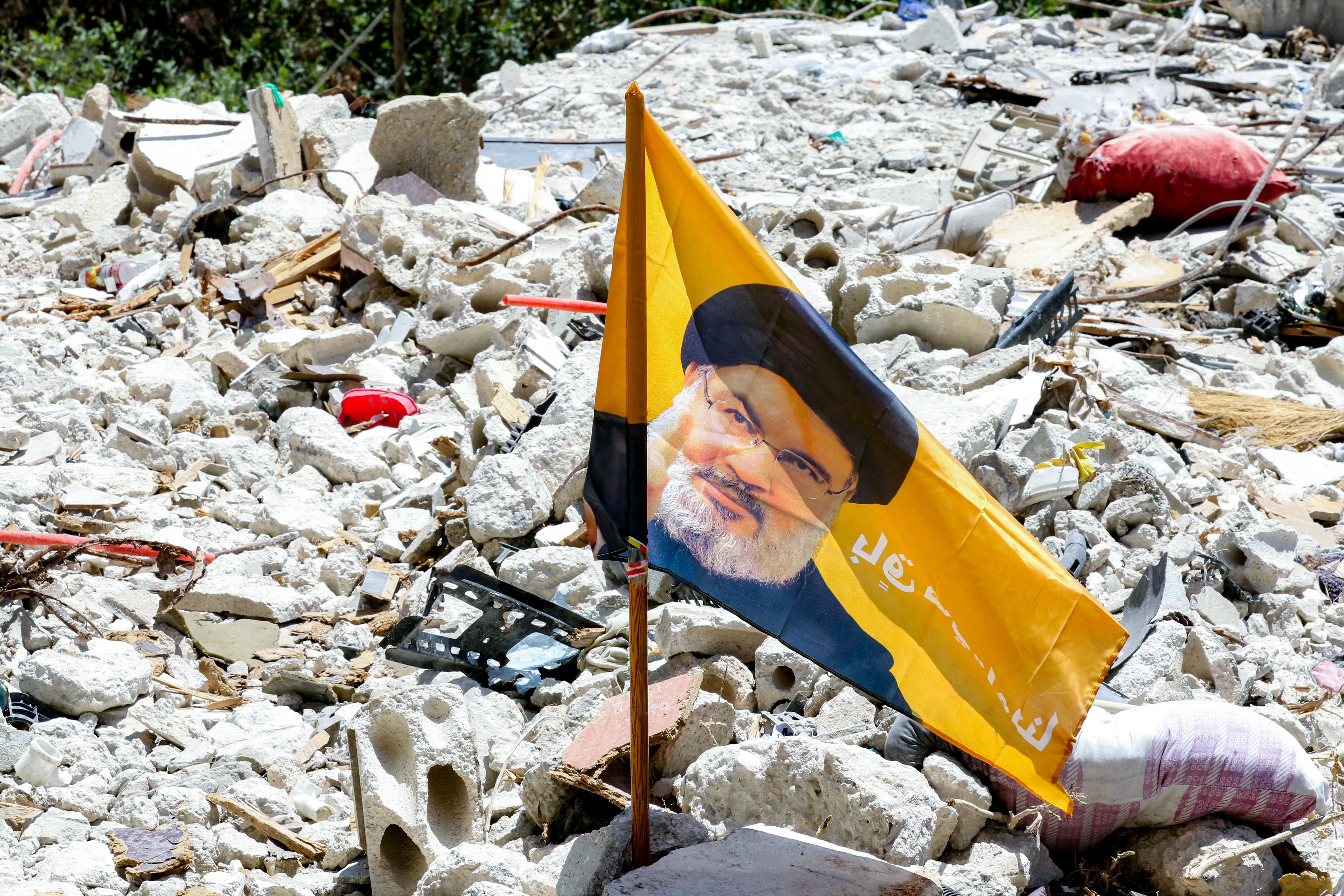
Israeli forces conducted airstrikes and a drone attack across multiple locations in southern Lebanon, according to reports from Lebanese state media. The military actions targeted several areas, escalating tensions in the region. Among the incidents, an Israeli drone strike specifically hit the town of Ansariyeh, situated within the Zahrani region. These operations by Israeli forces, which included both airstrikes and a drone attack, were reported by Lebanese state media as having occurred across various points in southern Lebanon. The targeting of these multiple locations shows a significant military engagement. The strike on Ansariyeh, a town located in the Zahrani region, was a distinct event reported as an Israeli drone attack. This series of military actions has led to a palpable increase in regional tensions.
Escalation Amidst Truce
Lebanon’s National News Agency reported that Israeli warplanes targeted the Nabatieh Al-Fawqa area and the eastern outskirts of Kfar Tebnit. Lebanese officials stated Israeli attacks in the south have continued even after the ceasefire announcement. These actions contribute to renewed tensions in the region. The latest escalation follows months of fighting that began after Hezbollah launched attacks against Israel during the wider regional war. This period of conflict has seen ongoing exchanges, with implications for regional stability. The reports from Lebanon’s National News Agency detailed specific locations that were hit, including the Nabatieh Al-Fawqa area and the eastern outskirts of Kfar Tebnit, indicating a broad scope of operations. Despite a declared ceasefire, Lebanese officials have consistently reported that Israeli attacks in the southern parts of the country have persisted, directly contributing to the heightened state of tension. This continuation of hostilities is particularly notable given the existing truce. The current escalation is not an isolated event but rather a continuation of months of intense fighting that commenced following Hezbollah's initial attacks against Israel, which were part of a broader regional conflict. The sustained nature of these exchanges carries significant implications for the stability of the entire region, signaling a potential for further widespread unrest.
Israeli Justification and Lebanese Concerns
The Israeli military stated that its strikes followed an incident in which a Hezbollah drone exploded near Israeli forces in southern Lebanon, injuring several soldiers. The military later reported another drone explosion that caused additional injuries to its personnel. The Israeli military provided a specific justification for its actions, citing an incident where a Hezbollah drone detonated in close proximity to Israeli forces operating in southern Lebanon, resulting in injuries to multiple soldiers. This initial drone incident was presented as the catalyst for the subsequent Israeli strikes. Following this, the Israeli military issued a further report detailing a second drone explosion, which also inflicted additional injuries upon its personnel, indicating a pattern of drone-related threats that prompted their response.
Since the ceasefire agreement was declared, at least five people have reportedly been killed in strikes. The Lebanese army has warned civilians to delay their return to towns and villages, citing concerns over possible further Israeli attacks and security risks in the areas. The human cost of these continued hostilities is evident, with reports indicating that a minimum of five individuals have lost their lives in strikes since the official declaration of the ceasefire agreement. In response to the ongoing security situation, the Lebanese army has issued explicit warnings to civilians, advising them to postpone their return to their towns and villages. This warning is predicated on serious concerns regarding the potential for further Israeli attacks and the inherent security risks that persist in these affected areas, noting the precarious environment faced by the civilian population.
Broader Regional Context
The recent attacks unfolded despite a US-Iran agreement announced earlier in the week, which aimed to conclude the wider regional conflict and included commitments to reduce military operations on multiple fronts, including Lebanon. This agreement, unveiled just days before the latest strikes, had explicitly sought to de-escalate military activities across various fronts, with Lebanon being a key focus. The occurrence of these attacks, therefore, directly contravenes the spirit and stated objectives of this international accord.
Regarding a lasting peace, Iranian Foreign Minister Abbas Araghchi stated that "any lasting resolution would require the withdrawal of Israeli forces from territories occupied during the conflict." This contrasted with remarks from Israeli Prime Minister Benjamin Netanyahu, who indicated Israeli forces would remain in Lebanon "for as long as necessary." The statements from key political figures show the deep divisions concerning the path to a lasting resolution. Iranian Foreign Minister Abbas Araghchi articulated a clear precondition for enduring peace, emphasizing that it would necessitate the complete withdrawal of Israeli forces from all territories occupied during the conflict. This position sets a fundamental demand from the Iranian perspective. Conversely, Israeli Prime Minister Benjamin Netanyahu conveyed a starkly different stance, asserting that Israeli forces would maintain their presence in Lebanon "for as long as necessary," signaling a commitment to an open-ended military presence. These contrasting declarations from high-ranking officials highlight the significant diplomatic impasse and the divergent views on what constitutes a viable and lasting peace settlement in the region. Meanwhile, Lebanon’s Health Ministry reported that the death toll from Israeli attacks since the conflict began had reached 3,826. The grim toll reported by Lebanon’s Health Ministry provides a stark numerical representation of the conflict's devastating impact, confirming that 3,826 lives have been lost due to Israeli attacks since the inception of the hostilities. This figure shows the severe humanitarian consequences of the ongoing military actions.