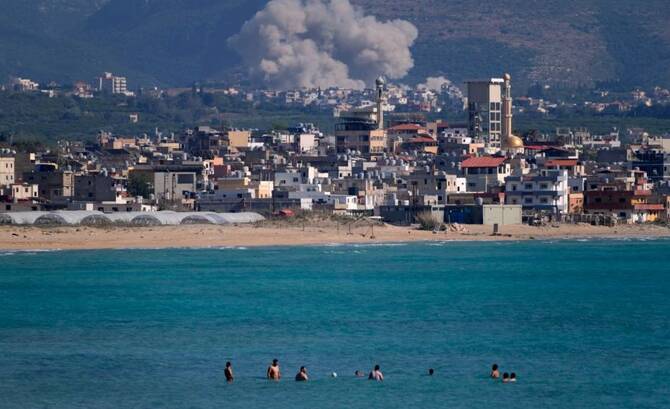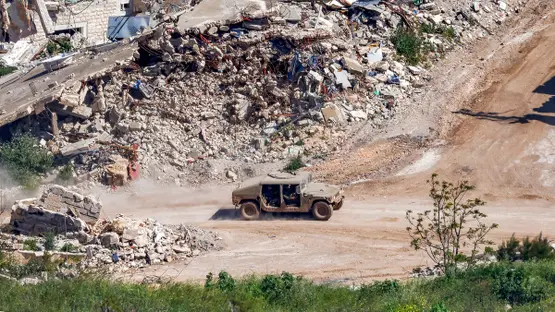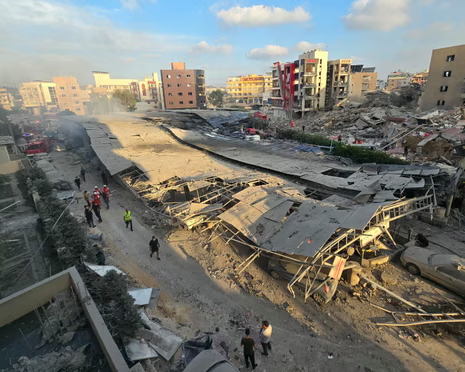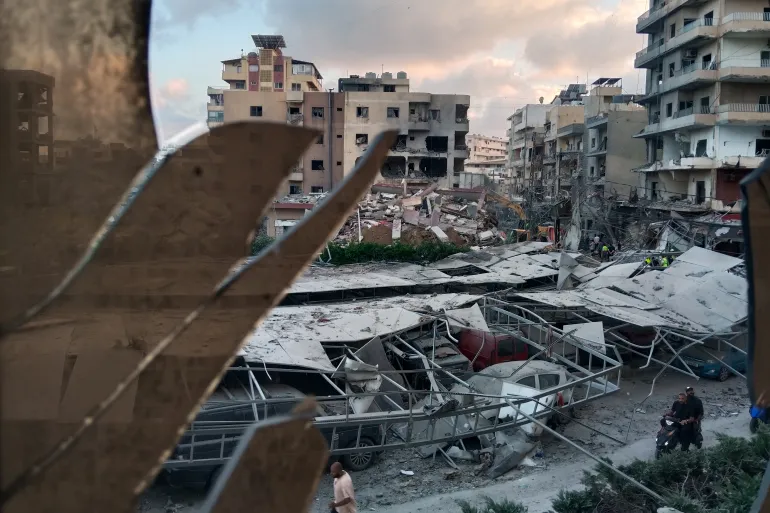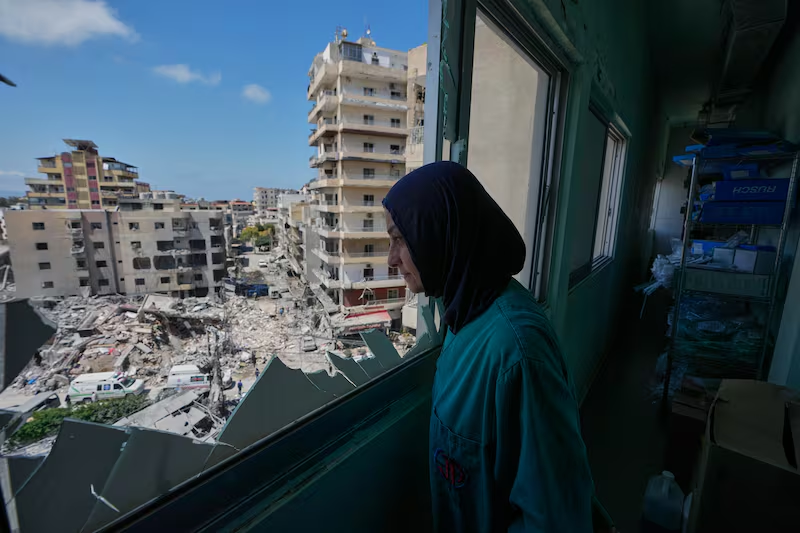
Israeli drone strikes killed 11 people across southern Lebanon on Tuesday, targeting multiple locations including a car carrying dentist James Karam, his son, and daughter between Marjayoun and Nabatiyeh. The attacks followed a Monday incident where an Israeli soldier was killed and three others wounded by an explosive-laden drone in southern Lebanon, according to Israel's military. The strikes occurred one day after U.S. President Donald Trump indicated that Israel and Hezbollah had agreed to de-escalate fighting. The Israeli military stated it was unaware of any strikes in the specific area where James Karam's family was tragically killed, a detail that has added to the complexity and confusion surrounding the incident.
Tuesday's casualties also included two Syrians working at a plant nursery in Jibchit, two individuals in Toul, and one person near Harouf, with three more fatalities reported in two other airstrikes. These incidents show the widespread impact of the recent escalation across various communities in southern Lebanon. On Monday, an Israeli airstrike in Marwaniyeh killed six members of the Abdullah family, identified as parents Hassan and Hanan, and their four children: Ali, Ibrahim, Leen, and Julia. The tragic loss of an entire family, including young children, has drawn significant international attention and condemnation. The Lebanese army also reported that two soldiers sustained light injuries from a drone strike, noting the direct involvement and peril faced by military personnel on the ground.
Escalation Despite De-escalation Hopes
Among those killed in the drone strikes were a man, his son, and his daughter, as the attacks targeted their vehicle between Marjayoun and Nabatiyeh. The Israeli military stated it was unaware of any strikes in the specific area where James Karam's family was tragically killed. This statement from the Israeli military has been met with skepticism by local authorities and residents, who point to the precise nature of the drone attacks. Hezbollah, a group backed by Iran, had launched dozens of projectiles and drones toward Israeli soldiers and cities in recent days, contributing to the heightened tensions. These actions by Hezbollah are a direct response to perceived Israeli aggressions and have been a consistent feature of the ongoing conflict.
However, Hezbollah did not conduct any attacks on Israel following an announcement made by U.S. President Donald Trump, who indicated that Israel and Hezbollah had agreed to de-escalate fighting. This brief lull in activity offered a glimmer of hope for a potential reduction in hostilities, though it proved short-lived. Hezbollah later claimed its fighters fired anti-tank missiles at Israeli troops near Hadatha, signaling a resumption of their military operations. Following these reports, sirens sounded in several areas across northern Israel, indicating potential incoming threats and forcing residents to seek shelter. The sounding of sirens has become a frequent and unsettling occurrence for communities living near the border.
An earlier drone strike on Saturday in southern Lebanon killed Staff Sgt. Michael Tyukin, 21, of Ashkelon. Four other soldiers were wounded in the same incident, further showing the dangers faced by Israeli forces. Staff Sgt. Michael Tyukin had immigrated to Israel from Ukraine in 2020 with his mother and was her only son. His death was a stark reminder of the personal toll of the ongoing conflict, bringing into focus the individual lives affected by the geopolitical strife. The story of his immigration and subsequent service notes the diverse backgrounds of those serving in the Israeli military.
Broader Conflict Toll Mounts
The latest round of fighting between Israel and Hezbollah has resulted in 3,468 fatalities in Lebanon, according to reports. This staggering number reflects the severe humanitarian cost of the prolonged conflict, impacting countless families and communities. In Israel, at least 27 soldiers and one defense contractor have been killed in or near southern Lebanon since the escalation began. These casualties represent a significant loss for the Israeli defense establishment and the nation as a whole. Two civilians have also died in northern Israel during the same period, noting the indiscriminate nature of some of the attacks and the risk posed to non-combatants.
Reports indicated that one of the Israeli soldiers killed was Staff Sgt. Adam Tzarfati, 20, of Rosh Haayin, a commando in the Maglan reconnaissance unit. He died when an explosive-laden drone struck troops in southern Lebanon overnight, the military said Monday. His death brought the number of Israeli soldiers killed in the current round of fighting between Israel and Hezbollah to 26 at that time. This grim statistic shows the continuous danger faced by soldiers operating in the volatile border region. Four civilians were also killed since the escalation began on March 2, further illustrating the broader impact on the civilian population. In addition to the fatalities, seven more soldiers were wounded in the incident where Staff Sgt. Tzarfati was killed, with three of them reported to be severely injured. One of the wounded soldiers was in serious condition, and two others sustained minor injuries, according to reports. The Israeli military had previously reported on Monday that an Israeli soldier was killed and three others were wounded when an explosive-laden drone struck troops in southern Lebanon overnight. This incident was part of a series of cross-border engagements that have intensified the conflict, demonstrating the persistent and deadly nature of the hostilities.
Diplomatic Efforts and Israeli Stance
A new round of talks between Israel and Lebanon commenced on Tuesday in Washington. These discussions represent the first direct engagement between the two countries in over three decades, having originally begun in April. The initiation of these talks followed an Israeli ground incursion into Lebanon, which marked their deepest penetration into the country in 26 years. This significant military action showed the urgency of diplomatic engagement, as both sides recognized the potential for wider conflict. The fact that these talks are occurring after such a long hiatus notes the critical need for a diplomatic solution to the long-standing tensions.
Israeli Defense Minister Israel Katz stated that Israel had previously refrained from attacking Beirut, attributing this restraint to deference to ongoing U.S.-Iran negotiations. Katz also conveyed that Prime Minister Benjamin Netanyahu informed U.S. President Donald Trump that Israel would target Beirut's southern suburbs if Hezbollah continued its attacks against northern Israel. This warning noted Israel's strategic red lines and its readiness to escalate if perceived threats persisted, sending a clear message about the potential consequences of continued aggression. The communication between Netanyahu and Trump indicates a high-level diplomatic engagement concerning the regional security dynamics.
In Lebanon, top political authorities have stressed the necessity for the talks to continue, viewing them as a key avenue for de-escalation and stability. Their insistence on the continuation of dialogue reflects a deep understanding of the severe implications of a full-scale conflict for their nation. However, two semiofficial Iranian news agencies reported that Iran had cut off communication with various mediators involved in ceasefire talks, casting a shadow over the prospects for a broader resolution. This move by Iran complicates diplomatic efforts and suggests a hardening stance from one of the key regional players. The ongoing conflict has significantly impacted Lebanon, where over 1 million displaced people are currently living in difficult conditions, facing severe humanitarian challenges. The continuation of diplomatic efforts is seen as vital for addressing both the immediate security concerns and the long-term humanitarian crisis, which continues to worsen with every escalation.
Hezbollah's Drone Tactics
Hezbollah has utilized small drones, controlled by fiber-optic cables, to evade electronic detection when targeting Israeli forces. These drones are characterized as small, challenging to track, and lethal, according to reports. Their compact size makes them difficult to spot visually, while their unique control mechanism provides a significant tactical advantage. Unlike many other unmanned aerial vehicles, fiber-optic drones are not piloted using GPS signals or radio control. Instead, they feature a thin cable that spools out behind them, directly connecting the drone to an operator's console. This unique control method makes the drones impossible to jam electronically, providing a distinct advantage in evading countermeasures employed by sophisticated defense systems. The deployment of these sophisticated, difficult-to-detect drones represents a significant tactical challenge for Israeli defense systems, contributing to the complexity and lethality of the ongoing conflict. Their ability to bypass conventional electronic warfare defenses has allowed Hezbollah to conduct precise strikes, as evidenced by the recent incidents resulting in Israeli casualties, thereby necessitating new strategies for detection and interception.