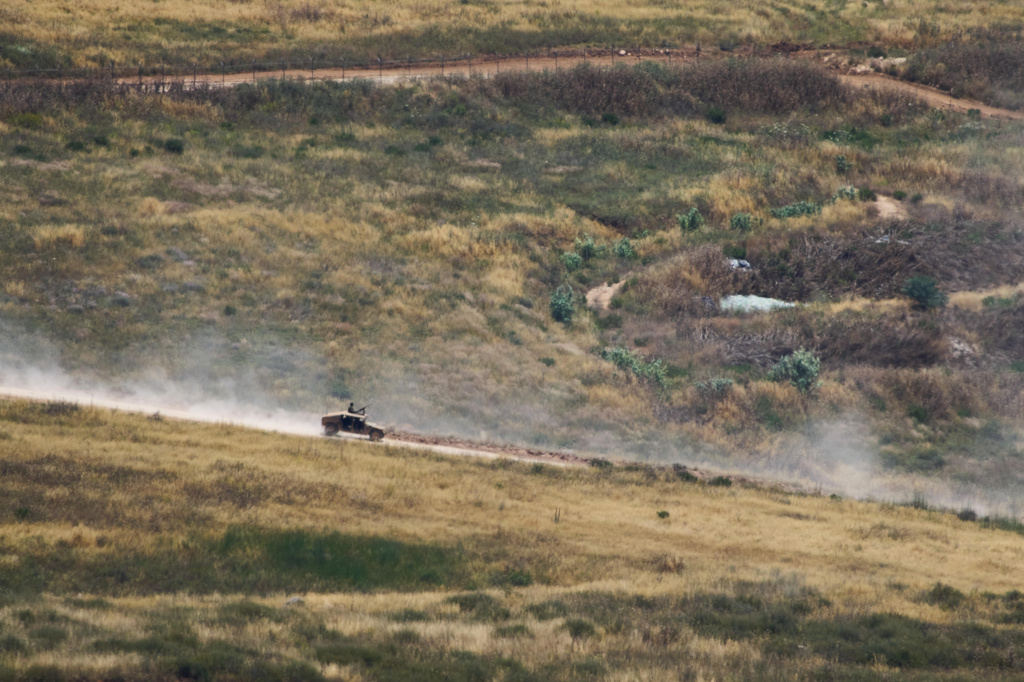
Israeli airstrikes in southern Lebanon on Saturday killed nine people, including three Lebanese military personnel, amidst newly announced ceasefire efforts. The strikes included a vehicle attack that killed a brigadier general, a captain, and another soldier, alongside six individuals in the village of Saksakiyah. The Lebanese army reported that three of the nine individuals killed in these strikes were members of the Lebanese military, specifically those targeted in the vehicle attack. Reports from the Lebanese army and state media confirmed these deaths, providing initial details on the tragic loss of life. The Israeli military acknowledged hitting a vehicle, stating the incident is under review. According to the Israeli military, the vehicle was “moving suspiciously” toward Israeli soldiers near the village of Kfar Tibnit, after receiving “concrete indications” that Hezbollah would direct fire toward Israeli soldiers from the same area. The military clarified that it operates against Hezbollah and not against the Lebanese army. However, the Lebanese army condemned the actions, stating, "The continued, deliberate, and repeated Israeli aggression against Lebanon, its people and its army only strengthens our resolve, faith and determination." The strikes occurred as a new ceasefire deal, brokered by the U.S. Between Israel and Lebanon’s government, was announced in Washington, adding a layer of complexity to the diplomatic efforts.
The incident unfolded against a backdrop of escalating tensions in the region, with the timing of the airstrikes coinciding directly with attempts to de-escalate the conflict. The loss of military personnel in the vehicle strike, specifically a brigadier general, a captain, and another soldier, represents a significant blow to the Lebanese armed forces and has drawn sharp condemnation from Beirut. The fatalities in Saksakiyah further show the civilian impact of the ongoing hostilities, raising concerns about the safety of non-combatants in southern Lebanon. The differing accounts from the Israeli and Lebanese sides highlight the deep-seated mistrust and conflicting narratives surrounding military operations in the border region.
Israeli Military Account
The Israeli military provided its account of the incident, stating that the vehicle was "moving suspiciously" toward Israeli soldiers positioned near the village of Kfar Tibnit. According to the military's statement, this movement occurred after they had received "concrete indications" that Hezbollah intended to direct fire toward Israeli soldiers from the same vicinity. These indications, the military asserted, necessitated a response to preempt potential attacks on its forces. The military's statement clarified its operational focus, asserting that it "operates against Hezbollah and not against the Lebanese army." This distinction was emphasized as part of their response to the escalating situation in southern Lebanon, aiming to frame their actions as defensive and targeted against a specific non-state actor. The Israeli military reiterated its commitment to reviewing the incident, a standard procedure following engagements that result in casualties.
However, the Lebanese army offered a contrasting perspective on the Israeli operations. In a strong condemnation, the Lebanese army stated that "The continued, deliberate, and repeated Israeli aggression against Lebanon, its people and its army only strengthens our resolve, faith and determination." The Lebanese army further indicated that Israel's attacks were perceived as an attempt to undermine ongoing diplomatic efforts. They argued that these actions aim to thwart efforts to reach a solution for stability, a full ceasefire, and the withdrawal of Israeli forces from occupied Lebanese territories. This perspective suggests that, from Beirut's viewpoint, the Israeli actions are not merely defensive but are part of a broader strategy to destabilize the region and hinder peace initiatives. The conflicting accounts highlight the deep divisions and distrust between the two sides regarding the ongoing military engagements, making any diplomatic resolution particularly challenging. The Lebanese government views the presence of Israeli forces in any part of its territory as an illegal occupation, further fueling the contention.
Lebanese Reaction and Sovereignty
Lebanon's President Joseph Aoun condemned the strike as "a flagrant violation to Lebanese sovereignty and international law." President Aoun characterized the incident as an "ongoing escalation that threatens stability and security in the south (of Lebanon), despite the efforts Lebanon is exerting in the Washington negotiations to put an end to the ongoing Israeli attacks without deterrent." He asserted that the Israeli actions constituted a violation of Lebanese sovereignty and international legal principles, calling for international condemnation and intervention. The president's statement showed the Lebanese government's frustration with the persistent military incursions and the perceived lack of international protection for its borders and citizens. The targeting of Lebanese military personnel, in particular, was seen as a direct affront to the state's authority and territorial integrity.
Reports indicated that Hezbollah has refused the truce announced amidst the recent hostilities, casting a shadow over the U.S.-brokered ceasefire efforts. The group's stance comes as the region grapples with the aftermath of continued military engagements, and its rejection of the truce complicates the path to any lasting peace. The Lebanese army previously stated that "The continued, deliberate, and repeated Israeli aggression against Lebanon, its people and its army only strengthens our resolve, faith and determination," a sentiment that resonates with the broader public and political discourse in Lebanon regarding Israeli actions. The consistent messaging from Lebanese officials and military leadership reflects a unified front in condemning what they describe as Israeli aggression.
The humanitarian impact in Lebanon has been extensive, with reports indicating that more than 1 million people have been displaced. These displacements show the widespread disruption caused by the conflict across various regions, forcing families from their homes and creating a severe humanitarian crisis. The cumulative toll of the conflict has also been significant, with more than 3,500 people killed in Lebanon since the war began. These figures highlight the severe human cost of the ongoing hostilities and the challenges facing the country in the wake of continued violence, including widespread damage to infrastructure and economic disruption. The displacement crisis places immense strain on Lebanon's already fragile public services and resources.
Broader Conflict Context
The ongoing conflict began on March 2, when Hezbollah initiated rocket attacks targeting northern Israel, marking a significant escalation in cross-border hostilities. Since that time, Israel has launched a ground invasion into Lebanon, accompanied by extensive aerial and ground assaults across various areas, expanding the scope and intensity of the conflict. This ground invasion has led to substantial territorial changes, with Israeli troops consequently seizing approximately a fifth of Lebanese territory. This occupation of Lebanese land represents a major point of contention and a direct challenge to Lebanon's sovereignty, as repeatedly emphasized by Lebanese officials. The extensive military operations have transformed parts of southern Lebanon into a war zone, displacing large populations and causing widespread destruction.
The Lebanese army has previously stated that "The continued, deliberate, and repeated Israeli aggression against Lebanon, its people and its army only strengthens our resolve, faith and determination," in response to Israeli actions. This statement reflects a deep-seated resolve within the Lebanese military to defend its nation against what it perceives as unprovoked and sustained aggression. The conflict has resulted in significant casualties on both sides, illustrating the severe human cost of the protracted hostilities. At least 29 Israeli soldiers have been killed, along with three Israeli civilians, noting the impact of Hezbollah's rocket attacks and the dangers faced by Israeli forces and communities near the border. The total number of casualties shows the gravity of the situation and the urgent need for a lasting resolution.
This broader context shows the protracted nature of the hostilities and the extensive military operations undertaken by both parties since early March. The territorial gains by Israeli forces and the reported casualties highlight the severe impact of the conflict on the region's stability and its inhabitants. The military actions have not only led to direct loss of life and displacement but have also exacerbated existing political and economic fragilities in Lebanon. The Israeli ground invasion and continued aerial assaults have fundamentally altered the security landscape of southern Lebanon, creating a complex and volatile environment. The international community continues to express concern over the escalating violence and its potential to draw in other regional actors, further complicating the already intricate geopolitical dynamics of the Middle East.
International Dimensions
On Friday, President Joseph Aoun and Lebanon's prime minister criticized Iran for opposing the latest ceasefire deal, indicating a divergence of views within the Lebanese political establishment regarding external influences on the conflict. The criticism prompted a response from Iran, showing the regional power dynamics at play. The U.S.-brokered talks between Israel and Lebanon’s government sought to establish a new ceasefire deal, a diplomatic effort that was publicly announced in Washington. This international mediation notes the global concern over the escalating conflict and the desire to prevent further destabilization. However, the internal Lebanese divisions and external pressures, such as Iran's stance, complicate the implementation and sustainability of any ceasefire agreement.
Iranian Foreign Minister Abbas Araghchi responded on X on Saturday, addressing the Lebanese president's comments. Araghchi stated, "one would think it’s Iran that has occupied a fifth of Lebanon, displaced a quarter of Lebanese and is bombing his country on daily basis." He further added, "Had Lebanon been a bargaining chip for Iran, we’d have a deal long ago. Save Lebanon from your real foe, Mr. President." This sharp rebuke from Iran's top diplomat illustrates the complex web of alliances and rivalries that influence the Lebanese conflict. Iran's statement aimed to deflect criticism and reframe the narrative, pointing to Israel as the primary aggressor and occupying force in Lebanon. The Lebanese army has previously asserted that "The continued, deliberate, and repeated Israeli aggression against Lebanon, its people and its army only strengthens our resolve, faith and determination," a sentiment that aligns with certain aspects of Iran's public stance, despite the recent criticism from Lebanese leadership. These exchanges highlight the complex regional dynamics influencing Lebanon's security situation, where internal political divisions intersect with external geopolitical interests, making the path to peace fraught with challenges. The role of international actors, including the United States and Iran, remains key in shaping the trajectory of the conflict and any potential resolution.