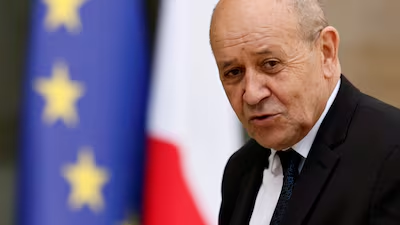
France is reportedly exploring alternatives to the United Nations peacekeeping force in southern Lebanon, which may not involve the UN, as the mandate for the UN Interim Force in Lebanon (UNIFIL) is set to expire at the end of the year. France is considering these alternatives to the UN peacekeeping force in southern Lebanon, with a focus on solutions that may not involve the United Nations directly. France is prepared to assist Lebanon with security in the south following UNIFIL's planned withdrawal, which is slated for the end of the year. UN Secretary-General Antonio Guterres, however, has urged Security Council members to maintain a uniformed UN presence in Lebanon after the mandate of the UN Interim Force in Lebanon (UNIFIL) expires, and has put forward proposals to that effect.
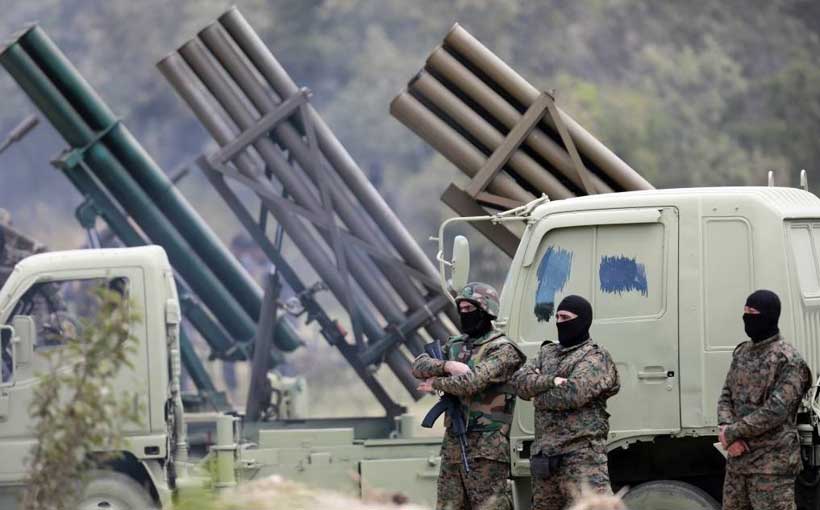
Conflict has persisted in the region despite a declared ceasefire, with Hezbollah continuing rocket and drone attacks. The latest escalation began on March 2 when Hezbollah launched rockets at Israel in support of Iran, two days after Israeli and US forces began striking Iranian targets. Israel responded by initiating a ground offensive into southern Lebanon, supported by intensive airstrikes. On Thursday, Lebanese Prime Minister Nawaf Salam announced that the army would begin moving into "pilot zones" in southern Lebanon. French Foreign Minister Jean-Yves Le Drian described this as a "significant step forward," allowing for an Israeli withdrawal and the deployment of the Lebanese Armed Forces "in an intelligent and gradual manner." The exact limits of these pilot zones remain unclear, and no official map has been released. Hezbollah has dismissed such efforts as "illusory." Fighting has not stopped despite the announcement of a ceasefire, and Hezbollah has continued launching rockets and drone attacks, showing the fragility of the security situation.
UNIFIL Mandate and Proposed Alternatives
United Nations Secretary-General Antonio Guterres has presented the Security Council with three options for a successor mission to the current 7,500-strong UN Interim Force in Lebanon (UNIFIL). These proposals outline varying levels of presence and capabilities, ranging from a light monitoring force of approximately 1,980 personnel to a more strong contingent of up to 5,525 personnel with enhanced monitoring and de-escalation functions. Guterres outlined these three options for replacing the current 7,500-strong force, reflecting a spectrum of engagement.
The first option, according to Guterres, would involve 350 unarmed military observers, supported by four infantry battalions, each comprising 750 troops, and a 700-member reserve force for protection. This initial option would offer the strongest monitoring capability, enabling observation along the entire Blue Line and extending up to the Litani River. This would provide full oversight of the critical border area.
Under the second proposed option, the mission would focus its activities on the area situated between the Blue Line and the Litani River, monitoring parts of the border through a network of observation posts and regular patrols. This approach would concentrate resources on a key zone of potential friction.
The third option would see the force monitoring developments along the Blue Line and several kilometers north of it, utilizing static positions and mobile patrols. However, under this third scenario, the entire Blue Line could not be continuously monitored without the integration of additional technological support. This option would also mean the force would lack the capacity to position itself between Israeli and Lebanese forces to assist in de-escalating tensions, and its ability to report ceasefire violations would be limited. The reduced scope of this option notes potential challenges in maintaining full oversight and intervention capabilities.
Any future mission, regardless of its structure, would require air assets for medical evacuations, alongside engineering and demining capabilities. The Secretary-General also noted that the integration of radar systems, helicopters, drones, and satellite imagery would significantly enhance the mission’s monitoring capabilities. Such technological enhancements are deemed key for effective surveillance and reporting. The ceasefire in the region stipulates a "complete cessation" of hostilities by Hezbollah, a condition that has been repeatedly challenged by ongoing actions.
Ceasefire Efforts and Ongoing Hostilities
French envoy Jean-Yves Le Drian's visit to Beirut occurred two days after the announcement of a fourth ceasefire. The ceasefire followed talks in Washington between Lebanon and Israel. Despite the ceasefire efforts, Israel has continued to bombard southern Lebanon. On Friday, Israel issued forced displacement orders for residents of at least eight villages in the Sidon district. Israeli forces remain inside the Yellow Line, an an area encompassing dozens of villages now under occupation.
Hezbollah has dismissed the ceasefire as "illusory," a sentiment echoed by its main backer, Iran, which rejected the Washington announcement. Iran stated that Israel must withdraw from its current positions in Lebanon and return to the lines that existed before the war started. This position shows a fundamental disagreement regarding the terms of disengagement. Le Drian described the Lebanese army's move into "pilot zones" in southern Lebanon as a "significant step forward," allowing for an Israeli withdrawal and the deployment of the Lebanese Armed Forces "in an intelligent and gradual manner." This move is seen as a key step towards de-escalation and the re-establishment of Lebanese sovereignty in the south.
Le Drian stated that the US had the ability to "bring together" the two countries, adding that the direct talks prevented Lebanon from becoming the "victim" of negotiations in which it had no seat at the table. France supports the Washington process, recognizing its potential to facilitate dialogue between the parties. Iran has sought to link Lebanon's future to its own, stating a ceasefire in Lebanon is a prerequisite for any broader agreement with the US to end regional hostilities. This linkage adds another layer of complexity to the regional security landscape.
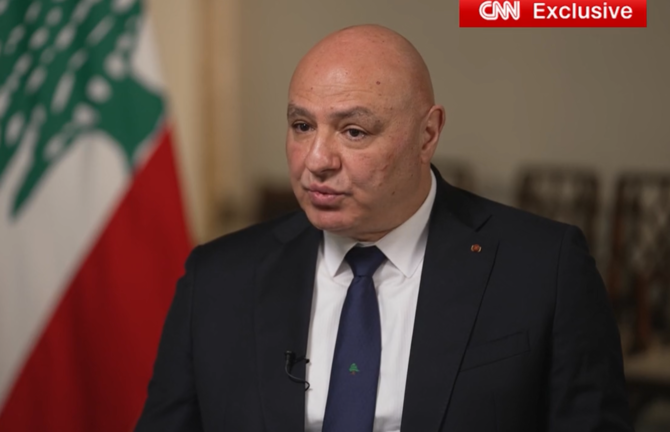
On Thursday, Israeli Defence Minister Israel Katz said the military would continue operating in Lebanon and would not withdraw "for the time being." Le Drian stated that France "strongly" condemns "Israeli occupation, which is completely unacceptable." He added, "We also condemned with great determination Hezbollah's actions since March 2," and reiterated that "France has very firmly condemned Israel's conduct." Le Drian also showed France's commitment to the region, saying, "France is ready" and "All our partners are worried about the security vacuum. But today I repeat very clearly: France is ready." This declaration emphasizes France's willingness to play a proactive role in stabilizing the region.
French Stance and Regional Concerns
Other European states, including Italy and Spain, could participate in a future security mechanism for southern Lebanon, according to French officials. The final structure of any such mechanism would depend directly on Lebanon's specific security needs, ensuring that any international support is tailored to the country's requirements. This collaborative approach notes a broader European interest in the region's stability. France has also expressed its support for the Washington process, which has facilitated talks between Lebanon and Israel, viewing it as a vital channel for diplomatic engagement.
French Foreign Minister Jean-Yves Le Drian has stated that France "strongly" condemns "Israeli occupation, which is completely unacceptable" under international law. This condemnation reflects France's adherence to international legal principles regarding territorial integrity. Le Drian also condemned Hezbollah's actions, specifically those occurring since March 2, indicating a balanced critique of all parties involved in the conflict. Hezbollah has previously described ceasefire efforts and proposed arrangements as "illusory," reflecting their skepticism regarding diplomatic solutions. The French position emphasizes a commitment to a full and equitable resolution, addressing actions from all sides.
Humanitarian Impact and Escalation
The military campaign in southern Lebanon has resulted in significant humanitarian consequences. More than 3,500 people have been killed, and approximately 10,000 individuals have been wounded during the conflict. Lebanese authorities report that the campaign has also led to the displacement of over one million people from their homes. The overall situation in Lebanon has deteriorated considerably since March, exacerbating the humanitarian crisis. This ongoing impact shows the severity of the hostilities and the urgent need for stability in the region, affecting a substantial portion of the population through casualties and forced displacement. The widespread displacement figures highlight the extensive reach of the conflict beyond immediate combat zones, creating a profound humanitarian challenge. The deteriorating situation since March further emphasizes the urgency of finding a lasting resolution to the conflict.