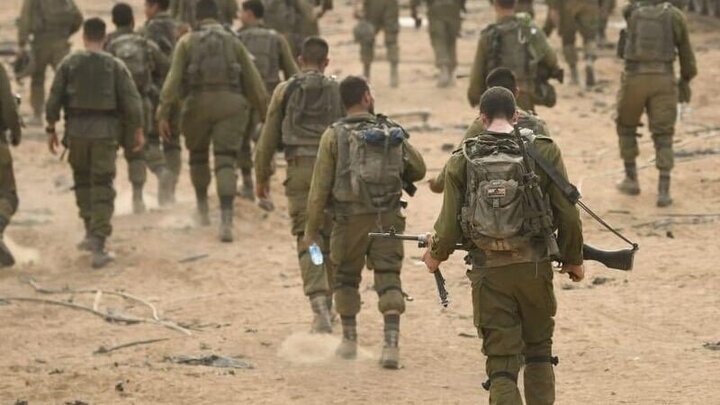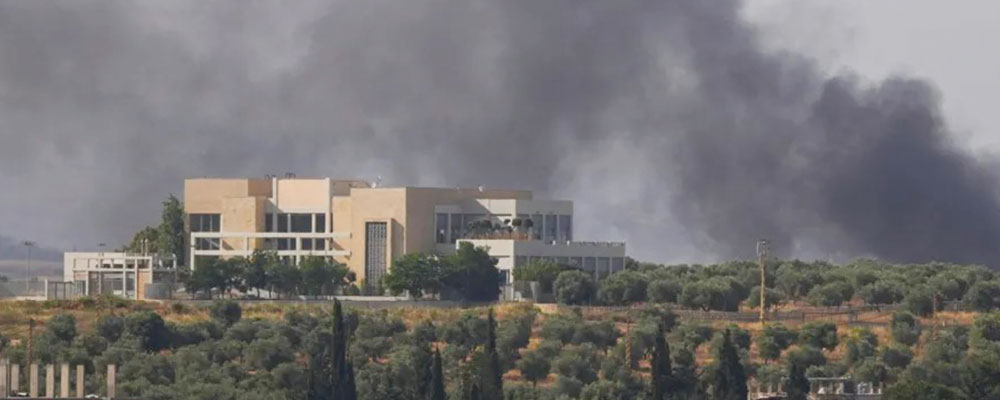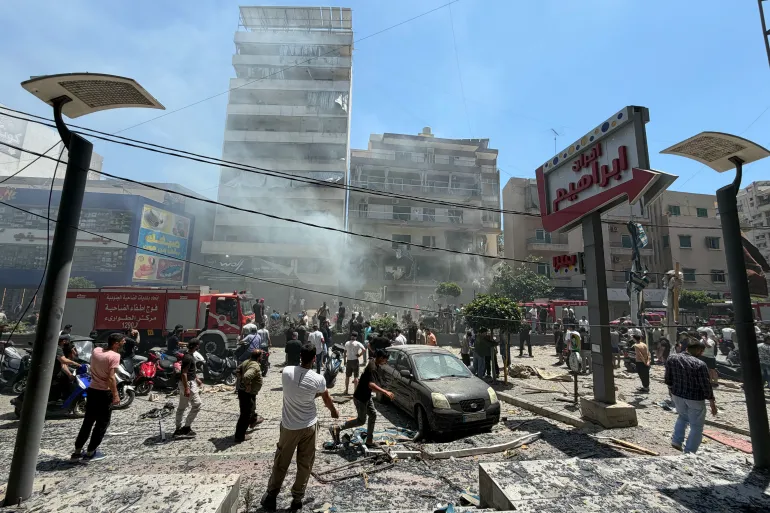
The Israeli military launched attacks on targets located in Beirut’s southern suburbs early Tuesday, marking a significant escalation in the ongoing regional tensions. This action followed claims by the Israeli military that Hezbollah had fired three projectiles towards northern Israel, targeting northern Israel. The Israeli military confirmed its involvement in these operations, stating they were a direct response to the alleged projectile launches from Lebanese territory.
The strikes occurred in areas including Dahiyeh and Ghobeiry, according to local reports from Beirut. These specific locations in Beirut's southern suburbs have historically been considered strongholds for Hezbollah. Israel stated its operation was a direct response to the projectile launches. The incident unfolds amidst broader diplomatic efforts involving the United States and Iran, which are currently engaged in peace talks aimed at de-escalating tensions in the region and finalizing a memorandum of understanding.
Escalation and Casualties
Prime Minister Benjamin Netanyahu stated the strikes were a direct response to Hezbollah firing toward Israeli territory. This assertion showed the Israeli government's position that its actions were retaliatory in nature. Lebanon’s National News Agency reported that at least two people were killed and four wounded in the Israeli operations. The precise identities of the casualties were not immediately released, but the report noted the immediate and tragic human cost of the renewed hostilities. Following the strikes, Benjamin Netanyahu posted on X, stating, "I spoke this evening with President Trump and told him that if Hezbollah does not stop firing at our cities and citizens – Israel will strike terrorist targets in Beirut." This public declaration from the Israeli Prime Minister signaled a firm stance and a potential for further, more extensive military action should Hezbollah continue its attacks.
An Israeli military spokesperson also announced that forced displacement orders had been issued, affecting residents in the Lebanese towns of Jbaa, Houmin al-Tahta, Ansar, and Kfar Sir. These specific towns were among a larger group of communities in southern Lebanon impacted by the orders. The spokesperson did not specify the number of residents affected by these orders or the duration of the displacement, leaving many in uncertainty regarding their immediate future. The Israeli military's actions in the Beirut suburbs and the subsequent threat from Prime Minister Netanyahu signal a potential expansion of the conflict beyond the immediate border regions. The casualties reported by Lebanon's National News Agency show the immediate human impact of the escalating military exchanges, creating a climate of fear and instability for civilians caught in the crossfire.
These displacement orders were not isolated incidents. On Sunday, June 14, 2026, Israel had previously issued forced displacement orders covering 29 locations in southern Lebanon. These full orders specifically covered 25 locations within the Nabatieh district, a significant agricultural and population center, and an additional four locations in the Sidon district, which is also densely populated. Residents in these communities were instructed to immediately evacuate and move north of the Zahrani River, a natural geographical barrier. This large-scale directive indicated a broader strategic maneuver by Israel, potentially preparing for extended military operations in the southern Lebanese territories. The repeated issuance of such orders notes the severe disruption to civilian life and the growing humanitarian concerns in the region, forcing thousands to abandon their homes and livelihoods.
Impact on US-Iran Negotiations
The escalation in Beirut’s suburbs risks derailing ongoing negotiations for a memorandum of understanding between the United States and Iran. These talks, which represent a key diplomatic channel for de-escalation, are highly sensitive to regional military actions. Throughout these discussions, Iran has consistently stated that attacks on southern Beirut constitute a red line, indicating that such actions would be viewed as a severe breach of trust and a direct challenge to the negotiation process. Iranian Ministry of Foreign Affairs spokesman Esmaeil Baghaei previously indicated that a deal was close to being finalized but would not be signed on Sunday, hinting at the delicate nature of the final stages of the agreement.
The current developments follow a period of intense diplomatic activity and previous attempts at de-escalation. The United States and Iran announced a temporary ceasefire on April 8th, an agreement that had initially offered a glimmer of hope for regional stability. However, Lebanon subsequently experienced its deadliest day of the conflict, with more than 350 people killed. These casualties occurred after the ceasefire declaration, noting the fragility of regional stability despite diplomatic efforts and the persistent challenges in enforcing agreements amidst ongoing hostilities. The recent Israeli strikes in Beirut's suburbs directly contradict Iran's stated red lines, raising serious questions about the viability and future of the US-Iran peace talks.
Regional Context and Precedent
President Donald Trump stated that a US-Iran deal was expected to be agreed upon on Sunday, June 14, 2026, expressing optimism about the diplomatic efforts. Pakistani Prime Minister Shehbaz Sharif echoed this sentiment, indicating the US-Iran deal would be completed within 24 hours and signed electronically, suggesting a high level of confidence in the imminent conclusion of the agreement. Iranian Foreign Minister Abbas Araghchi remarked on Friday that a deal had "never been closer," but he affirmed Iran would not abandon Lebanon or accept an agreement that permitted Israeli strikes. This statement from Araghchi showed Iran's unwavering commitment to its allies and its firm stance against any deal that would compromise Lebanon's security or legitimacy in the face of Israeli military actions. The Iranian Foreign Minister's comments noted the delicate balance negotiators are attempting to strike, trying to secure an agreement while upholding critical geopolitical principles for all parties involved.
The current situation bears a striking resemblance to previous escalations. When Israel last conducted strikes in Beirut suburbs a week prior, Iran responded by launching missiles towards Israel, demonstrating a clear pattern of retaliatory action and a tit-for-tat escalation cycle. Following those previous strikes in Beirut, President Trump reportedly demanded restraint from Prime Minister Benjamin Netanyahu during a phone call, indicating international concern over the potential for broader conflict. Currently, a Qatari delegation is in Tehran, engaged in efforts to resolve disputes between the United States and Iran, acting as a key mediator in these complex negotiations. The presence of the Qatari delegation shows the international community's urgent efforts to prevent a full-scale regional conflict, particularly given the recent military actions and the precarious state of the peace talks. The success of these mediation efforts hinges on the ability of all parties to exercise restraint and adhere to diplomatic channels, even as military tensions continue to mount.