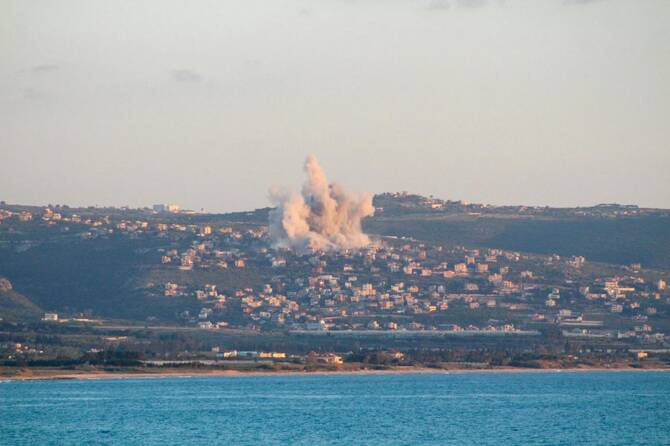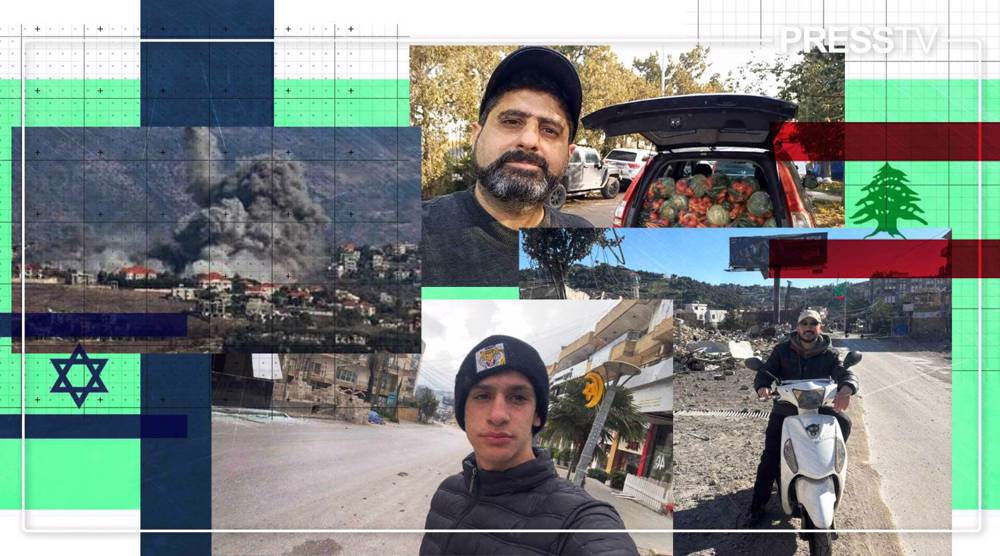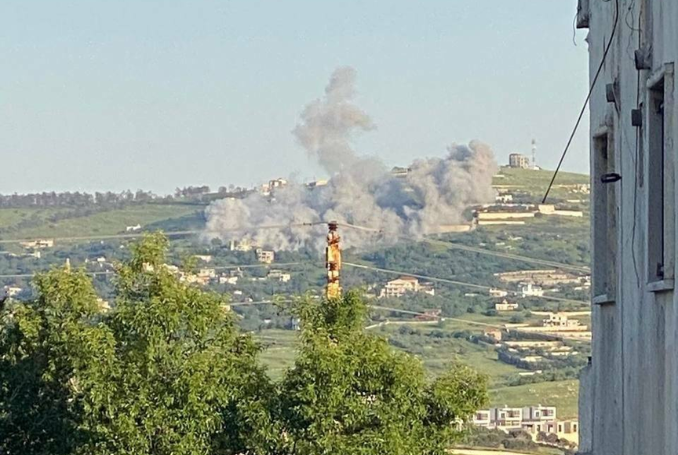
Israel conducted strikes across Lebanon on Saturday, resulting in the deaths of at least nine people in the country's south, according to authorities. The Lebanese health ministry reported that a raid in Saksakiyeh led to an initial toll of seven martyrs, including a girl, and 15 wounded, among them three children. This particular raid, which occurred in the coastal town of Saksakiyeh, was a significant event in the day's hostilities. The health ministry further detailed that the injured included a notable number of minors, noting the civilian impact of the strike. Another Israeli strike on a motorbike in the city of Nabatieh killed a Syrian national and his 12-year-old daughter. The health ministry specifically identified the victims of this strike as a Syrian national and his young daughter, showing the tragic loss of life. Additionally, in the southern town of Bedias, one person was killed in an Israeli strike, and 13 others were wounded, including six children and two women. These multiple incidents across different locations paint a grim picture of the day's events in southern Lebanon.
Escalation Amidst Truce
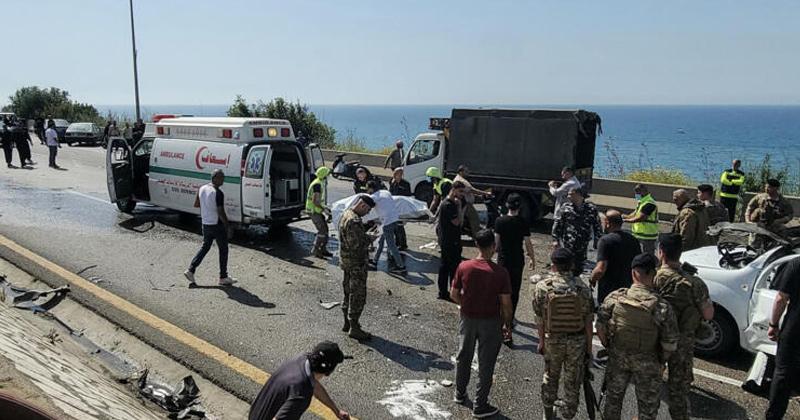
The latest attacks represent some of the most intense since the start of a three-week-old ceasefire between Israel and Iran-backed Hezbollah. This escalation marked a significant departure from the relative calm that had prevailed since the truce began. Lebanon's state-run National News Agency (NNA) reported a series of Israeli strikes across the south, including one on the town of Saksakiyeh. The NNA’s reports provided a full overview of the day's military activities, chronicling the various locations targeted. The NNA also reported that the "Israeli enemy launched two strikes on the Saadiyat highway," located approximately 20 kilometres (12 miles) south of Beirut. This particular strike on a highway not far from Beirut indicated a broader geographical scope of Israeli military operations than some previous engagements. The targeting of infrastructure, even a highway, suggested an intent to disrupt and exert pressure beyond immediate border areas.
The Israeli military stated it struck "Hezbollah terrorists operating from within a structure used for military purposes" in Saksakiyeh. This statement provided Israel's justification for the strike, framing it as a targeted operation against military assets. The military added that it is aware of reports regarding harm to uninvolved civilians in the structure in Saksakiyeh and confirmed that the details are under review. This acknowledgement from the Israeli military indicated an awareness of the civilian casualties reported by Lebanese authorities and suggested an internal process to investigate the circumstances. Earlier on Saturday, the Israeli military announced it had struck more than 85 Hezbollah infrastructure sites in the past 24 hours. This high number of targets struck within a single day showed the intensity and scale of Israel's operations, indicating a concerted effort to degrade Hezbollah's capabilities. These infrastructure sites are typically understood to include various facilities such as weapons depots, command centers, and launch sites. Israeli troops are currently operating inside an Israeli-declared "yellow line," which runs approximately 10 kilometres (six miles) inside Lebanon along the border. This "yellow line" demarcation signifies a zone of active Israeli military presence and operations within Lebanese territory, indicating a forward posture along the frontier. The presence of Israeli troops within this declared zone reflects a strategic decision to maintain a buffer or engage perceived threats directly across the border.
Hezbollah's Response
Hezbollah stated on Saturday that its forces had targeted troops in northern Israel with drones on at least two separate occasions. The group described these actions as a response to the ongoing Israeli strikes in Lebanon. Hezbollah specified that the drone attacks were aimed at Israeli personnel, though it did not elaborate on the specific targets or locations within northern Israel beyond the general region. This retaliatory action by Hezbollah demonstrated its intent to respond to Israeli military operations, using unmanned aerial vehicles as a primary means of engagement. The group's statement positioned these drone attacks as a direct consequence of the continuous Israeli military actions within Lebanese territory.
The Israeli military confirmed that "several" explosive drones were launched into Israeli territory as a result of these actions. The military did not provide an exact number of drones but indicated that multiple unmanned aerial vehicles had crossed the border. This assessment from the Israeli military aligns with Hezbollah's claims of launching drones, suggesting a direct engagement involving aerial incursions. The confirmation from the Israeli side corroborated the nature of Hezbollah's retaliatory strikes, noting the use of explosive drones in these cross-border incidents. The deployment of "several" drones indicates a coordinated effort rather than an isolated incident, reflecting a more significant operational capacity.
One Israeli army reservist sustained severe injuries, and two others were moderately wounded, in one of the drone attacks. The incident involving the reservists notes the impact of the drone strikes on Israeli military personnel, confirming casualties on the Israeli side. The Israeli military provided no further details about the specific location of this attack or the unit involved. The injuries sustained by the reservists show the tangible consequences of Hezbollah's drone operations, demonstrating that these attacks are capable of inflicting casualties on Israeli forces. The severity of the injuries to one reservist, along with moderate injuries to two others, indicates the potential lethality of the explosive drones used. This direct impact on military personnel further emphasizes the ongoing nature of the conflict and the risks faced by those operating in the region.
Broader Context and Future
Under the terms of the ceasefire released by Washington, Israel reserves the right to act against "planned, imminent or ongoing attacks." This provision of the ceasefire agreement grants Israel a degree of operational latitude, allowing it to undertake military actions it deems necessary for self-defense. Hezbollah drew Lebanon into the broader Middle East conflict on March 2, when it launched rockets at Israel. The group stated these actions were to avenge the killing of Iran's supreme leader in US-Israeli strikes. This event marked a significant turning point, escalating regional tensions and directly involving Lebanon in the wider conflict dynamics. Israel had carried out regular strikes targeting Hezbollah before March, accusing it of seeking to rearm despite a 2024 ceasefire agreement. These earlier strikes indicate a persistent pattern of conflict and Israeli concerns over Hezbollah's military build-up, even prior to the current escalation.
Raids also targeted a highway not far from Beirut, further extending the geographical scope of Israeli military operations. The strike on the Saadiyat highway, approximately 20 kilometers south of Beirut, represented a notable expansion of the conflict's reach, bringing it closer to major population centers. This targeting of infrastructure, even if not directly military, can be seen as a tactic to exert pressure and disrupt daily life. Earlier, Israel's military had called on residents of nine villages to evacuate, stating it would act "forcefully" against Hezbollah. This evacuation order, issued to residents in a significant number of villages, signaled Israel's intent for a strong military response and noted the potential for widespread civilian displacement. The directive to evacuate shows the serious nature of the anticipated military operations and the risks posed to communities near the border. According to Lebanese authorities, Israeli attacks on Lebanon have killed nearly 2,800 people since March 2, including dozens since the truce went into force. This staggering figure provided by Lebanese authorities illustrates the severe human cost of the conflict, with a substantial number of fatalities occurring even after the implementation of the ceasefire. The continued loss of life, even during a period meant to bring calm, shows the fragility of the truce and the persistent violence in the region. Lebanese and Israeli representatives are set to hold a fresh round of direct talks in Washington next week, indicating ongoing diplomatic efforts despite the recent escalation. These upcoming talks represent a key opportunity for de-escalation and a potential pathway towards a more lasting resolution, even as military actions continue to unfold on the ground. The decision to engage in direct talks in Washington suggests a recognition by both sides of the need for diplomatic engagement to address the underlying issues of the conflict.