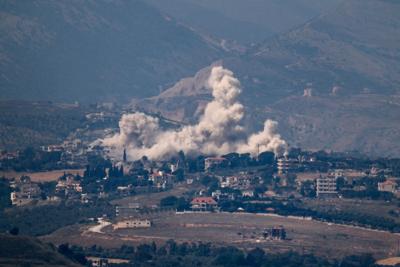
Two semiofficial Iranian news agencies reported Tuesday that Iran stopped communicating with mediators regarding an extension of a ceasefire in the ongoing war with the U.S. And Israel, though President Donald Trump immediately disputed the claim, stating talks were continuing. The reports came from the Fars and Tasnim news agencies, both considered close to Iran’s paramilitary Revolutionary Guard. A regional official involved in the mediation told The Associated Press that Iran had not communicated at all on Tuesday. This claim by the Iranian news agencies stated that Iran had indeed stopped communicating with mediators about extending a ceasefire in the war with the U.S. And Israel. President Donald Trump, however, disputed this claim, asserting that talks were continuing between the parties.
The US-Iran war began with US-Israeli strikes on Iran on February 28, and weeks of negotiations since an April 8 ceasefire have not produced a permanent resolution or restored full access to the Strait of Hormuz. A Qatari negotiating team arrived in Tehran on Friday in coordination with the United States to help seal a peace deal, while Pakistan's army chief, General Asim Munir, also arrived in Tehran on Friday to bolster mediation efforts. These diplomatic overtures highlight the international community's push for a lasting peace.
President Trump called the Iranian agencies' claim "false and erroneous," adding, "The conversations between us have been going on continuously, including four days ago, three days ago, two days ago, one day ago and today." He also urged the parties to "make a Deal." Iran's Foreign Minister Abbas Araghchi stated in a call with UN Secretary-General Antonio Guterres that Tehran was engaged in the diplomatic process despite "repeated betrayals of diplomacy and military aggression against Iran, along with contradictory positions and repeated excessive demands" by the United States. In this call, Foreign Minister Araghchi specifically accused the United States of "excessive demands." US Secretary of State Marco Rubio said Friday that "slight progress" was made during talks with Iran, offering a cautiously optimistic assessment of the ongoing diplomatic efforts.
Conflicting Reports on Diplomacy
Iran had previously stated that a ceasefire needed to be enforced in Lebanon for negotiations to continue, linking the broader regional stability to the progression of talks. This condition shows the complex geopolitical landscape surrounding the conflict. Meanwhile, US media outlets Axios and CBS News reported, citing unnamed sources, that the White House was considering military strikes on Iran. These reports, while unconfirmed by official sources, added another layer of tension to the already delicate diplomatic situation. On Saturday, Iran announced it had included the ending of a weeks-long US naval blockade and arrangements concerning the strategic Strait of Hormuz in a draft framework for a deal with the United States. Iran's Foreign Ministry spokesman Esmaeil Baqaei confirmed the inclusion, stating, "The issue of the Strait of Hormuz is among the subjects addressed in this 14-point memorandum of understanding but more importantly, ending the piracy carried out by the United States against international navigation." This statement from Esmaeil Baqaei emphasized Iran's focus on maritime security and sovereignty in the critical waterway.
State TV in Iran reported signals of a convergence of views with the US, though it noted that gaps between the two sides still remain, indicating that while progress has been made, significant hurdles persist. Iranian officials also indicated that the nuclear issue is not part of the initial framework being discussed with the US, suggesting a more focused approach on immediate conflict resolution and regional stability. Iran has stated it is in the "final stage" of drafting a framework for a deal with the United States, signaling a potential nearing of a breakthrough. However, Iran's chief negotiator Mohammad Bagher Ghalibaf issued a warning of a "crushing" response should US President Donald Trump resume hostilities, noting the fragility of the peace process and the potential for rapid escalation. President Trump, for his part, commented on the situation by saying it was "Right On The Borderline," reflecting the precarious balance of the ongoing negotiations.
Military Actions and Blockades
The U.S. Military announced it utilized a Hellfire missile to target the engine room of the Botswana-flagged merchant vessel M/T Lexie, effectively stopping it from reaching an Iranian port. This action was taken in response to the vessel's violation of the American blockade, with U.S. Central Command reporting that the crew had ignored repeated warnings over a 24-hour period. U.S. Central Command specified that the Hellfire missile was fired into the engine room of the M/T Lexie to halt it from reaching an Iranian port, citing its violation of the American blockade after the crew ignored repeated warnings over 24 hours. According to U.S. Central Command, this incident marked the seventh instance of a ship being stopped by the military while attempting to run the blockade, showing the consistent enforcement of the American blockade.
Reports indicated that competing blockades around the strategic Strait of Hormuz have caused significant disruption to the global economy, impacting international trade routes and energy supplies. The ongoing military operations linked to the Iran war have also impacted scheduled events, leading to the cancellation of the Royal International Air Tattoo, which was planned for July 17-19. The cancellation of the Royal International Air Tattoo was attributed to uncertainty regarding access to RAF Fairford, where the event was to be held, directly linking the military conflict to disruptions in civilian activities.
In a related development, European Union nations moved on Friday towards imposing sanctions on Iranian officials and other individuals deemed responsible for blocking the Strait of Hormuz. These actions show the broader impact of the blockades on international shipping and regional stability, as well as the international community's efforts to address the issue. The EU's move signals a coordinated international response to the challenges posed by the blockades in this vital maritime choke point.
Economic Strain and Domestic Unrest
Year-on-year inflation in Iran reached a level in May previously unseen since World War II, indicating a severe economic crisis. Iran's Central Bank stated that the consumer price index registered 77.2% in May when compared to the previous year. This figure represented an 8.5% increase from the inflation rate recorded in April, noting a rapid acceleration of economic hardship. The Central Bank's report detailed that the consumer price index reached 77.2% in May compared with the year before, and this inflation rate was 8.5% higher than that recorded in April.
The economic pressure was particularly acute in daily and general necessities, where inflation climbed to 113.8% from the year before. This category includes essential items such as medicine, taxi fares, tobacco, and communication fees, directly impacting the daily lives of Iranian citizens. The rise of 113.8% in inflation for daily and general needs, including critical items like medicine, taxi fares, tobacco, and communication fees, shows the profound challenges faced by the populace. Compounding the financial challenges, the Iranian rial has experienced a significant devaluation. While it traded at 32,000 to $1 in 2015, the currency now exchanges at over 1.7 million to $1, a dramatic collapse that further erodes purchasing power and economic stability. The rial's depreciation from 32,000 to $1 in 2015 to over 1.7 million to $1 currently illustrates the severe economic pressures on the nation.
Amidst these economic difficulties, Iran's theocracy responded to protests in January with a crackdown on demonstrators. Activists' estimates indicate that this crackdown resulted in the deaths of over 7,000 people, painting a grim picture of the domestic situation and the government's response to dissent. The crackdown on demonstrators in January, which activists estimate killed over 7,000 people, further notes the internal challenges facing Iran alongside its external conflicts.
In Washington, US President Donald Trump abruptly altered his schedule, canceling plans to attend his son's wedding. The decision was made to remain in the capital due to what he described as "circumstances pertaining to government." This adjustment to the President's personal plans occurred as diplomatic efforts surrounding Iran continued to unfold, showing the perceived urgency and importance of the situation. While Iran's Fars and Tasnim news agencies reported that talks had halted, President Trump stated the claim was "false and erroneous." He affirmed, "The conversations between us have been going on continuously, including four days ago, three days ago, two days ago, one day ago and today." President Trump also urged the parties to "make a Deal," describing the current situation as "Right On The Borderline," a clear indication of the high stakes involved in the ongoing negotiations between the United States and Iran.