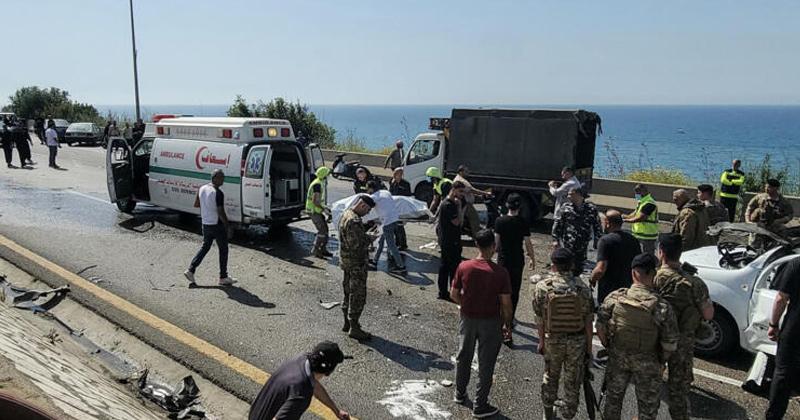
First Sergeant (res.) Alexander Glovanyov, 47, from Petah Tikva, was killed on the Israeli side of the border when a Hezbollah drone struck his tank carrier. The incident occurred near an Israel Defense Forces (IDF) outpost, marking a significant escalation in cross-border hostilities. Glovanyov's death represents a direct casualty from recent drone attacks originating from Lebanon, showing the persistent and evolving threat posed by such assaults in the volatile border region. The attack, which involved an explosive drone, notes the dangers faced by military personnel operating in the immediate vicinity of the Israel-Lebanon frontier.
Details of the Attack
First Sergeant (res.) Alexander Glovanyov was killed when a Hezbollah drone struck the tank carrier he was operating. The drone hit Glovanyov's tank carrier near an IDF outpost on the Israeli side of the border. The explosion seriously wounded Glovanyov, leading to his death. According to a report by Army Radio, the Israel Defense Forces (IDF) failed to identify the incoming drones. This critical failure meant that Glovanyov received no advance warning of the imminent danger from the aerial assault, leaving him vulnerable to the sudden and devastating impact of the strike. The lack of early detection raises significant questions about the operational procedures and technological capabilities employed to safeguard forces in the border area. This particular incident involved a fiber optic drone launched by Hezbollah, a method that has become increasingly common in recent cross-border engagements.
Victim and Military Role
First Sergeant (res.) Alexander Glovanyov was killed in an incident that took place near the Israel-Lebanon border. Glovanyov served as a lead vehicle driver within the 6924th Transport Battalion, which operates under the Technological and Logistics Directorate. His role involved the operation of a tank carrier, a key piece of equipment for military logistics and troop movement, which was struck by the Hezbollah drone. As a reservist, First Sergeant Glovanyov was actively contributing to the security efforts along the border when the fatal incident occurred. His service as a lead vehicle driver placed him in a frontline support role, essential for the mobility and operational readiness of IDF units. The incident shows the ongoing security challenges in the border region, where even support personnel are at significant risk from sophisticated enemy attacks. His death is a stark reminder of the sacrifices made by those serving in active duty and reserve capacities.
Official Reactions and Tribute
The Israel Defense Forces (IDF) announced the death of First Sergeant (res.) Alexander Glovanyov on Monday morning. Following the Hezbollah drone strike near the Lebanon border, soldiers immediately attempted to provide medical treatment to Glovanyov at the scene. Despite their efforts, First Sergeant (res.) Alexander Glovanyov was subsequently declared dead by military medical personnel. The announcement confirmed his passing after the incident involving the tank carrier he was operating. The IDF expressed its profound sorrow over the loss of First Sergeant Glovanyov, noting his dedication and service to the nation. His family was informed of the tragic news, and military officials extended their condolences. The death of a reservist like Glovanyov resonates deeply within the military community and among the public, emphasizing the human cost of the ongoing conflict and the constant threat along the northern border.
Broader Context
Hezbollah terrorists launched a fiber optic drone toward Israel, contributing to the escalation of hostilities in the border region. This particular attack resulted in the death of First Sergeant (res.) Alexander Glovanyov, who was operating a tank carrier. Glovanyov's death marks the fourth Israel Defense Forces (IDF) soldier killed during the ongoing ceasefire with Hezbollah as a result of explosive drones. This grim statistic shows the persistent danger posed by Hezbollah's advanced weaponry and tactics, even during periods designated as a ceasefire. The use of explosive drones represents a significant and escalating threat, capable of circumventing traditional defenses and causing direct casualties. The incident notes continued security challenges on the Israel-Lebanon border amidst sustained cross-border exchanges, demonstrating that despite any official ceasefire, the operational environment remains highly perilous for military personnel. The IDF continues to face the complex task of protecting its forces and the civilian population from these evolving threats.