Hezbollah announced multiple operations on what news outlets denoted as 'Day 72' of ongoing events, targeting Israeli troop gatherings in Deir Siryan and Al-Bayyada. The group stated it utilized drones and swoop-down missiles in these attacks, marking a significant escalation in the ongoing border conflict. Concurrently, sirens sounded over suspected drone infiltrations in frontline settlements, prompting an urgent appeal from the Israeli Chief of Staff to the Knesset for thousands of additional soldiers to bolster defenses and operational capabilities. This appeal shows the growing pressure on Israeli forces along the northern border.
Hezbollah's Intensified Assaults
Hezbollah's recent activities have demonstrated a continued and intensified engagement along the border. The Lebanese group targeted a communications Hummer belonging to the Israeli army in Tayr Harfa using a dive-bombing drone. This precision targeting notes Hezbollah's evolving tactical approach. In another significant operation, the group also directed a swarm attack at a newly established Israeli command center located in Al-Bayada, indicating an attempt to disrupt Israeli military coordination and control. These operations contribute to a discernible pattern of heightened activity by the Lebanese organization, which has been consistently challenging Israeli positions and personnel.
The impact of these attacks has been noted by Israeli authorities. The Israeli Ministry of Health reported that eight individuals sustained injuries from Hezbollah fire on May 10, providing a concrete measure of the human cost of these ongoing hostilities. Israeli news outlet Channel 13 indicated that Hezbollah has increasingly relied on explosive-laden drones, identifying them as a significant vulnerability for the Israeli army. This assessment suggests a strategic shift by Hezbollah, leveraging a weapon system that appears to pose considerable challenges to Israeli defenses.
Channel 13 further reported that Hezbollah persists in targeting Israeli soldiers, particularly with these explosive-laden drones. The news channel stated, "Hezbollah continues to attack our soldiers, especially with explosive-laden drones, and we still have no solution for this deadly weapon." This assessment notes the ongoing challenge posed by the group's innovative use of drone technology in the border conflict. The sustained use of such tactics shows a tactical shift observed by Israeli media, emphasizing the need for new countermeasures. The reliance on these drones suggests Hezbollah's intent to inflict casualties and disrupt Israeli operations while minimizing direct exposure for its own fighters. This technological adaptation has become a central feature of the current phase of the conflict.
Israeli Military's Urgent Needs
The intensified cross-border activity has led to significant incidents on the Israeli side. Israeli media reported a “serious incident” at an army base near the Lebanese border following an attack involving a Hezbollah explosive device. This incident points to the direct and tangible threats faced by Israeli military installations. Separately, Channel 14 reported that sirens sounded in frontline settlements, indicating suspected drone infiltration and rocket fire. These alerts necessitate immediate responses from Israeli air defense systems and ground forces, contributing to a constant state of readiness and tension in the northern communities. The frequent sounding of sirens also has a significant psychological impact on residents in the affected areas.
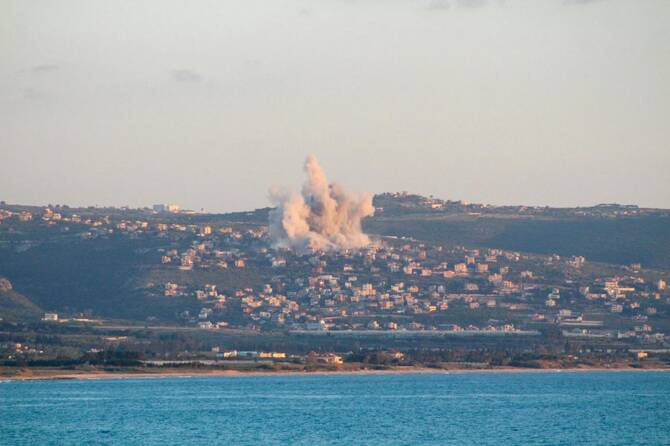
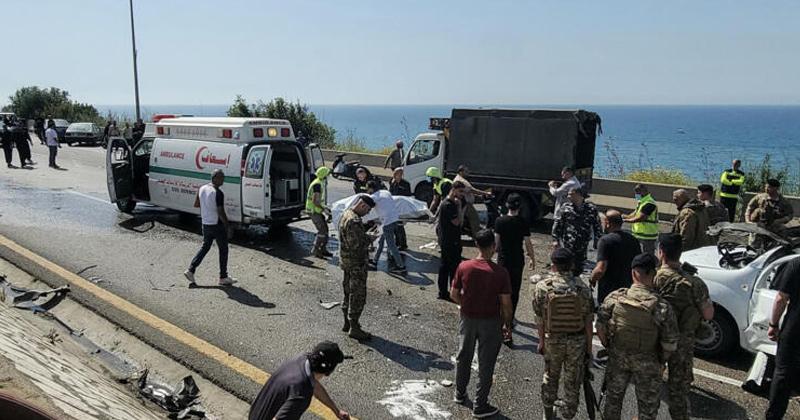
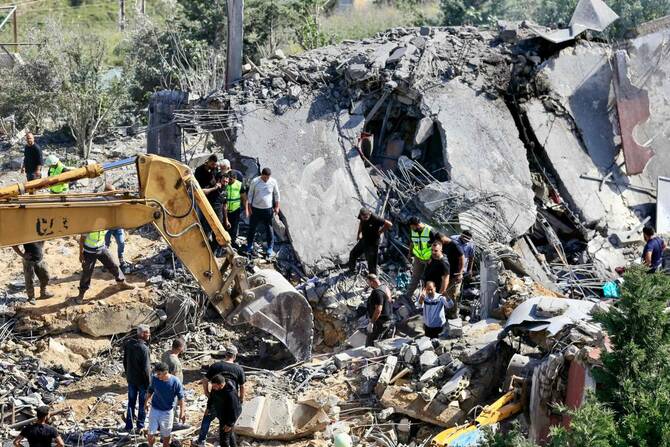
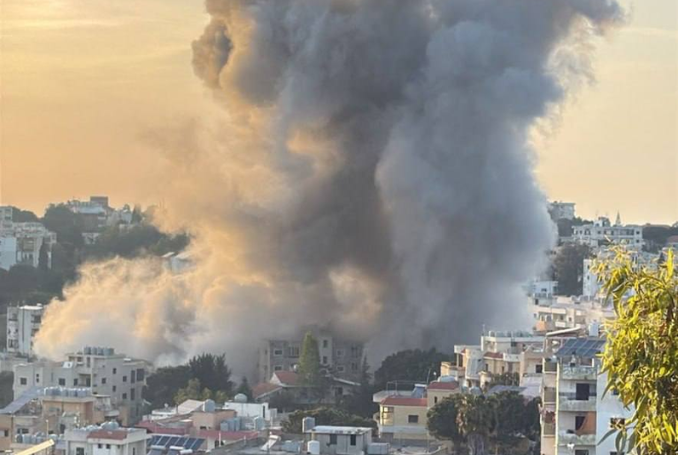
Amid these developments, the Israeli military conducted a series of retaliatory airstrikes. One such strike targeted the town of Kfar, indicating an Israeli response to the ongoing aggression. Further Israeli airstrikes were reported to have struck the town of Deir Zahrani, expanding the scope of Israeli military operations into Lebanese territory. Another Israeli airstrike hit the area located between the towns of Al-Duwayr and Al-Sharqiyah within the Nabatieh district, demonstrating a targeted approach to disrupt Hezbollah's operational infrastructure and capabilities. These strikes are part of a broader Israeli strategy to counter Hezbollah's actions and deter further escalation.
Concurrently, an Israeli occupation patrol was observed entering the village of Ruwayhina in the central Quneitra countryside. This ground movement suggests a sustained Israeli military presence and surveillance in areas adjacent to the border, indicating ongoing efforts to monitor and control the security situation.
The Israeli military also issued a statement regarding humanitarian aid to the Gaza Strip, a region currently embroiled in a separate but interconnected conflict. The military asserted that "Aid entering Gaza must be drastically reduced." This declaration indicates a shift in the military's stance on aid provisions, potentially linking it to broader security considerations or ongoing negotiations. This position has significant humanitarian implications and adds another layer of complexity to the regional dynamics. The reported border incidents and the military's aid statement collectively contribute to the evolving and increasingly volatile security situation in the broader region. The demand for additional soldiers by the Israeli Chief of Staff further notes the perceived need to reinforce the country's northern defenses against the persistent threats from Hezbollah.
Iran's Diplomatic Conditions
In a related diplomatic development, sources told Al-Mayadeen that Iran has outlined a proposed agreement requiring an immediate end to the war, Iranian management of the Strait of Hormuz, and the lifting of restrictions on Iranian oil sales. These conditions represent a full set of demands that would significantly alter the geopolitical landscape of the Middle East. Donald Trump, whose administration previously imposed sanctions on Iran, rejected this proposal, stating, "Iran’s response is completely unacceptable." This firm rejection shows the deep-seated disagreements between the parties and the high stakes involved in any potential resolution. These conditions were part of a broader diplomatic push by Iran, according to the sources, aimed at leveraging regional tensions to achieve strategic objectives.
Tasnim, citing an informed source, stated that Donald Trump "does not acknowledge reality, and that is why he suffers successive defeats against Iran." This statement from the Iranian news agency reflects a critical view of Trump's diplomatic approach and suggests a belief within Iranian circles that their strategy is yielding results despite international pressure. The news agency also reported that "The details published by The Wall Street Journal regarding Iran’s proposal for negotiations are significantly inaccurate." This statement contradicted reports of specific Iranian proposals circulating in some media outlets, indicating a controlled dissemination of information by Iranian sources and a potential attempt to manage the narrative surrounding their diplomatic overtures.
Sources speaking to Al-Mayadeen further revealed that the proposed agreement includes a provision for 30 days of negotiations to discuss details, which would commence after the cessation of hostilities. This indicates a structured approach to potential future talks, contingent on an initial de-escalation of conflict. The inclusion of a negotiation period suggests Iran's willingness to engage in detailed discussions, provided its core demands regarding the end of hostilities and regional control are met. The conditions put forth by Iran suggest a focus on regional control and economic leverage as part of any resolution, aiming to secure long-term strategic advantages. The proposed timeline for negotiations also implies a desire for a full and lasting settlement rather than a temporary truce.
Meanwhile, popular gatherings continue in Tehran, with participants expressing support for the Iranian leadership and armed forces. These demonstrations reflect ongoing public backing for the government's stance amidst regional tensions and diplomatic overtures. The sustained public support in the capital underlines the domestic context for Iran's foreign policy positions, suggesting that the government's assertive stance on regional issues resonates with a significant portion of its population. These demonstrations serve as a visible manifestation of national unity and resolve, further empowering the Iranian government in its diplomatic and military endeavors.