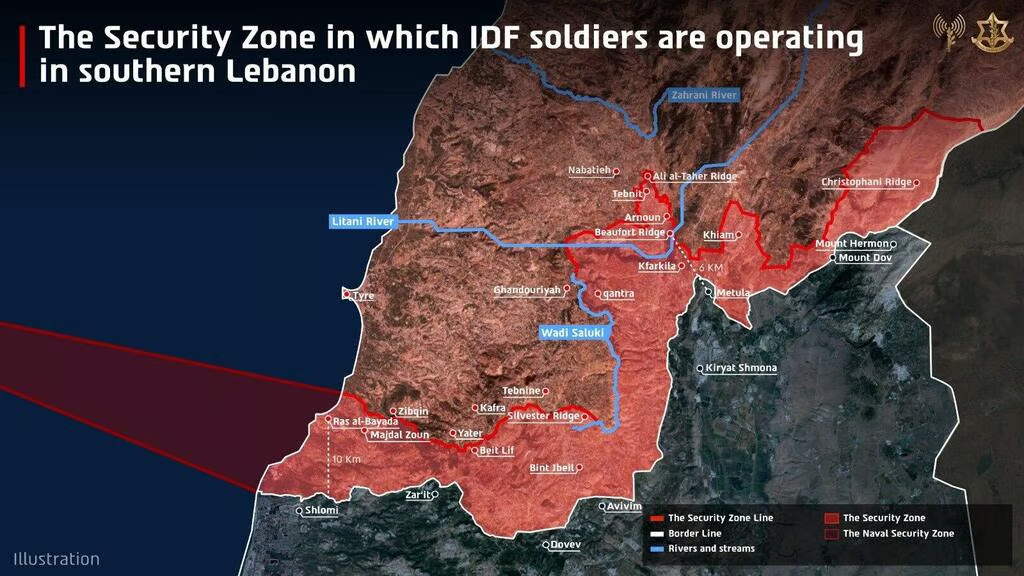
The IDF published a map detailing its southern Lebanon deployment on Thursday, coinciding with U.S. President Donald Trump's formal signing of a memorandum of understanding with Iran. This significant development occurred as the Israeli military is currently deployed within a security zone that extends approximately 10 kilometers inside Lebanese territory. Israel maintains the belief that preserving its presence in Lebanon is necessary at least until November, following the U.S. Midterm elections. This strategic deployment marks a period of heightened activity and ongoing vigilance in the region. The map, released on Thursday, provided specific visual confirmation of the military's operational areas.
IDF Operations and Deployment Details
IDF troops have established themselves firmly in their area of operations in southern Lebanon and continue to act to remove threats and improve the defense of residents of the north, according to a military statement. These efforts are part of a broader strategy to ensure regional stability and security. IDF forces remain positioned on the Ali Taher ridge, which strategically overlooks the Nabatieh area, providing a key vantage point. The village of Tibnit, where the IDF has operated in recent days, remains a point of control for the forces, showing the dynamic nature of their presence.
The military stated that its forces are deployed in some areas as far as 10 kilometers inside Lebanese territory, and in other areas about six kilometers deep. This varied deployment reflects the complex terrain and specific operational requirements. "According to operational needs, the IDF is deployed in the security zone, about 10 kilometers inside Lebanese territory," the military said, emphasizing the necessity of their presence for security purposes. The IDF is expected to continue holding the security zone based on these operational needs, indicating a sustained commitment to their current positions. The military also stressed that operational activity is continuing and that approaching the security zone is dangerous, serving as a clear warning to unauthorized individuals. The IDF has managed to remain in positions it captured, including certain areas beyond the "yellow line," and is preserving its freedom of action against threats beyond the security line, ensuring its ability to respond effectively to emerging dangers.
Political Context and Timeline
After the overnight signing of the memorandum of understanding between U.S. President Donald Trump and Iran, a 60-day negotiation period has commenced, setting a new diplomatic timeline. The working assumption in Israel is that this negotiation period, despite its formal initiation, will not culminate in a final agreement. This perspective shapes Israel's ongoing military and diplomatic strategies in the region. The military has stated it will continue its operations to remove identified threats to both troops and civilians located beyond the security zone, noting that military action is not solely confined to the immediate security perimeter. The IDF has previously confirmed its deployment, stating, "According to operational needs, the IDF is deployed in the security zone, about 10 kilometers inside Lebanese territory," a consistent message regarding its operational rationale.
Discussions regarding the next steps are ongoing within the diplomatic track, involving direct negotiations between Israel and Lebanon, indicating a multi-faceted approach to regional issues. Teams are anticipated to reconvene next week for further talks, showing the continuous nature of these diplomatic efforts. Military officials also affirmed that "IDF troops have established themselves in their area of operations in southern Lebanon and continue to act to remove threats and improve the defense of residents of the north," reiterating their primary mission. The maritime security zone is considered a continuation of the land security zone, aligning with the political leadership's decision and presenting a unified approach to security across different domains.
Military Communications and Warnings
The military called on the Red Cross to coordinate with it regarding its operations, signaling a desire for humanitarian oversight and communication during ongoing activities. IDF troops have established themselves in their area of operations in southern Lebanon and continue to act to remove threats and improve the defense of residents of the north, according to a military statement. This consistent messaging reinforces the military's objectives and operational posture. The military also reiterated its deployment, stating, "According to operational needs, the IDF is deployed in the security zone, about 10 kilometers inside Lebanese territory," further solidifying the official stance on its presence. This communication with the Red Cross shows the ongoing nature of military activities in the region and the need for international awareness and coordination. The IDF's continued presence and operational warnings are central to its strategy in southern Lebanon.