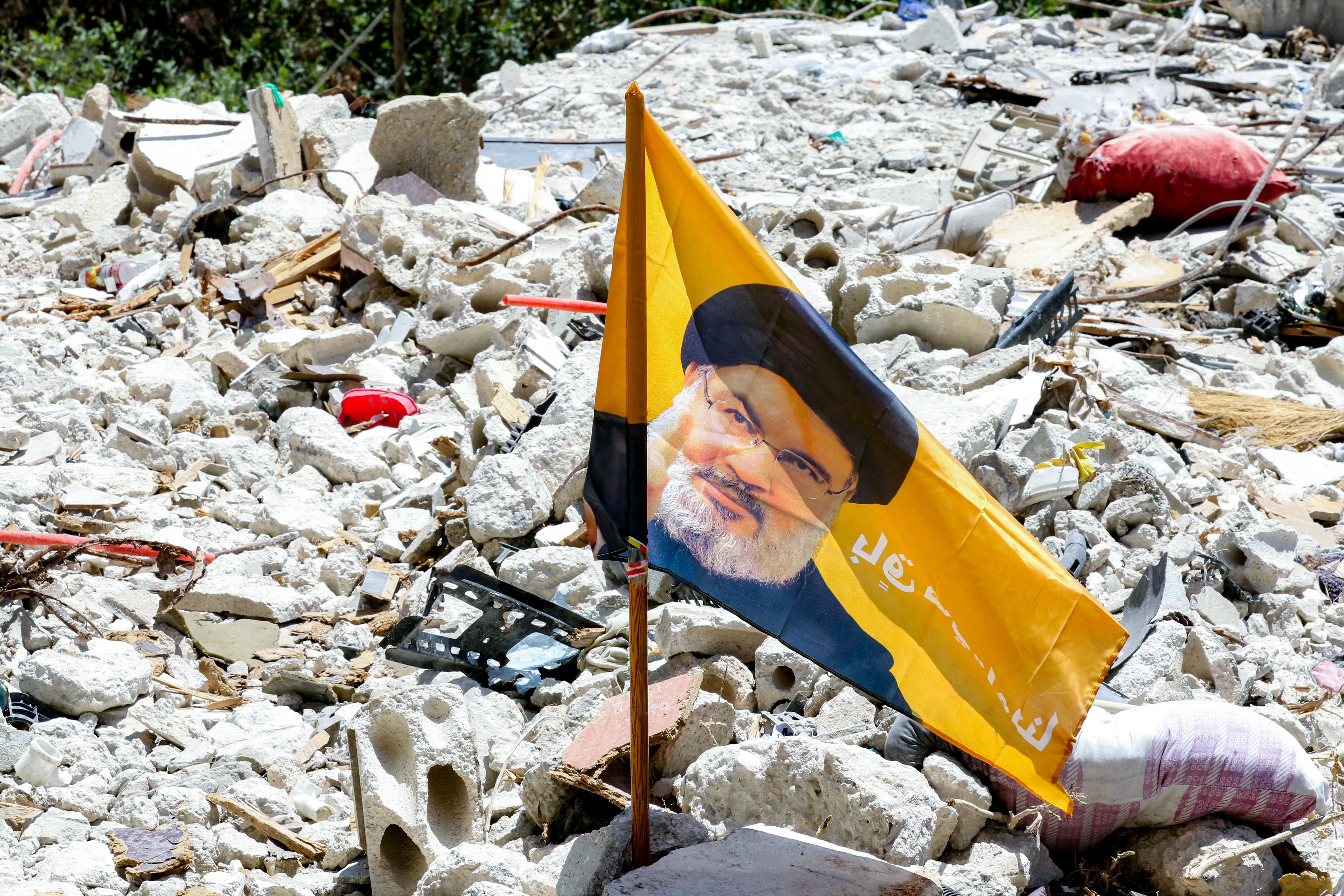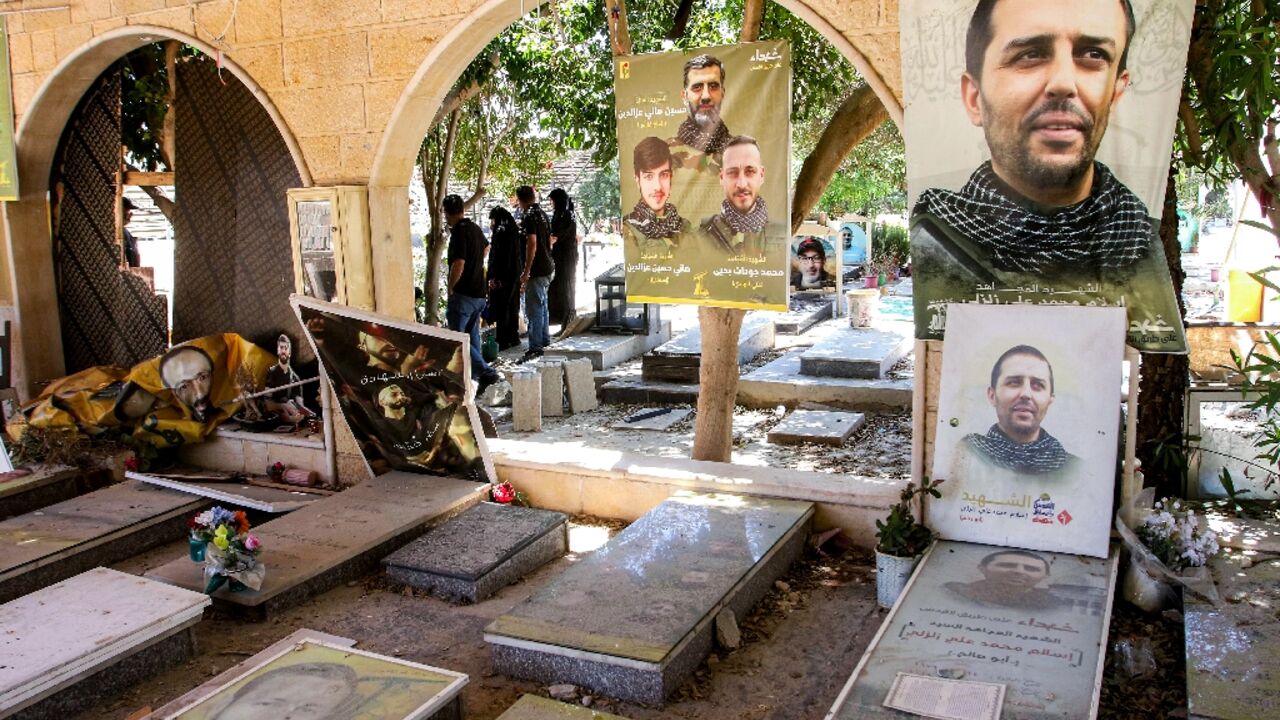
Gravediggers in south Lebanon's Deir Qanun al-Nahr are preparing tombs for those killed in Israeli strikes during the latest Israel-Hezbollah war, placing them near graves of individuals lost in previous conflicts. The preparations show the ongoing impact of hostilities on the community, a region that has repeatedly borne the brunt of conflict. Hussein Ghassani, a rescuer with the Islamic Health Committee, confirmed the village's grim task. Ghassani emphasized the profound losses experienced by the community, stating, "Deir Qanun is the village of martyrs and scholars." He added, "We are waiting to bury 17 or 18 martyrs, and there are still young men who we haven't yet found." The destruction extends to the very fabric of the village's infrastructure, with at least 50 homes in Deir Qanun al-Nahr reported destroyed and an additional 150 rendered uninhabitable, forcing many residents from their homes.
A Village of Martyrs
The personal narratives of loss are deeply intertwined with the village's collective experience. Shourouk Hariri, 32, wept as she mourned her twin brother, Ahmad Hariri, a volunteer rescuer, along with one of his colleagues and her uncle, a local civilian. The profound grief was palpable as she recounted the immediate aftermath of the tragedy. Ahmad Hariri, who was also a photographer, left behind a wife and a three-year-old daughter, a stark reminder of the young lives cut short and the families left to cope with unimaginable loss. "We arrived in the village yesterday and went straight to the place where Ahmad was killed, before coming here to the cemetery," Shourouk Hariri stated, her voice heavy with sorrow. She added, "We came here to understand what happened... We still can't believe he's gone." The emotional toll on families like the Hariris illustrates the devastating human cost of the ongoing conflict.
The village has experienced significant casualties in recent weeks and months. An Israeli strike last month claimed the lives of 14 people, nearly all from the same family, including three women and four children, in a home located on a small street. This single incident noted the indiscriminate nature of some attacks and the vulnerability of civilian populations. Dalal Safieddine, a resident, recounted the personal toll of the conflict, having lost five family members. These five individuals were all cousins and members of Hezbollah, showing the deep connections between community, family, and the armed group. Despite the profound losses and the constant threat of further violence, Safieddine expressed a resilient spirit. "I've lost five family members," she said, her voice firm, adding, "It's normal to make sacrifices. But in the end, we will overcome." The repeated loss of life shows the deep impact of the ongoing conflict on the community and its residents, fostering a resolve to endure despite immense hardship.
The Human Cost of Conflict
The dangers faced by those committed to helping others are particularly acute in this volatile environment. An Israeli strike on May 22 resulted in the deaths of Ali Hariri's nephew and two other local first responders from the Risala Scouts Association. These individuals were engaged in critical humanitarian work when they were targeted, noting the risks inherent in their essential duties. Ali Hariri reflected on the profound impact of this incident on his team and the community, stating, "We were a team of eight first responders, and we lost three. They were killed while carrying out their duty." The incident shows the extreme dangers faced by emergency personnel in the region, who often operate in highly perilous conditions to save lives.
The village of Deir Qanun al-Nahr, with a population of approximately 11,000, has experienced significant casualties since the escalation of hostilities. Municipal official Hassan al-Husseini reported that several dozen Israeli attacks since March have killed at least 55 people from the community. Al-Husseini described the widespread loss with a grim observation, noting, "In every family, if it's not a brother, it's a cousin" who has been killed, illustrating how deeply the conflict has permeated the social fabric of the village. The impact of these strikes has been felt across generations and throughout the community, leaving few untouched by grief and loss.
Prior to the US-Iran agreement, Israel's army had issued evacuation orders for Deir Qanun al-Nahr, leading to a mass exodus of its inhabitants. As a result of these orders, only around 400 residents remained in the village during the days leading up to the agreement, a stark contrast to its usual bustling population. This dramatic reduction in population speaks volumes about the fear and uncertainty that gripped the community, compelling thousands to seek safety elsewhere. The village, once vibrant, became a shadow of its former self, with homes emptied and streets quieted by the threat of further attacks.
Echoes of Resistance
The deceased are interred near the graves of Hezbollah fighters who perished in the current conflict, previous rounds of hostilities, and the 2006 Israel-Hezbollah war. This practice reflects a long-standing history of resistance in the region, where the memory of past struggles is continually honored and integrated into the present. The proximity of these graves serves as a powerful symbol of continuity and sacrifice for the community. One significant event in this history occurred on November 11, 1982, when guerrillas led by Ahmed Kassir detonated explosives at the Israeli military headquarters in Tyre, resulting in the deaths of dozens of Israeli troops. This act of resistance left an indelible mark on the collective memory of the region. Hezbollah itself emerged in response to Israel's 1982 invasion of Lebanon, solidifying its role in the country's armed resistance movements and becoming a formidable force in the political and military landscape.
More recently, Hashem Safieddine, who had been selected to succeed Hezbollah chief Hassan Nasrallah, was killed by Israel in 2024, days after Nasrallah's assassination. This event marked a significant blow to the organization's leadership and further intensified the ongoing hostilities. The ongoing conflict saw Hezbollah draw Lebanon into the broader Middle East confrontation on March 2 with rocket fire directed at Israel, a clear indication of the escalating regional tensions. Lebanon reports that the conflict has resulted in the deaths of more than 3,800 people across the country, a grim tally that continues to rise as the fighting persists. The profound losses suffered by Deir Qanun al-Nahr are thus part of a larger national tragedy, reflecting the widespread devastation and human cost of the protracted conflict.