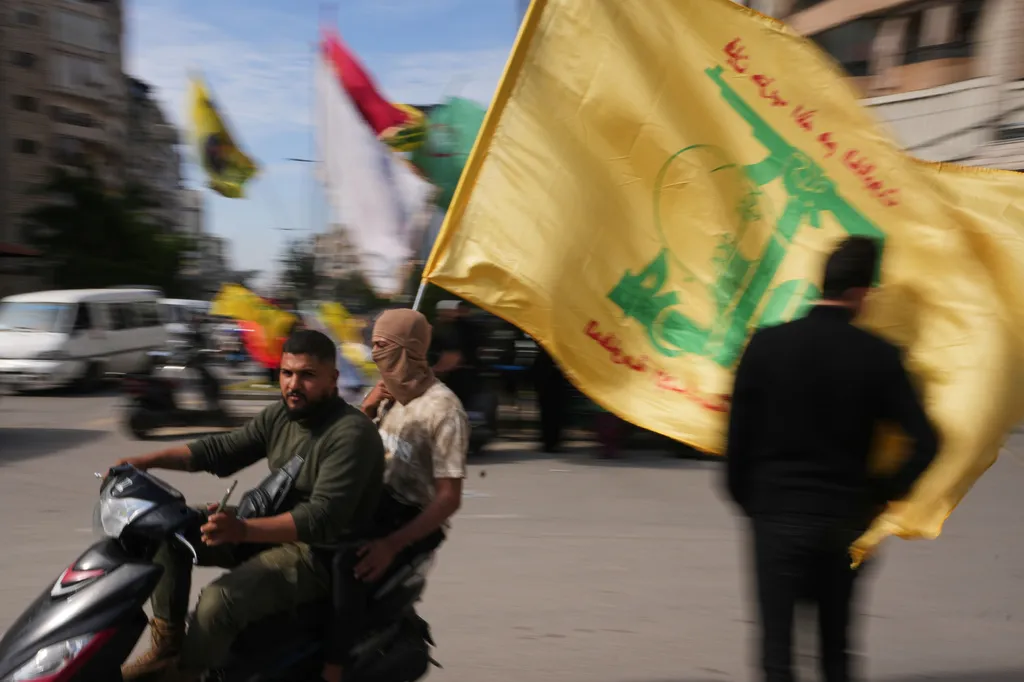
The U.S. Treasury last Thursday designated nine individuals, including Amal Movement security figures Ahmad Baalbaki and Ahmad Safawi, along with Brigadier General Khattar Nasser al-Din, who directs the Analysis Department at Lebanese General Security. This significant action by the U.S. Treasury specifically targeted a total of nine individuals in a move that shows a shifting strategy. The sanctions target Amal-linked security officials, signaling an end to the perceived distinction between Amal and Hezbollah in U.S. Policy. This approach marks a notable change, as it effectively ends the previous fiction of treating Amal and Hezbollah as distinct entities within the Lebanese political and security landscape. These actions were taken as part of a broader effort to address support for Hezbollah within the Lebanese state apparatus. Hezbollah has already dismissed the sanctions as having “absolutely no effect.” This dismissal notes the group's defiant stance in the face of international pressure.
Targeting State Complicity
Four Hezbollah parliamentarians, Hassan Fadlallah, Ibrahim al-Mousawi, Hussein al-Hajj Hassan, and Mohammed Fneish, were included in the recent sanctions, emphasizing the U.S. Focus on political figures. The U.S. Treasury also designated Colonel Samer Hamadi, who heads Lebanese Army Intelligence in Beirut's southern suburbs. This particular designation is significant as it directly implicates a high-ranking official within the national military structure. This expansion of sanctions signals a focus on individuals within state institutions perceived as supporting the group, rather than exclusively targeting known Hezbollah operatives. The inclusion of figures like Colonel Samer Hamadi indicates a deeper scrutiny of the institutional ties that enable Hezbollah's operations and influence. The U.S. Government appears to be drawing a clearer line regarding complicity within state bodies.
Hezbollah's system has been described as a "militia fused with mafia, weapons protected by patronage, coercion normalized through institutional complicity." This characterization paints a stark picture of a sophisticated network deeply embedded within the fabric of the Lebanese state and society. The description suggests that Hezbollah's power is not merely derived from its military capabilities but also from its intricate web of political and economic influence, which leverages state institutions for its own ends. Despite these measures, the Lebanese Army stated its soldiers remain "loyal." Hezbollah itself has already dismissed the sanctions, asserting they have "absolutely no effect." This consistent dismissal from Hezbollah suggests a calculated effort to downplay the impact of the sanctions on its operations and morale.
Broader Implications and Reactions
An Iranian diplomat, accused of coordinating Hezbollah’s regional support networks, was also sanctioned, further illustrating the international dimension of Hezbollah's activities and the U.S. Response. These actions follow Washington's earlier decision to cancel meetings for the Lebanese Armed Forces commander due to Lebanon’s perceived failure to address Hezbollah’s weapons. That prior cancellation served as a clear warning sign from the U.S. Regarding its expectations for Lebanon to curb Hezbollah's power. The Lebanese Army, however, issued a public statement after the designation of Colonel Samer Hamadi, asserting that its "soldiers remain “loyal”." This statement from the Lebanese Army was a direct response to the pressure exerted by the U.S. Sanctions, aiming to reassure both internal and external audiences of its institutional integrity and loyalty to the state. Hezbollah itself has dismissed the sanctions, stating they have “absolutely no effect.” This repeated dismissal by Hezbollah shows its defiance and intent to project an image of resilience against external pressure.
The expanded sanctions come as Lebanon and Israel prepare for security talks, adding another layer of complexity to an already tense regional situation. A military meeting is scheduled for May 29, with political negotiations set to take place in Washington on June 2-3. These diplomatic engagements proceed amidst the backdrop of intensified U.S. Pressure on Lebanese state institutions, creating a challenging environment for constructive dialogue. The timing suggests that the U.S. Aims to exert maximum leverage ahead of these key discussions, potentially influencing Lebanon's negotiating position or its internal political dynamics. The confluence of sanctions and diplomatic efforts notes the multifaceted approach being taken by international actors.
Future Sanctions Outlook
More than 100 additional names are currently under review for potential sanctions, according to reporting by Al-Arabiya’s senior Washington reporter. This ongoing review indicates a potential expansion of the U.S. Treasury's sanctioning efforts beyond the recent designations, suggesting a sustained and systematic campaign. The focus on individuals within the Lebanese state apparatus believed to be supporting Hezbollah suggests a continued strategy to exert pressure on the group by targeting its alleged enablers within official institutions. This approach aims to isolate Hezbollah by disrupting its institutional support structures and financial networks. The review process for these additional names shows the sustained attention from U.S. Authorities on financial networks and state actors perceived to be facilitating Hezbollah's operations and influence in Lebanon. The specific criteria for inclusion in this review remain undisclosed, but the pattern of recent sanctions has targeted figures across various governmental and security branches, indicating a broad scope for future actions. This proactive stance suggests that the U.S. Is committed to deepening its efforts to counter Hezbollah's power by dismantling its support systems from within the Lebanese state.