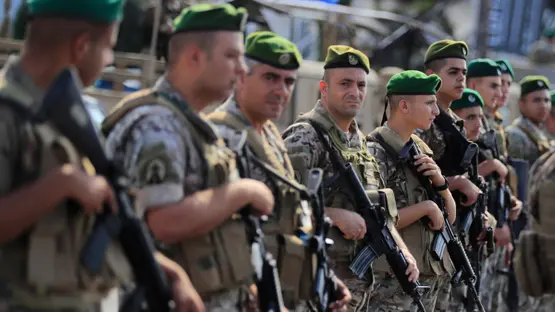
The United States announced sanctions against nine individuals on Thursday, May 21, 2026, accusing them of links to Hezbollah and of obstructing the peace process in Lebanon. These designations show a concerted effort by Washington to counter the influence of the Iran-backed group within the Lebanese political and security landscape. The individuals are also alleged to have impeded the disarmament of Hezbollah, an ongoing point of contention in the country. This action by the US Department of State notes concerns regarding Hezbollah's continued activities and its perceived obstruction of efforts to foster stability and sovereign governance in Lebanon.
These sanctioned officials were reportedly embedded across various sectors of Lebanon, including its parliament, military, and security apparatus. Their alleged roles involved working to preserve Hezbollah's influence within the country's institutions, thereby undermining the authority of the state. The US Department of State outlined these actions as detrimental to Lebanese sovereignty and stability, asserting that such deep-seated influence hinders the nation's ability to operate independently and pursue a genuine path toward peace. The US government maintains that the presence of individuals aligned with Hezbollah in critical government positions allows the group to exert undue control over national policy and security decisions, further entrenching its power.
Individuals Targeted by Sanctions
Among the nine individuals designated, several hold significant positions. Mohamed Abdel-Mottaleb Fanich, identified as a key figure, leads Hezbollah's executive council, a central body within the organization's leadership structure. His role is considered key in guiding the group's strategic and operational decisions. Another individual named in the sanctions is Hassan Nizammeddine Fadlallah, who has served as a Hezbollah member of the Lebanese parliament since 2005. Beyond his legislative duties, Fadlallah also previously worked with Al Nour Radio and Al Manar TV, both media outlets widely associated with Hezbollah, indicating his involvement in the group's communication and propaganda efforts.
Hussein Al-Hajj Hassan, another long-serving parliamentarian, has represented Hezbollah in the Lebanese parliament since 1996, demonstrating his entrenched position within the country's political system. The sanctions also targeted Ali Ahmad Safawi, described as the commander of the Lebanese Amal militia in southern Lebanon. Safawi reportedly led Amal forces in joint military operations with Hezbollah against Israel, noting his direct involvement in armed activities alongside the designated terrorist group. His leadership role in such operations suggests a close operational alliance between the Amal Movement and Hezbollah in the southern region.
Ibrahim al-Moussawi was also included in the list of sanctioned individuals. He heads Hezbollah's media committee and represents the group in parliament, serving as a prominent voice for the organization within both legislative and public spheres. His dual role shows Hezbollah's sophisticated approach to information dissemination and political representation. Additional individuals named include Ahmad Asaad Baalbaki and Ali Ahmad Safawi, both described as security officials of the Amal Movement. Their inclusion in the sanctions list points to concerns about the security apparatus of the Amal Movement and its alleged collaboration with Hezbollah.
Colonel Samir Hamadi, a senior Lebanese intelligence official, was also included in the list of sanctioned individuals. His designation indicates US concerns about the infiltration or influence of Hezbollah within Lebanon's official intelligence services. Brigadier General Khattar Nasser Eldin, head of the Lebanese General Directorate for General Security, was also included in the designations. The targeting of such high-ranking security officials suggests a deep-seated concern in Washington regarding the extent of Hezbollah's alleged influence over Lebanon's state security institutions. These designations aim to pressure individuals accused of supporting or enabling Hezbollah's activities within Lebanon's political and security structures, with the ultimate goal of weakening the group's operational capacity and political leverage.
Hezbollah's History and Designations
Hezbollah was established in 1982 by Iran's Revolutionary Guards, emerging during the Lebanese Civil War with significant ideological and material support from Tehran. The organization has since been designated a "terrorist group" by the United States and several Gulf Arab states, including Saudi Arabia, reflecting international condemnation of its actions and objectives. This designation has significant implications, leading to financial restrictions and diplomatic isolation for the group and its affiliates.
The United States holds Hezbollah responsible for a series of deadly attacks in 1983. Among these, the U.S. Attributes to Hezbollah a suicide bombing that killed 241 U.S. Service personnel and destroyed the U.S. Marine headquarters in Beirut, a devastating attack that remains a significant point of reference in US-Hezbollah relations. Another incident in 1983, for which the U.S. Blames Hezbollah, involved the destruction of a French barracks, resulting in the deaths of 58 French paratroopers, further illustrating the group's early operational reach and lethality. Additionally, the U.S. Government attributes a suicide attack on the U.S. Embassy in Beirut, also in 1983, to Hezbollah, showing the group's alleged targeting of Western interests in the region during its formative years.
Lebanon's Response and Ceasefire
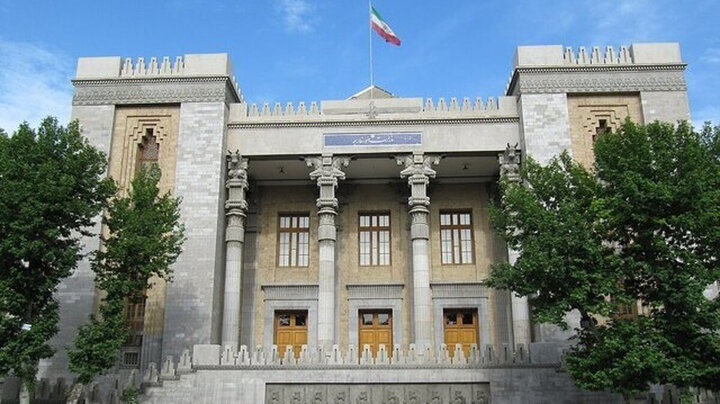
In a separate but related development, Israel and Lebanon last week consented to a 45-day extension of an existing ceasefire. This agreement reflects ongoing diplomatic efforts to maintain a fragile peace along their shared border, even as regional tensions persist. Separately, Lebanon’s Foreign Ministry declared Mohammad Reza Sheibani persona non grata, ordering the individual to depart Beirut. This move by the Lebanese government signals a significant diplomatic rift and a rejection of the individual's presence within the country.
US Stance and Financial Incentives
Mohammad Reza Sheibani, who Lebanon's Foreign Ministry declared persona non grata, has been identified as the Iranian ambassador designate to Lebanon. This expulsion of a high-ranking Iranian diplomat by Beirut indicates a potential shift in Lebanon's foreign policy or a response to specific concerns regarding Iranian influence. The US Department of State, in an effort to further pressure the group, announced it would pay up to $10 million for information leading to the disruption of Hezbollah's financial mechanisms. This substantial reward notes the US government's commitment to dismantling the group's funding networks and limiting its operational capabilities, both within Lebanon and internationally. The financial incentive is part of a broader strategy to choke off resources that enable Hezbollah's activities, which the US views as destabilizing to the region.