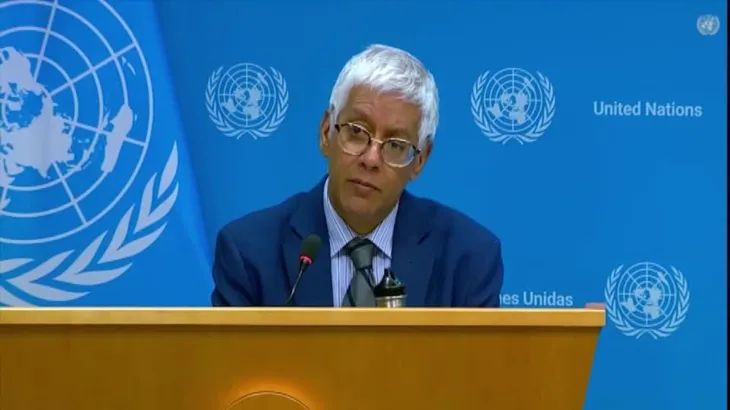
A UN spokesman stated that forced evacuation orders issued across southern and eastern Lebanon are "nearly impossible to follow safely." The spokesman's remarks, made today, questioned whether Israel is complying with international humanitarian law regarding the directives. The UN official expressed concern over the safety implications for civilians attempting to comply with such orders in the region, particularly as these areas may be active conflict zones. The statement showed the significant challenges and inherent risks faced by non-combatants when instructed to relocate under duress.
Evacuation Orders Unsafe
The United Nations raised questions today regarding the safety of forced evacuation orders issued across southern and eastern Lebanon. A UN spokesman stated that these directives are "nearly impossible to follow safely," casting doubt on whether Israel is adhering to international humanitarian law. The official expressed concern over the potential dangers civilians face when attempting to comply with such orders in the region, noting the practical difficulties of ensuring their protection during movements. Such concerns are particularly acute in areas where infrastructure may be compromised or where active hostilities are ongoing, making safe passage extremely challenging. These remarks were published on June 9, 2026, drawing immediate attention to the humanitarian situation. The UN's position emphasizes that even in times of conflict, the safety and well-being of civilians must remain critical, and any evacuation orders must be executable without undue risk to life.
International Law Concerns
The UN spokesman's statement calls into question whether Israel is complying with international humanitarian law regarding the evacuation directives. The remarks from the United Nations official suggest that the issuance of forced evacuation orders in southern and eastern Lebanon may not align with the principles governing the protection of civilians during armed conflict. International humanitarian law requires that all feasible precautions be taken to avoid, and in any event to minimize, incidental loss of civilian life, injury to civilians, and damage to civilian objects. This includes ensuring that any ordered evacuations are carried out in a manner that guarantees the safety and dignity of those being moved, providing safe routes and adequate shelter. The UN's questioning centers on whether these obligations are being met given the practical difficulties and safety risks associated with the directives, which could expose civilians to further harm. These concerns highlight the complexities of ensuring civilian protection in active conflict zones and the strict legal framework that governs the conduct of all parties involved in hostilities. The principle of distinction, which obliges parties to distinguish between civilians and combatants, and between civilian objects and military objectives, is central to these considerations, particularly when issuing directives that impact civilian populations.
UN Spokesman's Statement
A UN spokesman today stated that forced evacuation orders issued across southern and eastern Lebanon are "nearly impossible to follow safely." The spokesman's remarks questioned whether Israel is complying with international humanitarian law regarding the directives. The United Nations official expressed concern over the safety implications for civilians attempting to comply with such orders in the region, emphasizing the potential for increased vulnerability. This statement from the UN notes ongoing concerns about civilian protection in areas affected by conflict, where populations are already under immense stress. The organization continues to monitor the situation closely, focusing on adherence to established international legal frameworks that govern the conduct of hostilities and the safeguarding of non-combatants. The UN's intervention serves as a reminder to all parties of their obligations under international law to protect civilian lives and to ensure that any actions, including evacuation orders, do not inadvertently place them in greater peril. The safety of those attempting to relocate is a critical aspect of humanitarian response in conflict situations, and the UN's assessment points to significant challenges in this regard within southern and eastern Lebanon.