The United Nations has reiterated its urgent call for peacekeepers operating in Lebanon to be granted unrestricted freedom of movement, following a series of recent incidents that have challenged the mission's operational capabilities in the southern part of the country. This demand shows the critical importance of unimpeded access for the United Nations Interim Force in Lebanon (UNIFIL) personnel as they strive to fulfill their mandate in a volatile region. UNIFIL, which has been present in Lebanon since 1978, plays a key role in monitoring the cessation of hostilities and supporting the Lebanese Armed Forces. The challenges to their operations have included direct confrontations and obstructions, raising concerns about the safety of peacekeepers and the integrity of their mission. During one particularly concerning incident, an Israeli tank aimed its weapon directly at a UNIFIL vehicle, an action that further noted the severe tensions and potential for escalation in the operational area where peacekeepers are deployed. Such actions directly impede UNIFIL's ability to observe and report on violations, which is essential for maintaining stability.
Escalating Projectile Fire and Airspace Violations
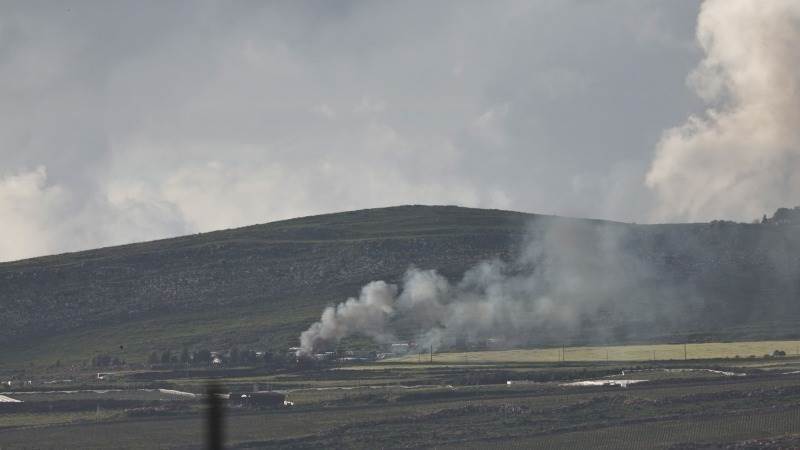
The recent period has been marked by a significant increase in military activity, as evidenced by UNIFIL's careful observations. UNIFIL peacekeepers reported observing a total of 143 trajectories of projectiles on Thursday alone, indicating a persistent exchange of fire across the Blue Line. A detailed breakdown of these observations revealed that 119 of these projectiles were attributed to Israel, while the remaining projectiles were attributed to Hezbollah. This level of activity follows an even higher volume of engagements recorded on Wednesday, when UNIFIL observed a staggering 364 projectile launches. On that specific day, the majority of the projectiles, 330, were attributed to Israel, with 34 attributed to Hezbollah. These figures show the intensity and frequency of cross-border shelling and rocket fire. Beyond the ground-based projectile activity, UNIFIL also documented a concerning number of airspace violations, with 38 such incidents observed on Wednesday. These persistent observations of both projectile exchanges and airspace incursions show the continued military engagements in the region, which is closely monitored by the UN mission as part of its mandate to maintain international peace and security. The sustained nature of these incidents poses a constant threat to regional stability and the safety of civilians.
Peacekeeper Movement Restricted and Confronted
The challenges faced by UNIFIL personnel are not limited to observing distant exchanges of fire but extend to direct encounters that restrict their operational freedom. A UNIFIL convoy, while conducting its duties, experienced a significant obstruction by two Israeli tanks in the Lebanese village of Tiri on Wednesday. This incident directly impeded the peacekeepers' ability to patrol and monitor the area effectively. During the confrontation, soldiers from the Israeli side explicitly signaled the UNIFIL convoy to halt, an order that forced the patrol to stop and subsequently reverse its course, disrupting its planned route. The situation escalated when one of the Israeli tanks aimed its weapon directly at a UNIFIL vehicle, a hostile act that raised serious concerns about the safety of the peacekeepers and the adherence to established protocols regarding UN operations. Following the tense encounter and the forced detour, the UNIFIL convoy was eventually permitted to proceed to its intended destination by taking an alternate route, albeit after significant delay and an unnecessary confrontation. This incident exemplifies the critical need for all parties to respect UNIFIL's freedom of movement and ensure the safety of its personnel.
UNIFIL's Commitment and High-Level Calls
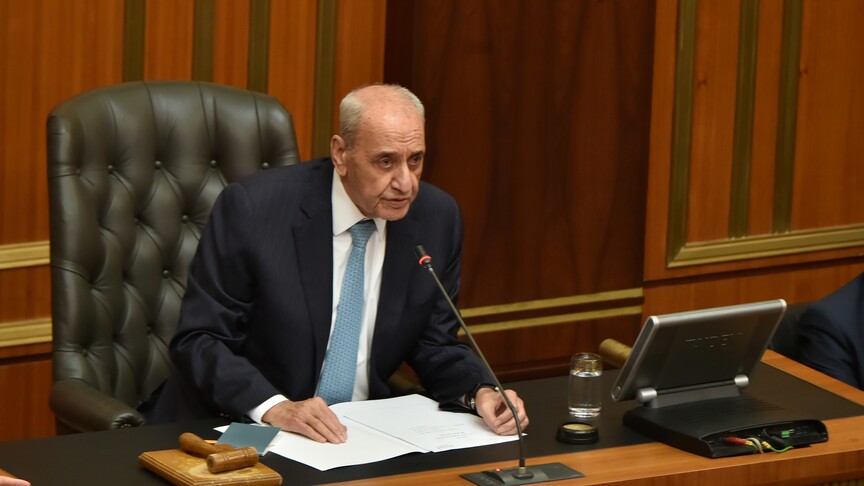
Amidst these escalating tensions and operational challenges, UNIFIL head Major General Diodato Abagnara engaged in key talks with key Lebanese officials. Major General Abagnara held discussions with President Joseph Aoun and Speaker of Parliament Nabih Berri in Beirut on Wednesday. These high-level meetings were conducted against a backdrop of ongoing regional tensions and served as an opportunity to address the critical issues affecting UNIFIL's mission and the broader stability of south Lebanon.
Speaking through a spokesperson, Major General Abagnara unequivocally affirmed UNIFIL's enduring commitment to its mandate. "UNIFIL remains committed to supporting, in close coordination with the Lebanese Armed Forces, the full implementation of resolution 1701, which continues to be the framework for restoring stability and security in south Lebanon," the spokesperson stated. This powerful statement shows the mission's unwavering dedication to its vital role in maintaining peace and security in the area, despite the significant obstacles encountered. The resolution, adopted in 2006, calls for a full cessation of hostilities, respect for the Blue Line, and the disarmament of all armed groups in Lebanon. The mission continues to work closely with local authorities and the Lebanese Armed Forces to achieve its objectives under this resolution, emphasizing the importance of cooperation for lasting peace. The United Nations' repeated calls for unrestricted access are fundamental to enabling UNIFIL to effectively carry out its mandate and prevent further escalation in this volatile border region.