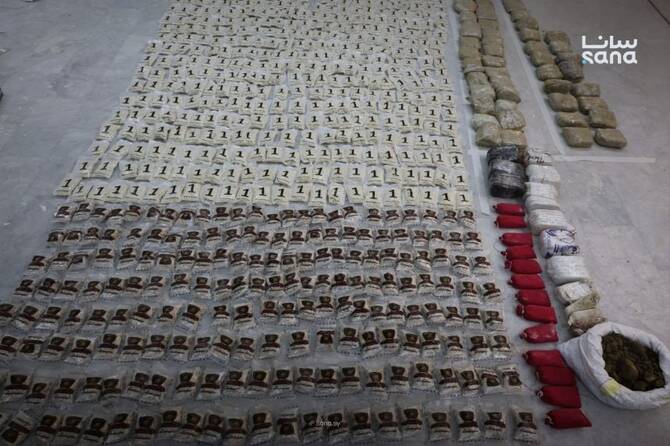
Syrian security forces have intercepted multiple attempts to smuggle narcotics from Lebanese territory in recent days, marking a significant push against illicit drug trafficking. The Syrian Arab Army’s Border Guard Forces seized more than 700,000 captagon pills and over 40 kilograms of hashish during these operations. These interdictions occurred as forces worked diligently to halt the persistent flow of drugs into Syria, reinforcing the new authorities' commitment to combating this widespread issue. The Syrian Arab Army’s Border Guard Forces, specifically tasked with securing the nation's borders, have been key in these recent operations, demonstrating their enhanced vigilance against cross-border criminal enterprises.
Details of Recent Seizures
The seizures took place as part of a series of anti-smuggling operations conducted along Syria's extensive border with Lebanon. Syrian authorities reported that the illicit narcotics were intended for distribution and sale in the rural areas surrounding the major cities of Homs and Damascus, indicating a widespread distribution network. These interdictions are part of ongoing, intensified efforts to combat drug trafficking across the border, which has long been a conduit for illegal substances. The Syrian Arab Army’s Border Guard Forces have been at the forefront of these efforts, demonstrating their resolve to secure the nation's borders against such illicit activities and prevent the widespread dissemination of illegal drugs within the country.
Earlier this month, Syrian forces successfully thwarted another attempt to smuggle drugs. That particular operation involved narcotics being transported from Lebanon towards farms located near Al-Nabek in the Damascus countryside, noting specific routes and destinations favored by traffickers. These incidents show the persistent challenge of drug smuggling into Syria from neighboring territories and the continuous vigilance required to counter it. The Syrian Arab Army’s Border Guard Forces have been at the forefront of these efforts, demonstrating their resolve to secure the nation's borders against such illicit activities. This proactive stance by the Border Guard Forces is a clear indication of the intensified campaign against drug smuggling.
Context of Captagon Trade
Captagon, an amphetamine-type stimulant, has become central to a multibillion-dollar drug-trafficking network that has deeply entrenched itself in the region. This illicit trade expanded significantly under the former Assad regime during the country's 14-year civil war. The protracted conflict created an environment ripe for the proliferation of such networks, transforming Captagon into a major source of revenue for various groups involved in the Syrian conflict. The drug’s production and trafficking have thus been a persistent and complex challenge for regional security forces, contributing to instability and organized crime. The scale of the trade has drawn international concern, with neighboring countries and global anti-narcotics agencies closely monitoring the situation. The vast profits generated by this trade have fueled criminal enterprises and exacerbated regional instability, making its disruption a priority for international law enforcement.
New Regime's Anti-Drug Stance
After the fall of the Assad regime in December 2024, new authorities in Syria pledged to crack down on narcotics production and smuggling. This commitment marks a significant shift in policy regarding the illicit drug trade that has proliferated in the region for years. The new authorities aim to dismantle the sophisticated networks that have facilitated the production and distribution of Captagon and other illicit substances. This renewed focus is seen as a key step towards restoring stability and legality within the country. The Ministry of Defense, which oversees the Border Guard Forces, did not state whether any arrests were made in connection with the recent interceptions of captagon and hashish. However, the successful seizure of such substantial quantities of drugs indicates a proactive approach by the new Syrian government to address the deep-rooted issue of drug trafficking. The Ministry of Defense's oversight of the Border Guard Forces notes the strategic importance placed on these anti-narcotics operations.