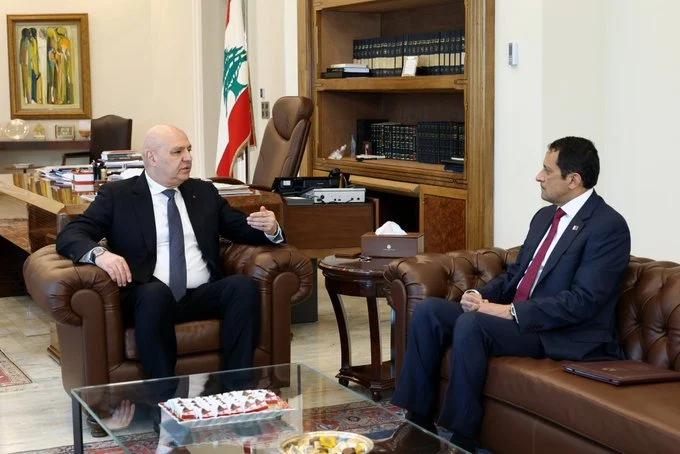
President Michel Aoun convened a series of important meetings at Baabda Palace, dedicating his efforts to address and follow up on critical diplomatic, political, and economic files pertinent to the nation's current trajectory. These engagements show the President's active role in navigating Lebanon's complex landscape. During these significant discussions, President Aoun received Sheikh Saud bin Abdulrahman Al Thani, the Ambassador of Qatar to Lebanon, marking a key moment in bilateral relations. The discussions between President Aoun and Ambassador Al Thani focused intently on following up on various files pertinent to Lebanon’s current situation, encompassing a broad spectrum of issues from regional stability to economic recovery.
Qatar's Enduring Commitment
In a clear demonstration of solidarity, the Qatari Ambassador, Sheikh Saud bin Abdulrahman Al Thani, affirmed Qatar's continued and unwavering support for Lebanon during his meeting with President Michel Aoun. Ambassador Al Thani specifically emphasized Doha's profound keenness on Lebanon's stability, a cornerstone of regional peace, and its commitment to actively supporting the Lebanese government in its endeavors. He noted Qatar's dedication to fostering de-escalation measures, which are key for maintaining calm and security within the country. Sheikh Saud reiterated Qatar's steadfast pledge to provide essential aid to Lebanon, clarifying that this support would be delivered in accordance with the established program agreed upon by both nations. This commitment reflects Qatar's consistent approach to assisting Lebanon through its challenges. Qatar maintains its supportive presence in Lebanon, a stance that is particularly significant and deeply appreciated given the country's current economic and political conditions, which necessitate strong international backing.
President Aoun's Diplomatic Agenda
President Michel Aoun engaged in several key diplomatic discussions at Baabda Palace, reflecting the multifaceted nature of Lebanon's international relations. Among these, he held a productive meeting with Metropolitan Nifon Siggli, the Patriarchal Vicar for the Orthodox in Russia. Their conversation centered on Lebanese-Russian relations, exploring avenues for strengthening these ties, and also touched upon the significant role of the Russian Orthodox Church in fostering cultural and spiritual connections. This interaction noted the ongoing ties between Lebanon and Russia, touching upon religious and bilateral matters that are important for both countries.
In another significant engagement, President Aoun received Jean-Christophe Carret, the World Bank's Regional Director, for a farewell visit as his tenure concluded. During their meeting, President Aoun expressed his sincere gratitude and thanked Carret for his dedicated efforts in strengthening the vital relations between Lebanon and the World Bank throughout his directorship. The departure of the regional director marked a moment for reflection on the collaborative work undertaken during his tenure, which included various development projects and financial assistance initiatives. Additionally, President Aoun discussed the general situation and current developments in Lebanon with MP Wael Abu Faour. Their full conversation covered various aspects of the country's evolving political and social landscape, addressing both immediate concerns and long-term prospects.
Lebanon's Path Forward
Lebanon currently faces a critical phase, characterized by significant internal stability challenges and an undeniable pressing need for both Arab and international support to navigate its complex circumstances. The country is actively seeking to consolidate its internal stability through various domestic reforms and initiatives, while simultaneously striving to strengthen its external support networks. This dual approach involves fostering sustained Arab relations and enhancing engagement with key international institutions. These concerted efforts are aimed at navigating the current complex situation, which demands a coordinated and full strategy.
Alongside the vital political initiatives designed to contain tensions and address the immediate consequences of the current phase, there is a widely recognized necessity to keep pace with and advance key economic, reform, and development files. This full approach shows Lebanon's multifaceted strategy to overcome its present difficulties and establish a more stable and prosperous future for its citizens. The ongoing commitment to these interconnected areas is seen as fundamental to Lebanon's long-term recovery and resilience.