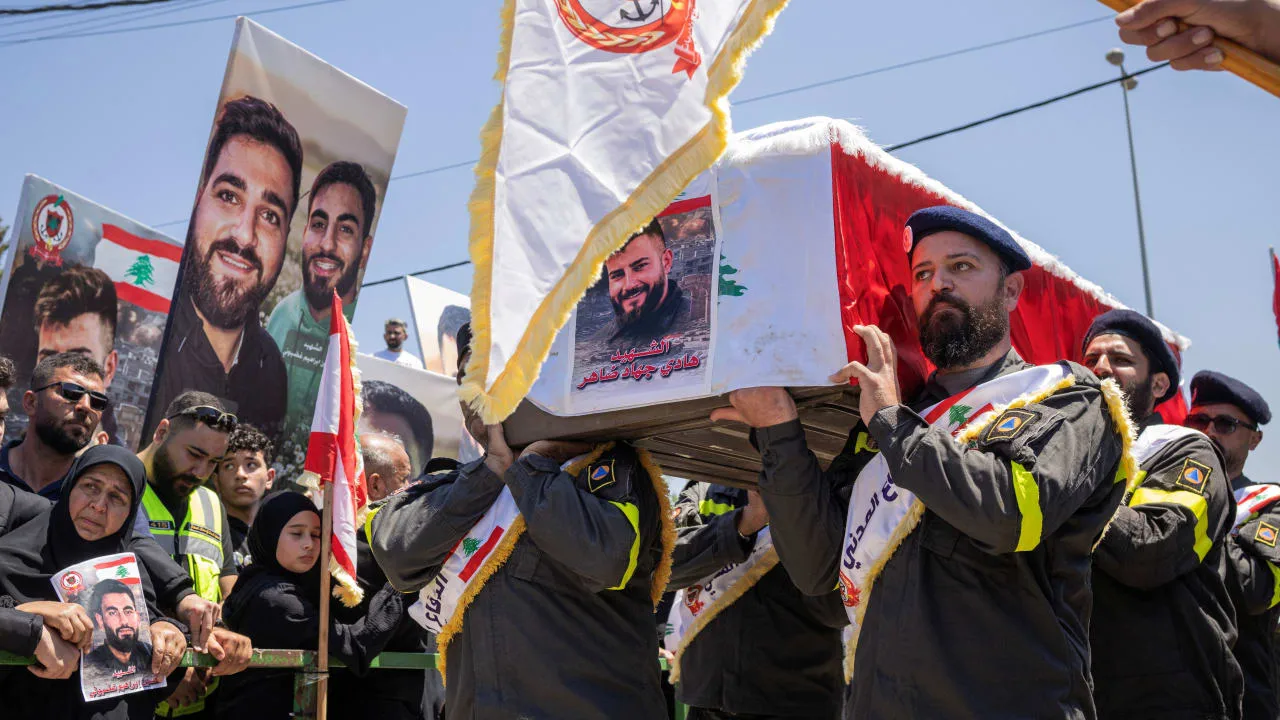
Prime Minister Benjamin Netanyahu has repeatedly called for "total victory" against adversaries on Israel's northern and southern borders, a stance showed by his public statements regarding Hezbollah and Hamas. Prime Minister Benjamin Netanyahu's rhetoric has consistently included calls for 'complete victory' against Hezbollah in the North and Hamas in the South. Netanyahu declared, "We will fight until we achieve victory – total victory; there is no substitute for it." His rhetoric has consistently emphasized a definitive military resolution to ongoing conflicts. Netanyahu affirmed that Israel "must defeat" Hezbollah and will continue to degrade the group "until all our objectives are met." These statements outline the Israeli government's declared strategic goals concerning security challenges in the North and South, as conflicts persist. The overall article was published on May 21, 2026.
Netanyahu's Rhetoric vs. Reality
Prime Minister Benjamin Netanyahu has publicly declared, "We will fight until we achieve victory – total victory; there is no substitute for it." He also stated that Israel "must defeat" Hezbollah and will continue degrading the group "until all our objectives are met." The article argues that such an emphasis on "total victory" carries the risk of inadvertently minimizing significant accomplishments that may have already been achieved through military or diplomatic efforts. This perspective suggests that an absolute standard could obscure progress and create a perception of perpetual conflict if complete eradication of an adversary proves unattainable. The article argues that setting the bar for 'total victory' risks minimizing accomplishments already achieved, potentially overlooking key gains in security or stability that fall short of an absolute win.
The article asserts that Israel's regional standing necessitates its perception as a strong entity. This strength must be demonstrated through a willingness to employ decisive force. The underlying rationale is to prevent Israeli citizens from living under a constant threat, ensuring security through a clear and firm posture. Israel must be perceived in the region as strong and willing to use decisive force to prevent its citizens from living under constant threat. Such a stance is presented as key for deterrence and for maintaining a stable security environment along its borders, signaling resolve to both allies and adversaries. Without this perception of strength, the article contends, the region could interpret any restraint as weakness, potentially inviting further aggression. This strategic imperative shapes much of the Israeli government's public messaging and military doctrine regarding its borders.
Hezbollah's Entrenched Power
It is considered a fantasy that the Lebanese government would be independent of Hezbollah and exercise full control over its military. Hezbollah is described as a "state within a failed state" and remains the most powerful military force in Lebanon, even after being significantly degraded by Israeli military action. The ceasefire imposed by US President Donald Trump is seen by some as having handed a strategic victory to Iran, showing Hezbollah's role as a division of the Islamic Revolutionary Guard Corps. This perception notes how external diplomatic efforts can inadvertently strengthen Hezbollah's position and, by extension, Iran's influence in the Levant. Hezbollah adheres to Iran's Supreme Leader under the doctrine of Wilayat al-Faqih, further cementing its ties to Tehran and integrating it into Iran's regional security architecture. This ideological and operational alignment means that any action against Hezbollah is often viewed through the lens of a broader confrontation with Iran.
Roughly half of Lebanon's population is Shi'ite, and many Lebanese citizens are ideologically aligned with Hezbollah or dependent on its extensive social services. This widespread support contributes to the group's deep entrenchment within Lebanese society, providing it with a strong popular base that extends beyond purely military or political influence. Hezbollah's provision of healthcare, education, and social welfare programs fills critical gaps left by the struggling Lebanese state, fostering loyalty and dependence among a significant portion of the population. Many Lebanese fear that if Hezbollah perceives an existential threat, it could trigger another civil war to preserve its dominance, a concern that influences political calculations within the country and discourages direct confrontation with the group. This fear is rooted in Lebanon's own history of sectarian conflict, making any challenge to Hezbollah's power a highly delicate and potentially destabilizing endeavor.
Hezbollah still effectively holds veto power over Lebanese government decisions, significantly limiting the state's capacity for independent action. This de facto control allows the group to block legislation, influence appointments, and steer national policy in ways that serve its own interests and those of its Iranian patrons. The Lebanese Armed Forces (LAF) remain compromised by infiltration, including within its intelligence services, which further complicates any potential internal challenge to Hezbollah's authority. This infiltration means that sensitive information can be leaked, and operations against Hezbollah can be undermined from within, severely hampering the LAF's effectiveness and trustworthiness. The LAF is currently both unwilling and unable to confront Hezbollah at its current strength, according to assessments, a reality that shows the depth of Hezbollah's military and political dominance. Lebanon's non-Shi'ite political leadership is similarly constrained, operating within the framework of Hezbollah's widespread influence and often forced to make concessions to maintain a semblance of national unity. The group has evolved from a "state within a state" to a "state against the state," reflecting its dominant and often obstructive role in Lebanese governance, actively working against the official state's authority when it conflicts with Hezbollah's agenda. This transformation signifies a critical shift in the balance of power, where Hezbollah no longer merely coexists with the state but actively dictates its limitations.
A Pragmatic Border Security Strategy
A viable pathway to securing Israel's northern border can be achieved through a combination of military action, buffer zones, and diplomatic achievements. This multifaceted approach acknowledges the complex nature of the threat and the limitations of any single strategy. For American policy, the path forward in Lebanon generally involves disarming Hezbollah, strengthening the Lebanese government and its armed forces (LAF), and enforcing United Nations Security Council Resolution 1701 and United Nations Security Council Resolution 1559. These resolutions call for the disarmament of all armed groups in Lebanon, the deployment of the LAF throughout the country, and respect for Lebanon's sovereignty and territorial integrity. The United States views these objectives as critical to fostering a stable and independent Lebanon, thereby reducing regional tensions and enhancing Israeli security.
The United States has facilitated meetings between Israeli and Lebanese ambassadors in Washington, which represented a symbolic step towards potential normalization between the two countries. Such diplomatic overtures, though often fraught with challenges, are considered essential for building channels of communication and de-escalation. Despite these efforts, challenges persist. Israel's current buffer zone extends approximately five to eight kilometers from its northern border, yet drones and longer-range missiles continue to strike Israel Defense Forces (IDF) positions and civilian areas from much greater distances, even during periods of ceasefire. This demonstrates the evolving nature of the threat, where traditional ground-based buffer zones are increasingly insufficient against modern weaponry. The continued strikes, even during declared ceasefires, highlight the persistent security vacuum and the difficulty of enforcing agreements without strong local control. These incidents show the urgent need for more effective security measures and stronger enforcement mechanisms.
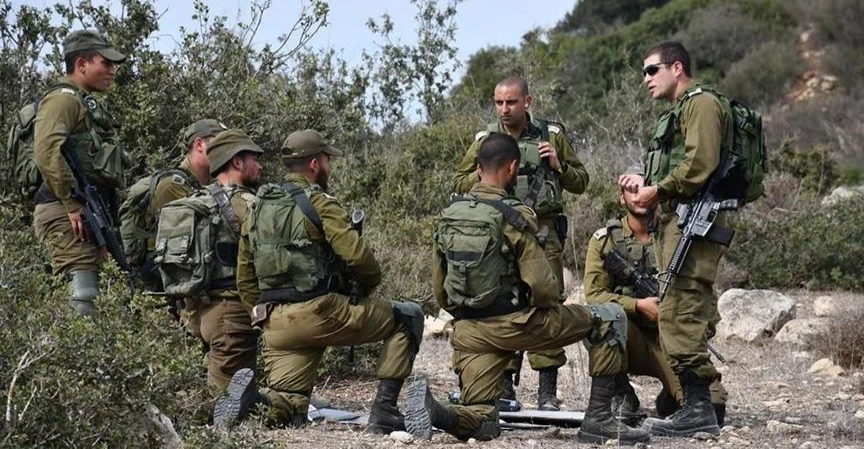
Discussions with IDF officers who interact with American intermediaries working with the LAF suggest several achievable steps for improving border security. These discussions aim to bridge the communication gap and identify practical solutions that can be implemented on the ground. However, messages passed through these American mediators are often ignored or delayed when Israel identifies Hezbollah activity in southern Lebanon, complicating de-escalation efforts and hindering timely responses to security threats. This communication breakdown points to a fundamental lack of trust and coordination, exacerbated by Hezbollah's independent actions. One proposed step involves vetted LAF units assuming control over specific areas in southern Lebanon, particularly those currently exploited by Hezbollah for military activities. This would entail a careful selection and training process to ensure these units are loyal to the Lebanese state and capable of operating independently of Hezbollah's influence. Expanding these vetted units from battalion strength to brigades would allow the Lebanese government to regain control of its military and territory, thereby fulfilling the mandate of United Nations Security Council Resolution 1559, which explicitly calls for the disarmament of all militias and the full deployment of the LAF. Such an expansion would provide the LAF with the necessary manpower and institutional capacity to assert state authority and enforce border security, reducing reliance on external forces for stability.
The Long Road to Stability
Lasting stability in Lebanon may depend on a broader regional shift, specifically a transformation in Iran. Given Hezbollah's deep ideological and operational ties to Tehran, fundamental changes in Iran's foreign policy and its approach to regional proxies would be instrumental in altering Hezbollah's behavior and reducing its destabilizing influence. Without such a transformation, any localized efforts to disarm Hezbollah or strengthen the Lebanese state are likely to face persistent challenges and external interference. A premature "solution" imposed on Lebanon, one that does not address the root causes of Hezbollah's power and its external support, would likely perpetuate the cycle of state weakness and militant dominance. Such an approach could inadvertently create new grievances, exacerbate existing tensions, and fail to establish a truly sovereign and stable Lebanese state. Therefore, a full strategy for Lebanon's stability must consider the broader geopolitical context and the critical role played by regional actors, particularly Iran. Efforts to bolster the Lebanese state and its institutions, while essential, must be complemented by sustained diplomatic pressure and strategic engagement aimed at reducing external interference and fostering a more conducive regional environment for peace and security.