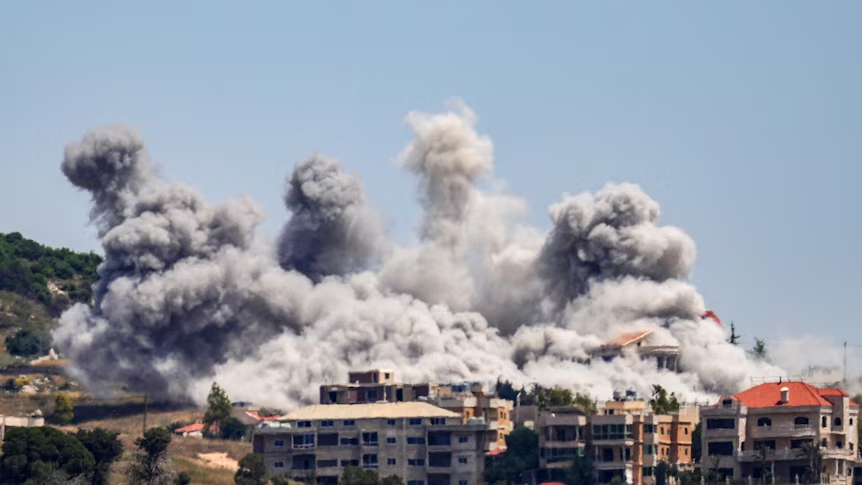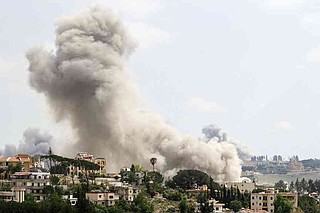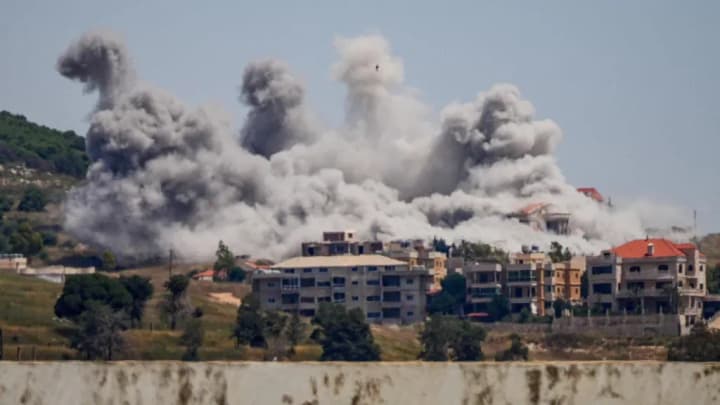
Nine people have died in Israeli strikes in southern Lebanon, including six overnight, with a Syrian citizen among the fatalities in a village near Nabatiyeh, as renewed hostilities flared between Israel and Hezbollah. Despite an announcement by U.S. President Donald Trump on Monday that both sides had agreed to de-escalate, missile launches from Lebanon immediately followed his statement, prompting Israeli warnings for residents in northern Israel to seek cover. Trump stated on social media, following a call with Israeli Prime Minister Benjamin Netanyahu, that "Hezbollah had agreed that all shooting will stop — That Israel will not attack them, and they will not attack Israel.” He added that there would be no Israeli troops “going to Beirut” and that those on their way "have already been turned back.” However, Israel's government ordered strikes on Beirut's southern suburbs, and Hezbollah fired rockets at northern Israel, including the outskirts of Haifa. Netanyahu affirmed Israel would "operate as planned" and strike targets in Beirut if Hezbollah’s attacks do not cease.
Deadly Strikes Rock Southern Lebanon
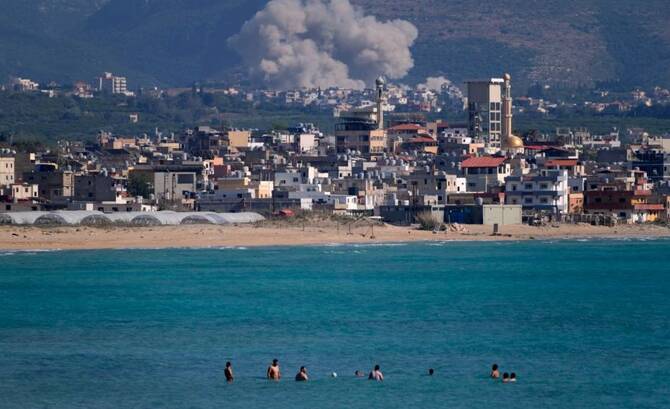
An airstrike in the port city of Tyre on Monday afternoon caused heavy damage to the Jabal Amel Hospital, and six people, including four Syrians and two Palestinians, were killed in a separate strike near Tyre. Reports indicated that the dead included two paramedics whose ambulance was hit in the Chehour area. The death of a Lebanese army serviceman and the wounding of two other soldiers were also reported.
According to Lebanese authorities, at least 3,516 people have been killed in the country since the start of the war. More than a million people have been forced to flee their homes in Lebanon. The latest round of fighting between Israel and Hezbollah has killed 3,433 people in Lebanon and displaced more than 1 million people.
Hezbollah Retaliates, Targets Israel
Hezbollah claimed responsibility for rocket fire on northern Israel, stating it attacked a gathering of Israeli troops early Monday and struck what it described as Israeli military infrastructure in Tiberius, located a few dozen miles south of the border. According to reports, the two sides had been under a ceasefire since mid-April, but Hezbollah resumed attacks after Israeli strikes in Lebanon that Israel characterized as self-defense. The Israeli military reported that its air force intercepted two projectiles launched from Lebanon toward Israeli territory. The military also said it intercepted a drone and a suspicious aerial target that crossed the border from Lebanon into the area where Israeli soldiers operate in southern Lebanon. Israel’s military further reported that a soldier was killed in southern Lebanon overnight in a drone attack by Hezbollah. In northern Israel, two civilians have also been killed, according to reports.
Diplomatic Efforts and Ceasefire Tensions
The new hostilities have tested a partial ceasefire reached earlier this week, with Israeli and Lebanese diplomats continuing negotiations in Washington, mediated by the United States. According to the Lebanese side, the agreement stipulates that Israel refrain from strikes on Beirut in exchange for Hezbollah ceasing attacks on Israeli territory. Reports indicated that Israeli forces recently made their deepest incursion into Lebanon in more than a quarter century. Talks between Israel and Lebanon are scheduled for Tuesday and Wednesday in Washington, where Lebanese negotiators hope to widen the scope of areas not attacked as they seek a complete ceasefire. These Israel-Lebanon talks, which began in April, were the first in over three decades between the countries, which have no formal diplomatic relations. Beirut has been mostly spared from airstrikes since the ceasefire went into effect, apart from two targeted attacks on the city's southern suburbs in May.
U.S. President Donald Trump stated that "there would be no Israeli troops “going to Beirut” and that those on their way "have already been turned back.”" Mr. Trump further claimed that "Hezbollah had "agreed that all shooting will stop — That Israel will not attack them, and they will not attack Israel.”" However, Prime Minister Benjamin Netanyahu confirmed the conversation but warned that "Israel would strike targets in Beirut, Lebanon's capital, if Hezbollah’s attacks do not stop," adding that the Israeli military would continue “to operate as planned” in southern Lebanon. Lebanese authorities secured Hezbollah’s approval of a proposal by U.S. Secretary of State Marco Rubio, which he described as an "action plan to ensure security in Lebanon, independent of Hezbollah," suggesting Israel would not strike Beirut's southern suburbs if Hezbollah did not attack northern Israel. U.S. Ambassador Mike Waltz said de-escalation and peace would come quickly "if Hezbollah immediately ceases its attacks, as apparently it’s promised, and the government of Lebanon asserts its fully sovereignty, rebuilds, and brings its people home." Lebanon's U.N. Ambassador Ahmad Arafa commended the Trump administration for “constructive efforts aimed at giving diplomacy a chance” and the President's latest push.
International Reactions and Broader Context
Israel reported the deaths of 26 soldiers and four civilians since the start of the conflict, with Netanyahu’s office specifying at least 26 Israeli soldiers and a defense contractor killed in or near southern Lebanon. Israel ordered strikes on Beirut suburbs, with a joint statement from Prime Minister Benjamin Netanyahu and Israeli Defense Minister Israel Katz attributing the orders to "attacks against our cities and citizens" and repeated ceasefire violations by Hezbollah. The Israeli military's Arabic spokesman advised residents to leave the suburbs, warning of attacks on Beirut's Dahiyeh area if Hezbollah continued targeting Israeli communities. Following this warning, many people were seen fleeing Dahiyeh. Saudi Arabia condemned Israel’s attacks on Lebanon, stating it "categorically rejects" Israel’s movement into the nation. Lebanese parliament chief Nabih Berri said he could guarantee Hezbollah’s "full, full and immediate commitment to a ceasefire." Lebanese President Joseph Aoun stated his government continues efforts to end "the suffering of the Lebanese in general and the southerners in particular." At the United Nations, Assistant Secretary-General Martha Pobee told the Security Council that "Israel’s push into Lebanon violates Lebanon’s territorial integrity and the 2006 council resolution requiring Israel to withdraw to south of the U.N.-drawn border with Lebanon," while also accusing Hezbollah of violating the resolution requiring its disarmament.