Israel and Lebanon have agreed to a ceasefire, with future talks scheduled to take place in Washington DC, following an initial truce announced by US President Donald Trump on 16 April. This initial truce, announced on 16 April, paved the way for subsequent negotiations in Washington DC, which ultimately led to the renewed ceasefire agreement. A significant component of this agreement is the establishment of security zones within Lebanon. This agreement was made public through a joint statement issued with the United States. Despite the initial truce announcement by US President Donald Trump on 16 April, hostilities between Israel and Hezbollah continued almost daily, with exchanges of fire reported throughout the period leading up to the renewed agreement. These ongoing hostilities showed the fragile nature of the initial truce and the urgent need for a more full and sustainable agreement to de-escalate the situation. The continuous exchange of fire between Israel and Hezbollah since the 16 April truce noted the persistent challenges in achieving a lasting peace in the region.
The joint statement, released alongside the United States, emphasized a strong stance against Hezbollah, declaring, "Hezbollah is not just an enemy of Israel and an enemy of America, but that it is an enemy of Lebanon." This declaration showed the international perspective on the militant group's role in the region. The statement further articulated the broader aspirations of the agreement, stating that "These steps will enable progress towards a full peace and security agreement." In a key affirmation of national sovereignty, the declaration also affirmed that "All countries reaffirmed that the future of the relationship between Israel and Lebanon must be decided by the two sovereign governments." It explicitly rejected external interference or control, asserting, "They rejected any attempt, by any state or non-state actor, to hold Lebanon's future hostage." This firm rejection of external influence aimed to empower both Israel and Lebanon to define their own bilateral relationship without undue pressure from other entities.
Escalating Hostilities and Truce Efforts
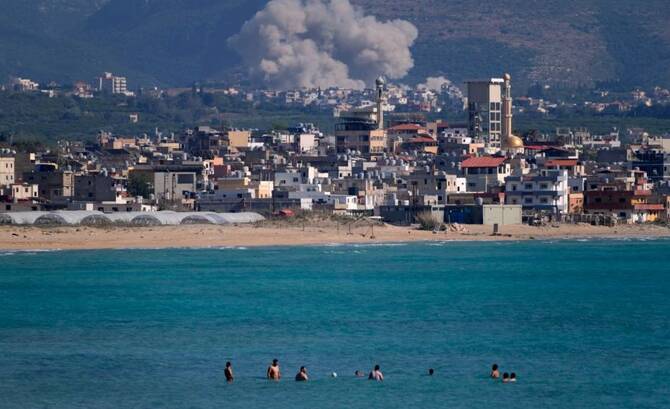
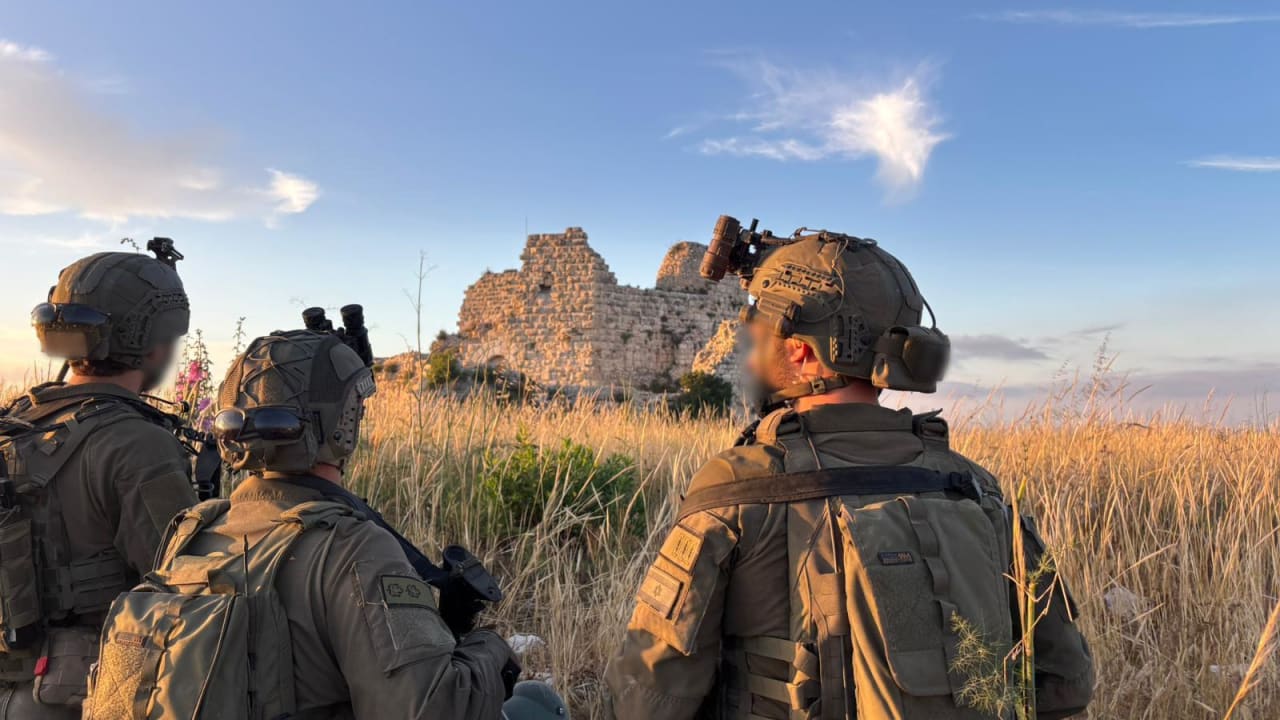
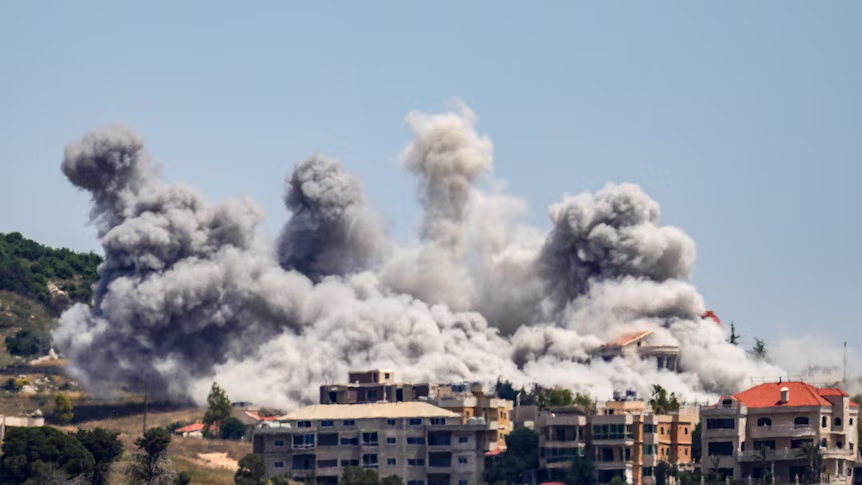
Prior to the ceasefire agreement, Israel had intensified its air and artillery strikes in recent days, particularly targeting areas within southern Lebanon. During these operations, the Israeli military reported that it had identified and eliminated two Hezbollah terrorists. The Israeli military further added that specific steps were taken to mitigate the risk of harm to civilians during these intensified operations. These measures, according to the military, were implemented to adhere to operational guidelines and reduce collateral damage in civilian areas. The intensity of these strikes reflected the heightened state of conflict leading up to the ceasefire.
Hezbollah, in response to the Israeli actions, has conducted attacks on Israeli troops both within Lebanon and in northern Israel. These retaliatory attacks have utilized both rockets and drones. The broader conflict between the parties began on March 2. This escalation followed a significant joint attack launched by the United States and Israel on Iran two days prior to the commencement of the conflict on March 2. The initiation of hostilities on March 2, following the joint US and Israeli attack on Iran, marked a critical turning point in regional dynamics, setting the stage for the subsequent exchanges of fire and military operations between Israel and Hezbollah.
During the same period of escalating hostilities, Israeli authorities reported casualties, with 18 soldiers and four civilians killed. These figures represent the human cost of the conflict on the Israeli side, noting the dangers faced by both military personnel and the civilian population in areas affected by Hezbollah's actions.
Terms of the Ceasefire Agreement
The ceasefire agreement stipulates that the Lebanese army will assume full control of the designated security zones. A key condition of this arrangement is that within these areas, Hezbollah militants will be prohibited from operating. Lebanon has pledged to enhance the capabilities of the Lebanese Armed Forces (LAF), with support from the United States, to ensure effective control across the entire nation. This commitment from Lebanon aims to bolster state authority over its territory. In line with this, the US military also intends to provide support to the LAF, aiming to improve their capacity and operational effectiveness. The support from the US military to the Lebanese Armed Forces is designed to strengthen Lebanon's ability to maintain sovereignty and security within its borders, particularly within the newly established security zones, thereby preventing the re-establishment of unauthorized militant presence.
Lebanon, for its part, has requested mutual respect for internationally recognized borders and emphasized the urgent need for a cessation of hostilities to prevent further loss of life and destabilization. For its part, Israel has stated that its security can only be guaranteed through the disarmament of Hezbollah and the dismantling of its infrastructure throughout Lebanon, asserting this as a fundamental requirement for lasting peace. The Israeli military aims to establish a buffer zone in southern Lebanon to prevent future attacks by Hezbollah, viewing this as a critical measure for its northern border security. This proposed buffer zone is intended to create a physical barrier and a demilitarized area that would significantly reduce Hezbollah's ability to launch cross-border assaults, thereby enhancing the safety of Israeli communities along the frontier.
The current ceasefire is contingent upon a complete cessation of fire from the Iran-aligned Hezbollah militia. This condition is central to the agreement's viability. The agreement requires a complete cessation of all Hezbollah fire and the evacuation of all Hezbollah operatives from areas south of the Litani River. These stipulations highlight the focus on curbing Hezbollah's military presence and activities in southern Lebanon. Notably, Hezbollah itself was reportedly not present at the peace negotiations that led to this ceasefire agreement. The absence of Hezbollah from these key discussions shows the complex nature of the negotiations and the challenges in securing commitments from all relevant actors in the conflict. This fact also suggests that the agreement's enforcement will heavily rely on the Lebanese government's ability to assert control over territories where Hezbollah has historically operated, a task made more challenging by the group's significant influence.
Diplomatic Path Forward
A new round of discussions and negotiations is scheduled to commence in June, indicating a continued diplomatic effort to solidify peace. A specific security track for these talks will launch at the Pentagon on May 29, focusing on military and security arrangements. Subsequently, a political track is set to reconvene in Washington DC during the week of June 22, to address broader political and diplomatic issues between the two nations. These structured talks aim to build upon the ceasefire and work towards a more full and enduring resolution. The establishment of distinct security and political tracks reflects a methodical approach to tackling the multifaceted challenges inherent in the Israeli-Lebanese relationship, ensuring that both immediate security concerns and long-term political stability are addressed systematically. The upcoming discussions in June are critical for translating the ceasefire into a more strong and lasting framework for peace, with the May 29 Pentagon meeting specifically designed to lay the groundwork for military cooperation and de-escalation protocols.
Humanitarian Impact and Displacement
The recent period of intensified conflict has had a severe humanitarian impact. On Wednesday, Lebanon's health ministry reported that Israeli airstrikes killed 22 people, including eight children, across the south of the country. These strikes caused widespread devastation and loss of life. An attack on a civil defense center in Harouf critically injured a fourth paramedic, further noting the dangers faced by emergency responders. Lebanon's health ministry accused Israel of targeting civilians and paramedics, raising serious concerns about adherence to international humanitarian law. According to reports, the conflict has resulted in a significant death toll, with at least 2,896 people killed in Lebanon since the fighting began on March 2. The displacement of populations has also been extensive, with officials reporting that more than one million people have been displaced from their homes across Lebanon, leading to a humanitarian crisis and immense suffering for the affected communities. This massive displacement has placed immense strain on Lebanon's resources and infrastructure, necessitating urgent international humanitarian aid to address the needs of those uprooted by the conflict. The ongoing humanitarian crisis, marked by substantial loss of life and widespread displacement, shows the profound and devastating consequences of the recent hostilities on the civilian population in Lebanon.