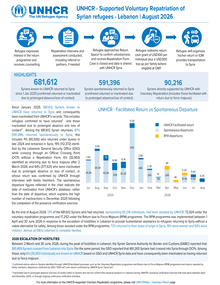
Since January 2025, a substantial number of Syrian refugees in Lebanon, totaling 681,612 individuals known to UNHCR, have been inactivated from the agency's records after returning to Syria. The United Nations High Commissioner for Refugees (UNHCR) reported these significant figures based on full data covering the status of Syrian refugees in Lebanon as of 31 August 2026. The inactivation of these records signifies their formal removal from active refugee status within UNHCR's strong system, reflecting a major demographic shift. This process is a critical part of maintaining accurate records and understanding the dynamics of refugee populations in the region.
Breakdown of Inactivations
A detailed analysis of the 681,612 Syrian refugees whose records were inactivated reveals diverse pathways of return. A predominant portion, 87% of the total, amounting to 591,396 individuals, returned spontaneously to Syria. This figure notes a significant trend of voluntary repatriation among the Syrian refugee population residing in Lebanon. In addition to these spontaneous returns, a notable 19% of the total returnees, which translates to 112,372 individuals, were specifically identified by the Lebanese General Security Office (GSO). These identifications occurred as the individuals crossed through an Official Crossing Point (OCP) without possessing a Repatriation Form, indicating their departure from Lebanon. These various figures show the different mechanisms and circumstances by which Syrian refugees have departed Lebanon since early 2025.
Another substantial category of inactivations, accounting for 64% or 377,621 Syrian returnees, resulted from prolonged absence or a loss of contact with UNHCR. For these individuals, their return to Syria was often confirmed by the agency through direct interviews conducted with their family members who remained in Lebanon. This careful method of verification ensures that the records accurately reflect the departure of these individuals. This specific category represents the largest single reason for inactivations within the UNHCR system, emphasizing the agency's reliance on community-level information for record updates. The systematic approach to confirming these departures is key for maintaining the integrity of the refugee database.
Context and Timing
The reported figures concerning spontaneous departures reflect the specific date of inactivation from the UNHCR’s database, rather than the actual date of departure for the individuals themselves. This distinction is critically important for accurately understanding the timing of these record adjustments and the administrative processes involved. A particularly high number of inactivations were recorded in December 2025. This surge followed the successful completion of a full presence verification exercise that had been conducted by the United Nations High Commissioner for Refugees (UNHCR). This extensive exercise likely led to a significant and necessary update in the agency's records, thereby clarifying the current status of a large segment of the Syrian refugee population in Lebanon. The verification process is a standard procedure designed to ensure that UNHCR's data remains current and reflective of the reality on the ground.
Data Clarifications on Return Circumstances
Further data clarifies the specific circumstances surrounding the departures of other segments of the Syrian refugee population. Approximately 11% of the Syrian returnees, totaling 65,500 individuals, were noted to have returned to Syria under duress in late 2024. This indicates that their return was not entirely voluntary, but rather influenced by external pressures or difficult conditions. Additionally, 6% of Syrian returnees, amounting to 35,903 individuals, were identified as having returned due to force majeure after 2 March 2026. The term "force majeure" implies circumstances beyond their control, such as natural disasters or other unavoidable events, which compelled their return. These figures represent specific, distinct circumstances surrounding the departures of a significant portion of the Syrian refugee population from Lebanon, providing a more nuanced understanding of the overall repatriation trends.