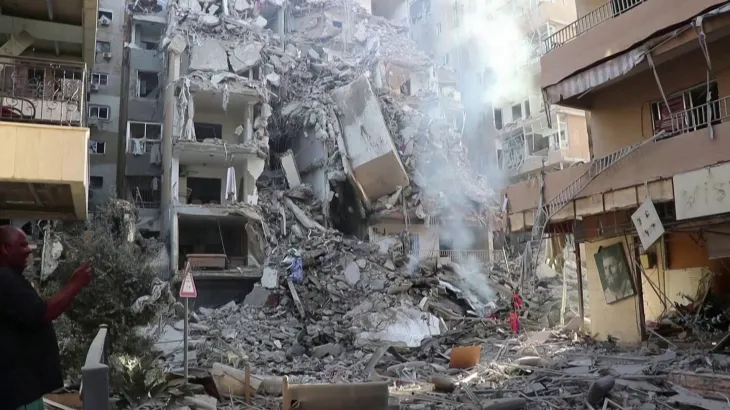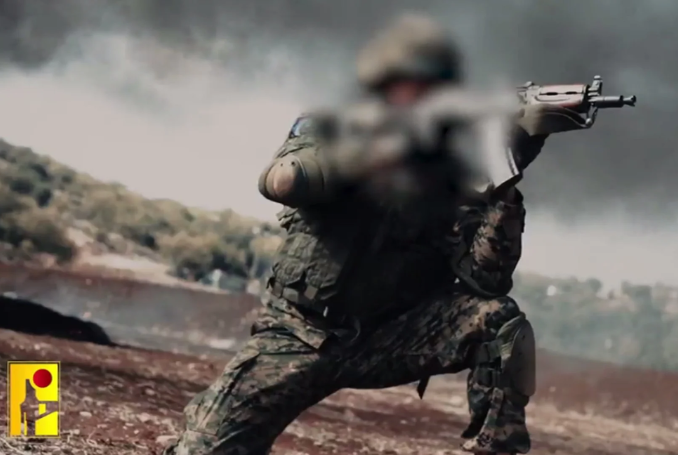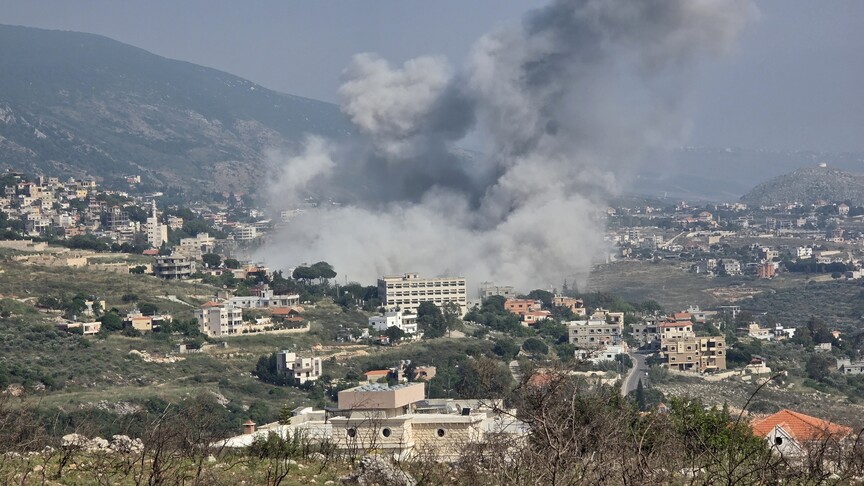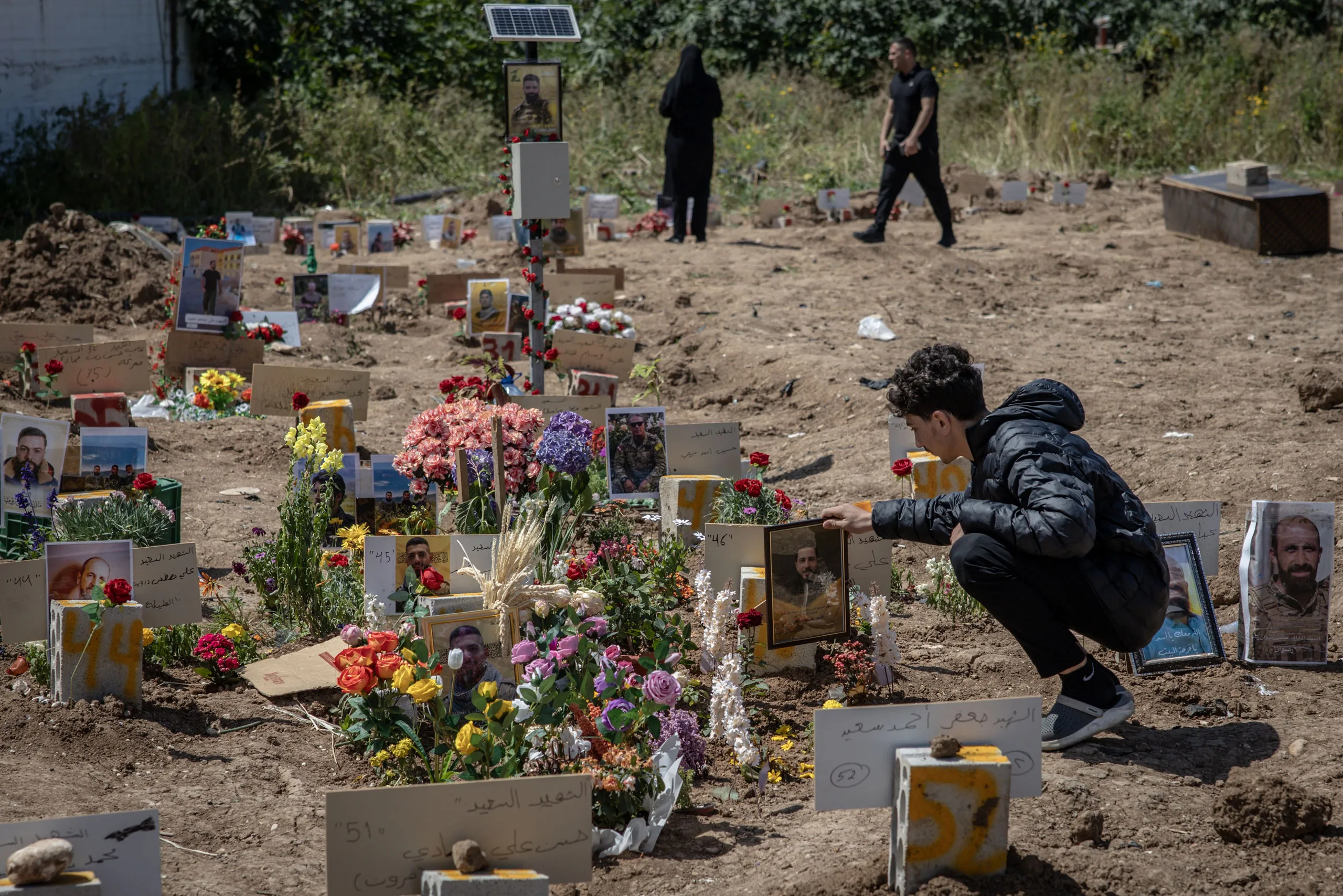
Three Hezbollah fighters were apprehended at a checkpoint in southern Lebanon while transporting Kalashnikov rifles and thousands of rounds of ammunition. The incident occurred in the country’s south, where the fighters were caught ferrying the weapons and ammunition. This event unfolded as Lebanon’s cash-strapped military was tasked with dismantling Hezbollah’s arsenal following a 2024 ceasefire. The recent war between Hezbollah and Israel concluded last month, resulting in over three thousand fatalities. This devastating conflict, which led to a ceasefire, claimed the lives of more than three thousand people, showing the severe human cost of the ongoing tensions. Hezbollah fighters stated, "We are trying to defend our land. Our place is not here in the court. Our place is in the south," articulating their perspective on their armed presence and activities. Israel continues to occupy parts of southern Lebanon and conducts strikes in the area, contributing to the volatile security situation.
A Fragile State's Struggle
Lebanon’s Army commander, Rudolph Haykal, leads a military institution that receives substantial international support. The U.S. Has provided more than three billion dollars to the Lebanese military since 2006, aiming to bolster its capacity and strengthen its role as a national institution. This significant financial investment reflects international efforts to stabilize Lebanon and empower its state institutions. This support comes as the country navigates profound internal challenges, including a severe economic crisis and a complex political landscape. Lebanon’s economy began its collapse in 2019, plunging the nation into a deep financial downturn that has exacerbated existing social and political fragilities. This economic crisis has had broad consequences, impacting all sectors of society and complicating the government's ability to address national security concerns effectively.
The country has a history of protracted conflict, with its civil war lasting from 1975 to 1990. This fifteen-year civil war left deep scars on the nation, shaping its political dynamics and the roles of various armed groups. Hezbollah itself emerged in the wake of Israel’s invasion of Lebanon in 1982, establishing itself as a significant non-state actor with considerable military and political influence. The group's formation was a direct response to the Israeli presence, rooted in resistance against occupation. The military’s role in securing the nation's borders has also faced scrutiny, particularly during recent escalations. At the onset of the current war, the Lebanese military withdrew from the border region, a move that created a vacuum that Hezbollah has largely filled. This withdrawal noted the limitations and strategic decisions facing the national army in areas where non-state actors maintain a strong presence. The presence of Hezbollah in these border areas further complicates the military's efforts to assert full state control and uphold its mandate.
President Joseph Aoun in April questioned the ongoing impact of regional conflicts on Lebanon’s civilian population. "How long will the people of the south continue to pay the price for others’ wars on our land?" President Aoun asked, noting the strain on the southern communities. His remarks show the dilemma faced by a state attempting to assert its sovereignty while confronting well-armed non-state groups and persistent external pressures. The president’s statement reflects a broader sentiment of frustration within the Lebanese government regarding the country's entanglement in regional disputes. The civilian population, particularly in the southern regions, bears a disproportionate burden from the recurring conflicts and the presence of armed groups. This constant state of insecurity and displacement profoundly impacts daily life, economic stability, and the social fabric of these communities. The question posed by President Aoun resonates with many Lebanese citizens who seek a more stable and secure future for their nation, free from the cycles of violence that have historically plagued the region. The challenge for the Lebanese state is to find a path to peace and sovereignty that addresses both internal divisions and external aggressions, a task made immensely difficult by the entrenched nature of the various actors involved.
Hezbollah's Enduring Power
The three Hezbollah fighters apprehended at a checkpoint were released after paying a fine of nine hundred thousand Lebanese pounds, an amount equivalent to approximately ten dollars. Their release followed an incident where they were found transporting Kalashnikov rifles and thousands of rounds of ammunition, a clear violation of state authority. This specific incident marked the first of approximately two dozen cases brought against Hezbollah members in recent weeks, indicating a pattern of armed activity and the state's attempts to address it. The fighters had stated, "We are trying to defend our land. Our place is not here in the court. Our place is in the south," articulating their perspective on their armed activities and their perceived role in national defense. This statement notes the ideological foundation of Hezbollah's armed wing, which views itself as a protector of Lebanese territory, particularly in the south.
Despite the recent conflict, Hezbollah's leadership faced significant setbacks, with an Israeli assassination campaign decimating its command structure. This targeted campaign aimed to dismantle the group's hierarchy and disrupt its operational capabilities. Much of its existing weapons stockpile was also destroyed during the war, further impacting its military resources. A major development affecting Hezbollah occurred in 2024 when Hassan Nasrallah, the group’s longtime leader, was assassinated by Israel, creating a significant leadership vacuum within the organization. Nasrallah had led Hezbollah for decades, becoming a central figure in Lebanese and regional politics, and his death undoubtedly presented a profound challenge to the group's cohesion and future direction. Further complicating its resupply efforts, the land route historically used by Hezbollah to transport weapons from Iran via Syria was severed following the collapse of the Assad regime in December 2024. This development has altered key logistical pathways for the group, making it more difficult to replenish its arsenal and maintain its military strength. The loss of this critical supply line represents a substantial blow to Hezbollah's strategic capabilities and its ability to project power.
Hezbollah has nonetheless continued to project its military capabilities, broadcasting propaganda videos of its rocket and drone strikes. These broadcasts occurred in defiance of a March ban, indicating the group's continued operational autonomy and willingness to challenge governmental directives. The defiance of the ban shows Hezbollah's assertion of authority independent of the Lebanese state, noting the ongoing struggle for control within the country. Hezbollah identifies as a Shiite group, and Shiites constitute roughly a third of Lebanon’s population, providing a significant demographic base for its support and recruitment. This demographic presence shows the deep societal roots Hezbollah maintains within Lebanon, contributing to its enduring influence despite external pressures and internal challenges. The group's strong ties to a substantial segment of the population provide it with a strong support network, enabling it to sustain its operations and political presence. This embeddedness within a key demographic makes the task of disarming the group exceptionally complex for the Lebanese authorities, as it involves navigating deeply held community allegiances and political identities. The group’s continued activities highlight the complex environment in which the Lebanese military operates as it attempts to assert state control over armed non-state actors.
The Uncertain Road Ahead
The release of the three Hezbollah fighters marked the first of approximately two dozen cases brought against Hezbollah members in recent weeks, signaling a persistent challenge to state authority. By January, the Lebanese Army announced the completion of the first phase of a disarmament plan, a development that occurred amidst significant internal upheaval. This announcement, while a step towards fulfilling the ceasefire requirements, was made against a backdrop of immense national strain. Well over a million people, around a fifth of Lebanon’s population, have been displaced in the latest war, adding to the complexities confronting the state. This massive displacement crisis places enormous pressure on Lebanon's already strained resources and infrastructure, further complicating any efforts towards national stability and disarmament. The humanitarian consequences of the war are profound, with a significant portion of the population now facing uncertainty and hardship, making the political and security challenges even more acute.
Abbas Ibrahim, who retired as Lebanon’s former national-security chief in 2023, questioned the feasibility of disarming Hezbollah without viable alternatives for national defense. Ibrahim stated, "Are those Western countries ready to give us the weapons and equipment we need to defend the country if Israel tries to invade us? The answer is no." He further elaborated on the challenges by asking, "How can you ask people to be disarmed when you don’t have an alternative?" Ibrahim also warned against repeating past mistakes, asserting, "We passed through this experience before. Why do we want to drink from this bitter glass again?" referring to previous attempts to confront the group. His remarks highlight a critical dilemma for the Lebanese state and its international partners: the perceived necessity of Hezbollah's armed wing by some as a deterrent against external threats. Without a credible, well-equipped national army capable of ensuring national security, the argument for disarming non-state actors becomes significantly harder to make to a population that has experienced repeated invasions and conflicts. Ibrahim's perspective shows the deep-seated concerns about national defense capacity and the potential vacuum that could be created by a unilateral disarmament without adequate state provision.
The historical context of Hezbollah’s power in Lebanon remains a critical factor in understanding the current situation. In 2008, Hezbollah fighters seized parts of Beirut within hours after the Lebanese government attempted to shut down its telecommunications network and remove an airport-security chief, demonstrating the group's capacity to challenge state authority directly and effectively. This swift and decisive action showcased Hezbollah's formidable military strength and its willingness to use force to protect its interests and infrastructure. The incident served as a stark reminder of the limits of state power when confronted by a well-organized and heavily armed non-state actor. A significant development affecting Hezbollah occurred in 2024 when Hassan Nasrallah, the group’s longtime leader, was assassinated by Israel, creating a leadership vacuum within the organization. This event, while a major blow to Hezbollah, has not fundamentally altered the underlying dynamics of power in Lebanon nor the group's armed presence. Despite these challenges, the fighters apprehended at the checkpoint maintained their rationale for being armed, stating, "We are trying to defend our land. Our place is not here in the court. Our place is in the south." This steadfast conviction reflects the enduring ideological commitment of Hezbollah fighters and the complex, deeply entrenched nature of their role in Lebanon's security landscape. The path forward for Lebanon to assert its sovereignty and achieve full disarmament remains fraught with challenges, requiring a delicate balance of internal political will, strong national defense capabilities, and sustained international support.