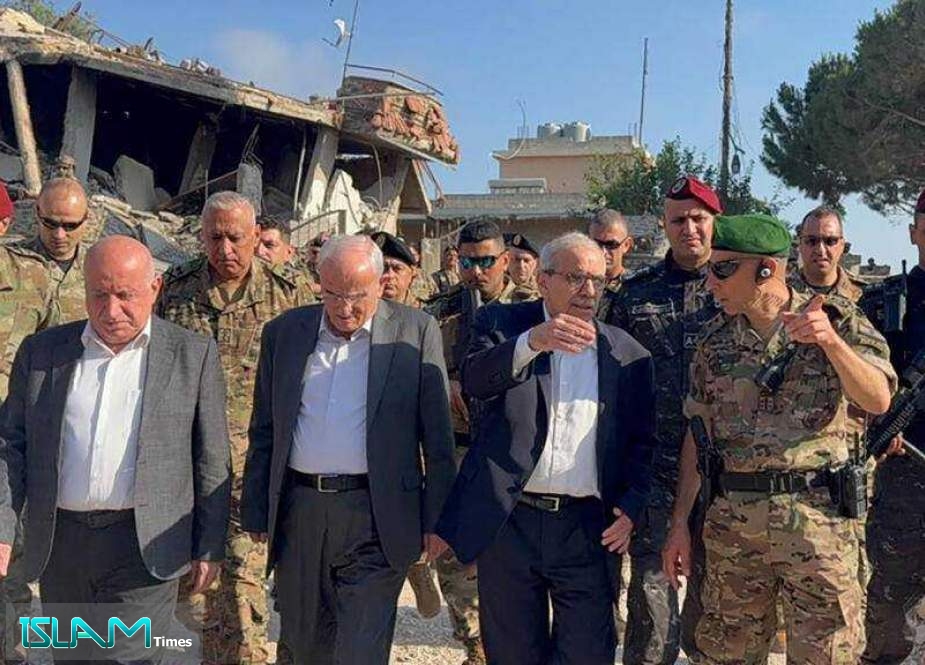
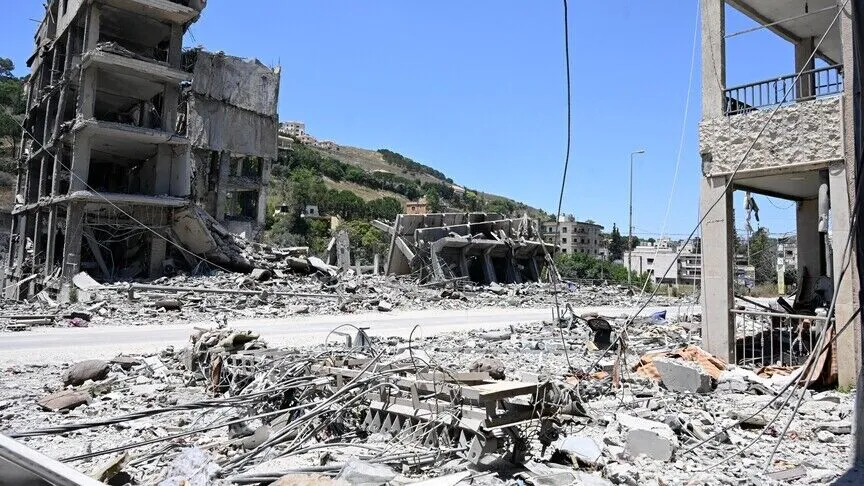
A joint panel hosted by The New Arab and ActionAid UK in London on Wednesday examined Lebanon's overlooked crises, shedding light on the multifaceted challenges confronting the nation. The discussion, aptly titled 'Lebanon's Perpetual Crisis,' addressed the severe and interconnected difficulties facing the country, which have often been overshadowed by other global events. These challenges notably include a significant ongoing displacement crisis, where the number of internally displaced persons (IDPs) in Lebanon has reached around one million people, according to figures presented by the panel. The event served as a critical platform to highlight the international community's perceived neglect of Lebanon's escalating humanitarian situation, which continues to worsen amidst regional instability.
Critique of International Response
Karim Traboulsi, a prominent voice at the discussion, argued that Lebanon's humanitarian catastrophe received a far more limited international response compared to the Gaza war, despite both crises occurring simultaneously. Traboulsi showed the stark contrast in global attention, stating, "One thing I noticed is that the Gaza genocide and war in Lebanon were happening at the same time, and it's not a competition in death tolls or suffering, but you could argue that in Lebanon, in every offensive from Israel, the death toll is bigger than the previous one." He further noted the disparity in the scale of displacement, noting, "The number of IDPs reached around one million people, which is comparable to the displacement of civilians from north Gaza to the south and other parts." Traboulsi questioned the differential international reaction to these parallel crises, asking, "The purpose of this is to ask why one triggered a global wave of solidarity, whereas Lebanon was met with much more limited solidarity and response." He concluded his point by stating, "In my view, one of the biggest problems in terms of coverage is the denial of what's really happening," suggesting a deliberate or unconscious oversight in media and political circles.
Roula Zeaiter, another speaker, observed that international coverage frequently overlooks the cumulative impact of Lebanon's successive crises, which date back to the 1970s. This historical amnesia, she explained, prevents a full understanding of the current situation. Zeaiter added that this coverage often fails to recognize the central role women have played in responding to conflict across these multiple crises, diminishing their contributions and resilience in the face of adversity. The panel emphasized that a more nuanced and historically informed perspective is key for effective international engagement.
Structural Inequalities and Legal Failures
Mona Deeley argued forcefully that the failure of Western countries to uphold international law concerning Israel contributes significantly to Lebanon's persistent instability. Deeley articulated a critical perspective on regional dynamics, stating that Lebanon cannot achieve genuine stability, even if Hezbollah were disarmed and Israel withdrew its occupation, while the surrounding region remains in constant conflict. She attributed this ongoing regional conflict to the non-application of international law to Israel's occupation of Palestinian, Syrian, and Lebanese territories. Deeley emphasized, "Lebanon cannot be an island of stability even if Hezbollah is disarmed and Israel withdraws its occupation. In the midst of a region that is in constant conflict, and the reason it's in constant conflict is because international law is not being applied to Israel. It is in occupation of Palestinian territories, it's in occupation of Syrian territories, and it's in occupation of Lebanon." This argument notes the deep-seated geopolitical issues that perpetuate the crisis in Lebanon.
Deeley also noted the broader consequences of such legal failures, asserting, "When you disrespect international law, that has implications at home. It also has implications for domestic economies when the world is unstable." She called for a renewed focus on international law by civil society and media as a fundamental step towards achieving lasting peace and stability in the region. This call to action shows the belief that adherence to international legal frameworks is not just a moral imperative but a practical necessity for global security and economic well-being. Meanwhile, Israel's renewed military offensive in the broader region has resulted in the deaths of more than 4,300 people since March 2, adding another layer of complexity and human cost to the ongoing conflicts.
The Role of Media and Civil Society
The panel at the London event questioned how media portrayals of Lebanese people as "resilient" might inadvertently normalize ongoing suffering and diminish pressure for international intervention. Discussions explored the perception that such framing, while seemingly positive, can inadvertently lower the urgency for external aid and diplomatic action by implying that the population can endlessly endure hardship without significant external support. Participants also examined the broader roles played by women's movements, various civil society organizations, and the international community in addressing Lebanon's multiple crises. The panel specifically noted how these groups have responded to the humanitarian challenges and structural issues facing the country, emphasizing their vital contributions amidst the complex regional instability and the often-limited international response. The discussion showed the need for more accurate and impactful media narratives that compel greater global solidarity and action.