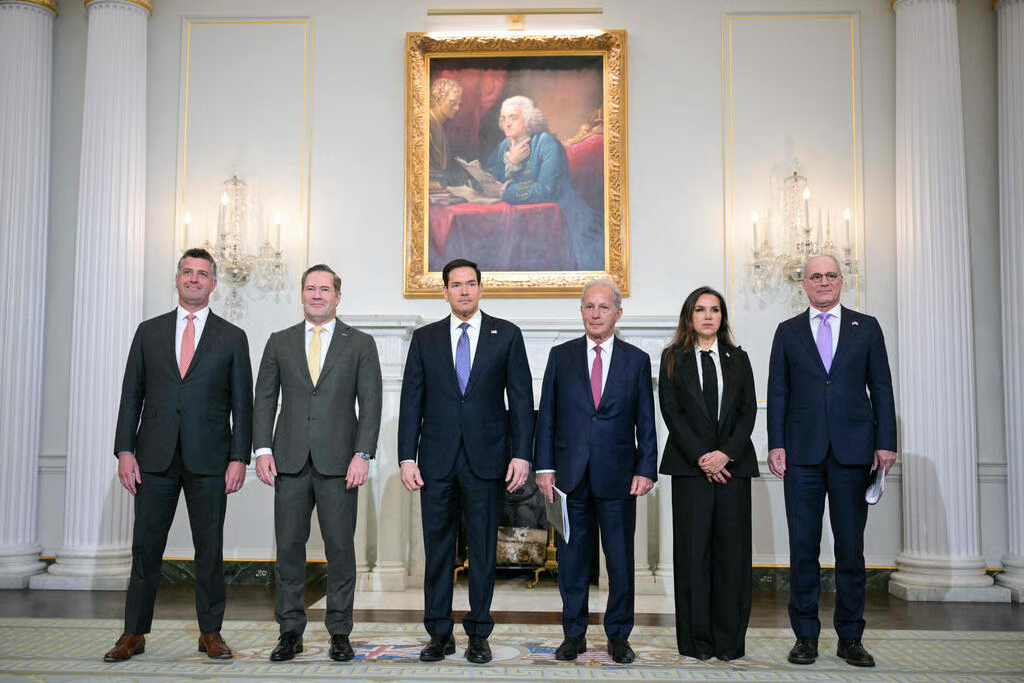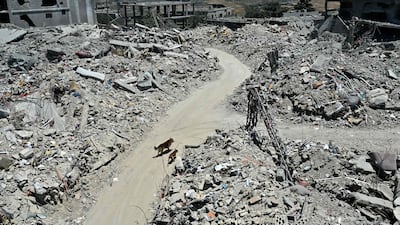
Lebanon has unequivocally rejected Israeli claims regarding a full withdrawal from its southern territory, a declaration made amidst the fifth round of negotiations between the two nations in Washington. These talks represent ongoing efforts to address longstanding border disputes and the future of occupied Lebanese land. Lebanese officials firmly maintain that key strategic areas such as Ain Arab, Kfar Tebnit, Nabatieh, Beaufort castle, and the Ali Al Taher ridge remain under Israeli occupation, directly contradicting assertions of a complete Israeli pullout. The Lebanese stance shows the significant chasm between the two sides' interpretations of current events and their respective territorial claims.
Conflicting Accounts Emerge on the Ground
Discussions between Israel and Lebanon currently include a US-backed "pilot zone scheme," a proposed mechanism for the structured transfer of occupied Lebanese territory to the Lebanese military. This initiative aims to create a framework for de-escalation and the eventual restoration of Lebanese sovereignty over these areas. However, conflicting reports have emerged regarding Israeli actions on the ground, casting doubt on the immediate feasibility and implementation of such a scheme.
A senior Israeli defence official affirmed that the military would not withdraw from its self-declared buffer zone in southern Lebanon, indicating a firm commitment to maintaining its current defensive posture. This statement provides insight into Israel's security considerations and its reluctance to fully relinquish control over areas it deems vital for its protection.
Conversely, a senior security official contradicted claims of withdrawal, stating plainly that Israeli troops "come and go" from occupied territory in south Lebanon, citing the village of Ain Arab as an example of this dynamic on Wednesday. The official plainly stated, "No one withdrew," directly challenging any narratives suggesting a permanent or significant Israeli pull-back. This on-the-ground assessment notes the fluid nature of troop movements in the disputed territories.
This contrasts sharply with a statement from a US State Department official, who asserted that Israel had taken a concrete step by pulling back from a part of its buffer zone. The US official further elaborated on the expectations following this move, stating, "The Lebanese Armed Forces should now move in and verifiably clear out terrorist weapons and infrastructure. This model will be repeated across south Lebanon, enabling the safe return of displaced families, reconstruction of the south, and the restoration of full Lebanese sovereignty." This US perspective frames the Israeli action as a positive, albeit initial, step towards a broader resolution. A Lebanese political source indicated that potential starting points for these pilot zones, as discussed in the negotiations, include Kfar Tebnit near Nabatieh and villages and areas neighboring Beaufort castle, suggesting specific areas are under consideration for initial implementation of the scheme.
Negotiations and Persistent Stalemate
Lebanese officials have noted significant differences between their military delegation and the Israeli delegation during talks in Washington. These disagreements center on the practical proposals concerning pilot zones intended for the transfer of occupied Lebanese territory to the Lebanese military. The ongoing discussions aim to resolve longstanding border disputes between the two nations, but the diverging positions suggest a complex path forward.
These talks in Washington have seen four rounds of negotiations since April, reflecting continued diplomatic efforts to address the territorial issues. The current session marks the fifth round of these key discussions between Lebanon and Israel in the US capital, showing the sustained international focus on achieving a resolution. Despite the frequency of these discussions, the stated differences suggest a persistent stalemate in reaching agreement on the practical implementation of withdrawal and transfer mechanisms. The pilot zone scheme, backed by the United States, remains a central point of contention as both sides present their positions on the proposed arrangements, illustrating the intricate details that need to be ironed out.
Regional Repercussions and Unresolved Tensions
Five rounds of negotiations in Washington have not yet resulted in a durable ceasefire between the parties, indicating the deep-seated nature of the conflict and the difficulty in achieving a lasting peace. The ongoing conflict has led to a significant loss of life, with more than 4,000 people reported killed since early March, showing the urgent need for a resolution. Regionally, Hezbollah and Iran have both strongly rejected any calls for Hezbollah to surrender its weapons, a stance that adds another layer of complexity to the security landscape of southern Lebanon and the broader region. This rejection notes the entrenched positions of key non-state and state actors, further complicating the path to a full and lasting peace agreement.