President Salam affirmed on Wednesday that Lebanon is committed to mobilizing all political and diplomatic efforts to secure a full withdrawal from all Lebanese territories, stating that current developments represent only the beginning of these efforts. The President emphasized the national goal of restoring life to the South, noting the state's dedication to this objective. President Salam further declared that the return of people to their land is the truest expression of Lebanon's unity and sovereignty, showing the importance of population return for national integrity. The President stressed that Lebanese authorities remain determined and steadfast in pursuing these goals. He further elaborated that what is currently being witnessed is merely the initial phase of a full strategy, and that the authorities are resolute in their commitment to continue mobilizing all necessary political and diplomatic resources to achieve the complete Israeli withdrawal from all Lebanese territories. This steadfast determination underpins the entire framework of Lebanon's approach to the ongoing situation.
Mobilizing for Withdrawal and Return
President Salam affirmed from the outset that Lebanon's primary objective is the complete Israeli withdrawal from all Lebanese territories. This declaration shows a foundational stance for the ongoing efforts. He explicitly stated that from the very beginning of the current situation, the unequivocal goal has been the full Israeli withdrawal from all Lebanese lands. This clear and consistent objective guides all subsequent actions and diplomatic initiatives undertaken by the Lebanese state.
The state has committed itself to the return of life to the South, indicating a broader strategy beyond military or political maneuvers that focuses on civilian and societal restoration. This commitment involves revitalizing communities and infrastructure in the southern regions. President Salam showed that the return of life to the South is not merely an aspiration but a national goal to which the state is deeply committed. This commitment extends to ensuring that displaced residents can safely and effectively return to their homes and rebuild their lives. The full nature of this commitment signifies a long-term vision for stability and prosperity in the region, moving beyond immediate security concerns to address the holistic needs of the affected population.
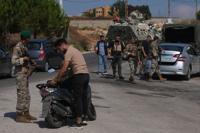
A key component of this strategy involves ensuring the safety and security of residents. The Lebanese army and security forces are present to protect returning people, providing a security umbrella for those re-establishing their lives in the South. This deployment is intended to facilitate a safe and orderly return for displaced individuals and families. The presence of state security apparatuses is deemed key for rebuilding trust and stability in an area that has experienced significant disruption. These forces are tasked with maintaining order and safeguarding the civilian population as the process of reconstruction and resettlement unfolds. President Salam specifically addressed the residents of the South, assuring them that the state had begun harnessing all capabilities to support their return. He reiterated that the Lebanese army and security forces are actively present to protect returning people and to complete the army's full deployment across the region. This assurance aims to build confidence among the population, signaling that their safety and well-being are critical during this transitional period.
Diplomatic Efforts and International Talks
Italy will host new talks between Lebanon and Israel on August 4th, according to a report from AFP citing the Italian Foreign Ministry. The announcement indicates a continued diplomatic push for resolution between the two nations, building on previous engagements. Such discussions are often key for de-escalation and the establishment of more stable regional conditions. The Italian Foreign Ministry's role in facilitating these talks shows international involvement in addressing the complex dynamics between Lebanon and Israel. The decision to host these key discussions reflects Italy's commitment to fostering peace and stability in the Middle East, offering a neutral venue for dialogue.
The upcoming meeting on August 4th provides a forum for direct dialogue, which is frequently sought by international mediators in protracted disputes. While the specific agenda for these talks has not been publicly detailed, previous diplomatic efforts have focused on border demarcation, security arrangements, and the implementation of international resolutions. The choice of Italy as a host nation suggests a neutral ground for the delegations to convene, aiming to foster an environment conducive to productive negotiations. These talks are expected to be closely monitored by international observers, given their potential implications for regional stability and the ongoing efforts to secure a full withdrawal from Lebanese territories, as recently emphasized by President Salam. The diplomatic process often involves multiple rounds of discussions, with each meeting contributing to the broader framework of a potential agreement or understanding. The involvement of a third-party host like Italy aims to ensure impartiality and to facilitate open communication channels. The international community views these talks as a vital step towards achieving a lasting peace and ensuring the full implementation of international mandates concerning the Lebanese-Israeli border. The success of these diplomatic endeavors is seen as essential for reinforcing regional security and supporting Lebanon's efforts to regain full sovereignty over its territories.
On-the-Ground Developments
The Israeli army has completed its withdrawal from Zawtar al-Gharbiyya, marking a significant on-the-ground development in the southern region. This movement follows ongoing discussions and efforts related to military disengagement. The withdrawal from Zawtar al-Gharbiyya affects the immediate operational landscape and the disposition of forces in the area, signaling a tangible step in the process of military redeployment. This specific withdrawal is a concrete action that aligns with the broader objective of a complete Israeli withdrawal from Lebanese territories, as articulated by President Salam. It represents a practical outcome of the diplomatic and political pressures exerted, and its completion is a positive indicator for the local population. The departure of forces from Zawtar al-Gharbiyya directly impacts the security and daily lives of residents in that particular locality, paving the way for the return of civilian administration and services.
Separately, the National News Agency reported that Israeli forces released three Lebanese youths who had been arrested earlier in the day. The youths were detained in the outskirts of the town of Shebaa and held for several hours before their release. They had reportedly been taken to an unknown destination following their arrest in the morning. The National News Agency account detailed their subsequent release, concluding this incident involving their detention and return. This incident, while distinct from the broader withdrawal efforts, notes the ongoing sensitivities and occasional frictions that characterize the border region. The swift resolution of such incidents, particularly the release of detainees, is often seen as beneficial for de-escalation and maintaining a fragile peace. The reporting of such events by official news agencies shows the transparency with which these developments are communicated to the public, both domestically and internationally.
Broader Context and Commitments
President Salam addressed residents of the South, stating the state had begun harnessing all capabilities to support their return. He affirmed the Lebanese army and security forces are present to protect returning people and complete the army's deployment. President Salam also announced preparations for the return of all basic services, including water, electricity, and communications, alongside efforts to provide ready-made housing and everything necessary for a transitional phase. This full plan for reconstruction and resettlement is designed to alleviate the hardships faced by the displaced population and to facilitate a smooth transition back to normalcy. The provision of essential services is critical, as it forms the backbone of any functioning community. Without reliable access to water, electricity, and communication networks, the process of rebuilding homes and livelihoods would be severely hampered.
The commitment to providing ready-made housing demonstrates a proactive approach to addressing immediate shelter needs, ensuring that returning families have a safe and secure place to live while more permanent solutions are explored. This transitional housing is critical for offering stability and dignity to those who have lost their homes. The overarching goal, as articulated by President Salam, is to ensure that the return of people to their land is not just a physical relocation but a full restoration of their lives, supported by strong state services and security. This holistic approach shows the national importance placed on the South's recovery and integration into the broader Lebanese fabric, reinforcing the country's unity and sovereignty through tangible actions. The emphasis on "everything necessary for a transitional phase" indicates a flexible and responsive strategy, ready to adapt to the evolving needs of the returning population and the challenges of post-conflict reconstruction.