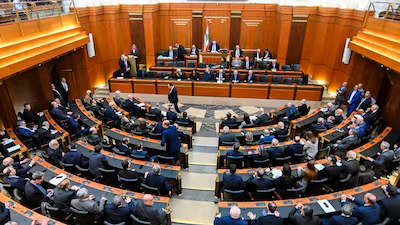
Lebanon's parliament adjourned a two-day session on Thursday, July 17, 2026, after losing its legal quorum. The legislative gathering, intended to discuss various matters including a potential vote on the death penalty, concluded prematurely when fewer than two-thirds of its members were present. The lack of a sufficient number of lawmakers prevented further proceedings, forcing the speaker to end the session. This adjournment notes the ongoing political challenges within the nation's legislative body and shows the difficulties in advancing significant legislative reforms. The session was specifically scheduled to include a key vote on abolishing the death penalty, a measure that has drew considerable attention both domestically and internationally.
Bill's Progress and Parliamentary Maneuvers
Three Lebanese parliamentary committees jointly approved a draft law on July 9, 2026, aimed at abolishing the death penalty. This action by the committees moved the proposed legislation closer to a full parliamentary debate and vote. The bill, if passed, would represent a significant shift in the country's legal framework regarding capital punishment, replacing it with alternative sentencing. The joint approval by these committees signaled a potential breakthrough in a long-standing debate.
For the draft law to become enacted, it requires approval by the full parliament. The legislative body, composed of 128 members, mandates that at least 65 of its members must be present for the bill to pass into law during a voting session. This quorum requirement is central to the parliamentary process for all legislation and ensures a broad consensus for major legal changes. The inability to maintain this quorum ultimately stalled the progress of the bill.
In addition to the death penalty bill, a general amnesty bill was also listed on the agenda for Thursday's parliamentary session. This indicates that lawmakers intended to address multiple significant legislative items during the proceedings, reflecting a broader legislative agenda. The inclusion of both bills points to a broader legislative effort to tackle various legal and social issues, including addressing prison overcrowding and reforming the judicial system. The simultaneous consideration of these two distinct yet related pieces of legislation added complexity to the parliamentary discussions.
Death Penalty in Lebanon: Current Status and Reforms
Lebanese courts continue to hand down death sentences despite ongoing legislative efforts discussing potential abolition. No executions have been carried out in Lebanon since 2004, marking a de facto moratorium on capital punishment for nearly two decades. Currently, approximately 80 prisoners are on death row across the country's penal institutions. Capital punishment in Lebanon applies to a range of severe crimes, including murder, terrorism, and treason. The continued imposition of death sentences, even without execution, maintains a state of legal limbo for those on death row and notes the deeply entrenched nature of capital punishment within the Lebanese legal system.
The death penalty abolition bill, which recently advanced through parliamentary committees, forms part of broader reforms aimed at modernizing Lebanon's judicial and penal systems. These efforts reflect a wider scrutiny of the country's legal infrastructure and its capacity to meet contemporary human rights standards. Lebanon's prisons currently hold about 8,500 people, significantly exceeding their official capacity of 4,500. This overcrowding presents a severe challenge to humane conditions and effective penal management, showing the immense pressures on the country's correctional facilities. The proposed reforms, including the abolition of the death penalty, are seen by proponents as key steps towards alleviating some of these systemic issues and bringing Lebanon's legal framework more in line with international norms.
Lebanese Forces' Stance and Opposition
The Lebanese Forces bloc requested the death sentence commutation bill be withdrawn and postponed. This request was rejected, leading to the MPs' walkout from the parliamentary session. Lebanese Forces MP Fadi Karam stated his bloc's opposition was not to abolishing the death penalty itself, but rather to the sequence of legislative action. Karam explained the concern was that commuting death sentences before the amnesty law could allow prisoners to benefit twice, potentially leading to an early release for individuals convicted of serious crimes.
Fadi Karam articulated the bloc's position, stating, "We are against the death penalty because we do not believe in killing the killer, but we are not in favour of reducing the sentence of someone sentenced to death in a way that would allow them to leave prison after benefiting from two laws." This perspective notes the party's apprehension about the sequencing of legislative actions and the potential for unintended consequences. The Lebanese Forces' move to request the bill's withdrawal showed their conditional opposition to the legislative process as it was presented, rather than a fundamental disagreement with the concept of abolition. Their subsequent walkout further demonstrated their resolve on the matter, contributing directly to the session's eventual lack of legal quorum. This strategic move effectively stalled the legislative process, preventing a vote on both the death penalty abolition and the general amnesty bill.
Human Rights Advocates' Concerns
The parliamentary session was scheduled to include a vote on abolishing the death penalty, a measure long advocated by human rights groups both within Lebanon and internationally. These organizations argue that capital punishment is a cruel, inhuman, and degrading punishment that violates fundamental human rights. They have consistently called for Lebanon to formally abolish the death penalty and commute all existing death sentences, aligning the country with a growing number of nations that have renounced capital punishment. However, members of the Christian Lebanese Forces parliamentary bloc walked out of the chamber during the proceedings. In Lebanon, capital punishment is applicable to crimes including murder, terrorism, and treason, reflecting the severity with which these offenses are viewed under current law. The withdrawal of the Lebanese Forces bloc contributed to the loss of quorum, preventing the scheduled vote on the death penalty abolition bill and disappointing human rights activists who had hoped for a decisive step towards reform. The postponement means that the fate of the 80 prisoners currently on death row remains uncertain, and the broader reform efforts for Lebanon's judicial and penal systems face continued delays amidst the ongoing political stalemate.