Talks between Israel and Lebanon, mediated by the United States, resumed yesterday in Washington on Thursday, entering a more complex diplomatic phase. US officials described a military session at the Pentagon as constructive but limited, indicating that technical progress is possible while acknowledging that political authority, particularly on the Lebanese side, remains scattered. A U.S. State Department official described the full day of discussions on Thursday as “productive and positive,” though core political issues such as the future of Hezbollah, Israeli withdrawal, and the sequence of steps remain unresolved. Lebanon continues to push for a cessation of Israeli operations and eventual Israeli withdrawal. Meanwhile, Israel insists any permanent arrangement must include guarantees for Hezbollah's disarmament and an end to cross-border attacks. The 'sequencing dilemma' – determining who makes the first move – is considered the central political obstacle.
Dual Tracks Emerge
The diplomatic process has evolved from a fragile ceasefire mechanism established in April into a dual negotiation track encompassing both military and political discussions. The direct background for yesterday's political talks was a military meeting hosted by the Pentagon last week. These discussions aimed to activate a ceasefire by defining enforcement mechanisms, reducing friction along the border, and exploring steps such as establishing 'pilot zones'. The 'pilot zone' concept, which emerged from the military track, offers a potential solution by de-escalating sector by sector. Under this approach, Israel would withdraw from specific areas, the army would deploy to dismantle Hezbollah infrastructure, and the U.S. Would verify compliance.
If successful, this idea could expand gradually, paving the way for what U.S. Officials describe as a 'conflict termination' arrangement, which is more than a ceasefire but less than a formal peace treaty. A preliminary roadmap is currently forming, following a 'step-by-step' methodology. Step one involves maintaining and enforcing the current ceasefire, preventing escalation during negotiations. Step two details the implementation of the 'pilot zones' plan. Step three focuses on gradually expanding these zones, coupled with efforts to dismantle Hezbollah's infrastructure. The fourth step involves transitioning to a 'conflict termination' framework, which would include border demarcation and adherence to non-aggression principles. Finally, step five aims to keep the door open for a long-term track leading to either normalization or a formal peace agreement.
Hezbollah: The Central Obstacle
The roadmap for de-escalation relies on assumptions that remain subject to political dispute, particularly concerning the Lebanese government's capacity and willingness to confront Hezbollah. Secretary of State Marco Rubio described Hezbollah as the primary obstacle to Lebanese sovereignty and to Israeli-Lebanese peace. Rubio stated, "Hezbollah does not exist in isolation from Iran," viewing the group as entirely dependent on external support. He further described Hezbollah as an enemy not only to Israel and the U.S. But also to the Lebanese state itself, citing its calls to overthrow the government and repeated violations of ceasefire understandings. This framing justifies negotiations primarily between two states, Israel and Lebanon, thereby excluding Hezbollah as a legitimate interlocutor. It also reinforces a sequential logic aligned with Israeli demands: Hezbollah must be disarmed militarily as a prerequisite for any lasting settlement. Rubio acknowledged the dilemma, noting that strengthening the Lebanese state, especially its army, must parallel dismantling Hezbollah's military capabilities.
Hezbollah is not part of the ongoing talks and has vocally opposed Lebanon engaging in direct negotiations with Israel. Israeli officials have focused on disarming Hezbollah and described the negotiations as a precursor to a potential normalization of diplomatic relations. According to an Israeli official, the issue of Hezbollah’s weapons would be dealt with politically within Lebanon after an agreement. If Israel agrees to a ceasefire and withdraws from the territory it occupies in southern Lebanon, the official believes Hezbollah would agree to an arrangement under which it would hand over its weapons to the Lebanese army. Israeli Ambassador to the U.S. Yechiel Leiter stated that Israel aims "to negotiate for full peace as if Hezbollah does not exist — borders, embassies, visas, tourism, everything."
Differing Diplomatic Goals
Diplomatic sources indicated that the Israeli and Lebanese delegations began building a degree of familiarity and mutual trust during the recent talks. However, the Lebanese delegation was not fully authorized to make binding decisions, particularly on issues related to Hezbollah, a limitation that sharply reduced the ceiling for achievements possible through both political and military tracks. President Trump's approach to the negotiations is more conditional, pressuring for de-escalation while preserving Israel's freedom to act if Hezbollah continues its attacks. His engagement was a decisive factor in keeping Israel at the negotiating table.
Lebanese officials are hoping the two-day negotiations will yield a new ceasefire deal and pave the way for tackling issues including Israeli forces' withdrawal from southern Lebanon and Hezbollah's disarmament. These officials have said they are seeking a security agreement or armistice that would stop short of normalization. Trump has publicly called for a meeting between Lebanese President Joseph Aoun and Israeli Prime Minister Benjamin Netanyahu, though Aoun has declined to meet or speak directly with Netanyahu at this stage. A senior Lebanese official stated on Thursday that Lebanon wants a complete ceasefire first and then would negotiate the withdrawal of Israeli forces. The official added that Lebanon is "relying heavily on the U.S. Administration" to provide it with leverage in the negotiations with Israel. Aoun reportedly told Trump that if the two countries are able to reach a security deal, he would come to the White House and "inaugurate" it.
Escalating Border Violence
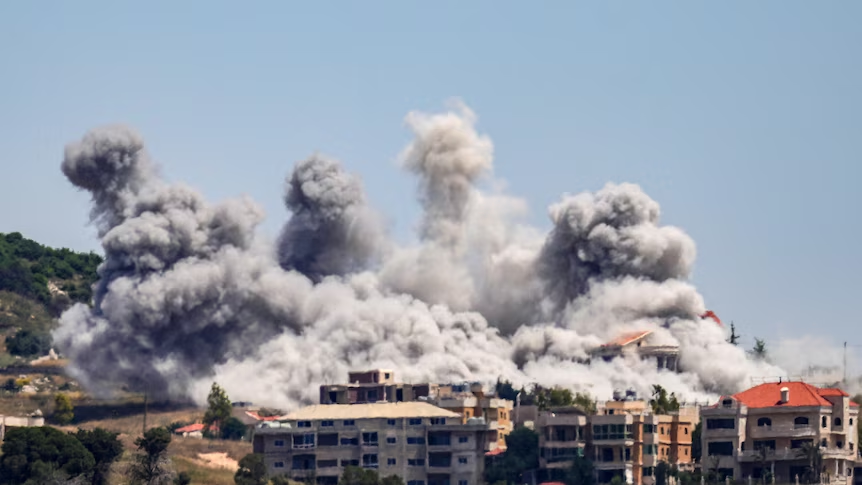
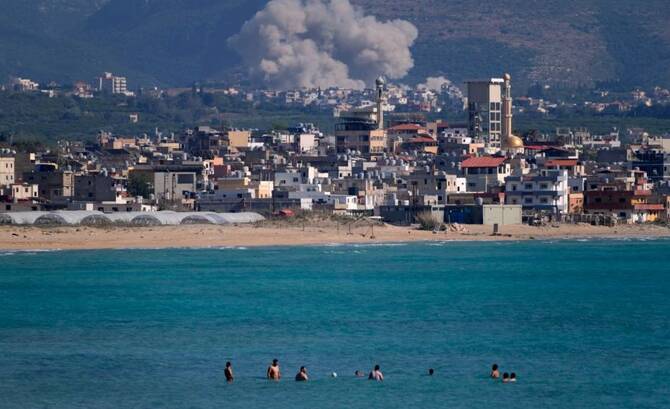
The current round of talks occurred days before the expiration of a truce that reduced, but did not stop, fighting between Israel and Hezbollah. Israel and the Iranian-backed militant group have continued to trade near-constant fire across the border despite a U.S.-brokered ceasefire on April 17, which was initially a 10-day truce and then extended for another three weeks. Hours after Thursday’s discussions began, a Hezbollah drone exploded inside Israel, injuring three civilians, two of them severely, marking the first instance of civilian injuries from Hezbollah projectiles since the ceasefire.
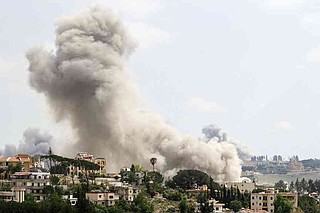
On Wednesday, Israel struck seven vehicles in Lebanon, killing 12 people, including a woman and her two children, with later strikes in southern Lebanon killing another 10 people, including six children. Lebanon’s Health Ministry reports that since the conflict began on March 2, 2,896 people have been killed and 8,824 wounded in Lebanon. Around 400 people have been killed since the nominal ceasefire was implemented. On the Israeli side, eighteen Israeli soldiers, two Israeli civilians inside Israel, and a defense contractor working in southern Lebanon have been killed. Additionally, six U.N. Peacekeeping forces in southern Lebanon have been killed. U.S. Secretary of State Marco Rubio did not attend Thursday’s session. Ambassador Yechiel Leiter believes a full agreement is possible within a few months, conditioned on the successful dismantling of Hezbollah's military capabilities.