Lebanon frequently serves as a strategic point of leverage for Israel when seeking to alter regional dialogues, particularly concerning diplomacy between the United States and Iran, according to Jenny Williams. Williams stated that when US-Iran diplomatic efforts gain momentum, Benjamin Netanyahu often turns his attention to Lebanon. Indeed, when diplomacy between the United States and Iran begins to breathe, Benjamin Netanyahu reaches for Lebanon, a pattern that has become strikingly evident. She described this as a "familiar cruelty" in how Lebanon is treated, noting that "a village becomes a message. A suburb becomes a signal. A border town becomes a lever in someone else’s negotiation." There is a familiar cruelty in the way Lebanon is treated whenever Israel wants to change the regional conversation, a strategy that has profound and often devastating consequences for the Lebanese people.
Netanyahu's approach, Williams indicated, relies on the international community growing weary of questioning such actions. The strategy aims for Lebanon's suffering to recede into background noise. He needs Lebanon’s suffering to become background noise, a distant echo that does not disrupt the broader geopolitical narrative. Williams emphasized that the UN Charter’s prohibition on the threat or use of force against another state’s territorial integrity "is not a decorative sentence." A key element of Netanyahu's strategy depends on the world becoming tired of asking why these actions are permissible, allowing the repeated violations to pass without significant international censure.
The Pattern of Escalation
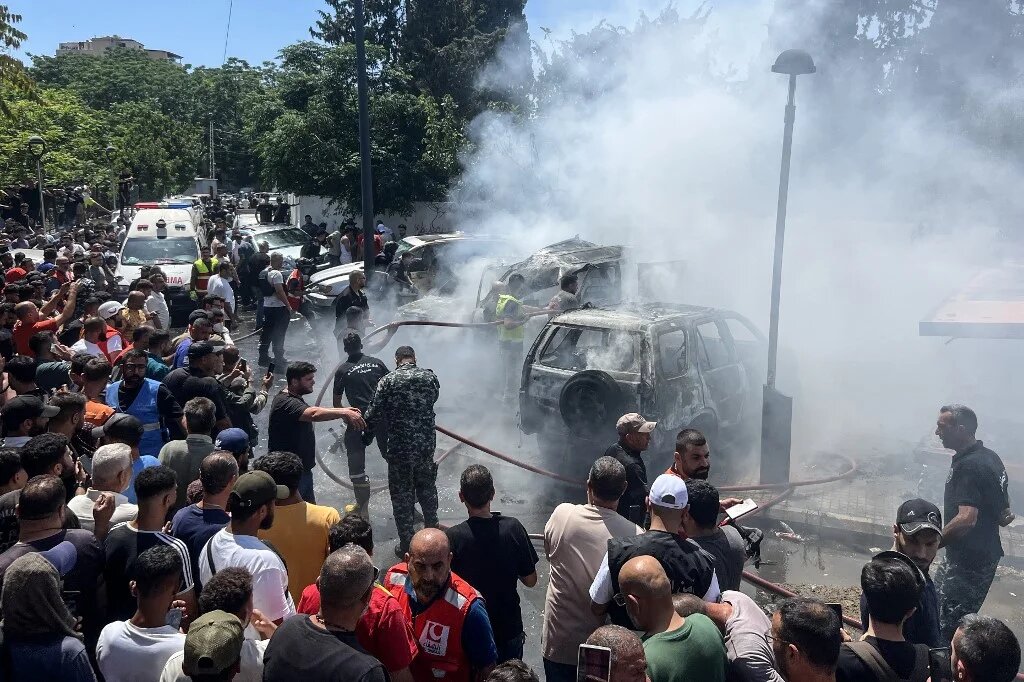
Last night’s escalation in Lebanon was not an isolated military episode, but rather part of a discernible pattern, according to Jenny Williams. Last night’s escalation was not an isolated military episode; it was part of a pattern that has become almost impossible to miss. Williams asserted that Israel has no moral or legal right to treat Lebanese territory as a pressure valve for its own strategic anxieties. She added that Prime Minister Benjamin Netanyahu aims for each Israeli strike to be perceived as a tactical event, rather than an element of a broader strategy to derail de-escalation efforts. He needs each Israeli strike to be treated as a tactical event rather than part of a larger attempt to sabotage de-escalation, obscuring the true intent behind the repeated military actions.
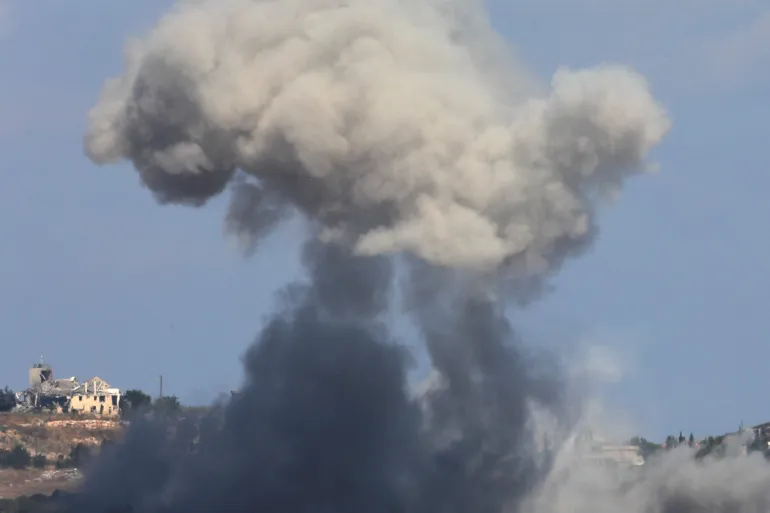
Between April 17 and June 7, Israel conducted nearly 3,500 bombings in Lebanon, alongside controlled demolitions and razing operations in the country's south. Israel has bombed the country nearly 3,500 times between 17 April and 7 June, alongside controlled demolitions and razing operations in the south. These actions have resulted in the displacement of more than one million people. More than one million people have been displaced from their homes and livelihoods due to the ongoing conflict. Williams stated that Netanyahu’s calculation is not subtle, as he seeks to keep Lebanon active as a front even if US-Iran diplomatic efforts move towards a ceasefire or a broader understanding. Netanyahu’s calculation is not subtle. He wants Lebanon to remain open as a front even when the Iran-US track moves towards a ceasefire or a broader understanding, ensuring that the conflict can be reignited or intensified as needed. She explained, "Lebanon gives him a battlefield that can be widened without immediately admitting that the real target is diplomacy itself."
Williams further contended that there is no international law if Lebanese sovereignty can be violated thousands of times and still be described as a security necessity. She characterized the situation as part of a pattern that has become nearly impossible to overlook, a clear demonstration of how international norms are disregarded.
Iran's Diplomatic Stance
Iran has consistently maintained that Lebanon is not a peripheral issue in regional diplomacy, according to Jenny Williams. Iran has insisted that Lebanon is not a side issue in any discussions about regional stability or peace. Tehran has established a ceasefire in Lebanon as a prerequisite for any potential peace agreement with Washington. Tehran has made a ceasefire in Lebanon a condition for any peace deal with Washington, showing its commitment to its ally. Following a series of Israeli strikes that pushed the ceasefire towards collapse, Iran attributed blame to Washington for allowing the crisis to escalate, cautioning that Israeli actions in Lebanon were jeopardizing diplomatic efforts. After Israeli strikes pushed the ceasefire towards breaking point, Iran blamed Washington for allowing the crisis to worsen and warned that Israeli actions in Lebanon were endangering diplomacy, noting the interconnectedness of these regional issues.
Iran subsequently responded to Israel militarily and indicated that further assaults on Lebanon would lead to more severe repercussions. Williams stated, "Iran then answered Israel militarily and signaled that further attacks on Lebanon would bring harsher consequences. The message was not ambiguous: Lebanon is not a forgotten file, and Israel does not get to bomb it as a way of writing the terms of US-Iran diplomacy."
Williams noted that Iran’s approach to Lebanon demonstrates a distinct political rationale. She explained, "Iran’s approach to Lebanon reveals a different kind of political logic. It may not be one Washington likes, but it is consistent: an ally is not abandoned because the cost rises." This perspective suggests that Lebanon is not sidelined merely because its suffering complicates ongoing discussions. Williams added that the individuals living under Israeli bombardment are not treated as an unfortunate footnote to a more streamlined diplomatic narrative. She concluded, "In a region where American promises often arrive with fine print, that consistency matters."
US Double Standards and Lebanon's Plight
In Washington, discussions regarding Lebanese lives frequently occur only when they become a variable in the strategic calculations of other actors. In Washington, Lebanese lives are often discussed only when they become a variable in someone else’s strategy, rather than being considered for their inherent value or suffering. Prime Minister Benjamin Netanyahu, according to analysts, relies on Washington maintaining the pretense that the Lebanese situation can be compartmentalized and separated from Iran, from Gaza, from the Strait of Hormuz, and from the broader challenges to American influence in the Middle East. He needs Washington to keep pretending that the Lebanon file can be separated from Iran, from Gaza, from Hormuz, and from the wider failure of American order in the Middle East, allowing Israel to continue its actions without full accountability for the regional implications.
Critics point to a pattern of American foreign policy that, while consistently speaking of allies, loyalty, and international rules, has a record of using partners and subsequently leaving them to bear the consequences. Washington speaks constantly of allies, loyalty, and rules. Yet the American record is full of partners used, exposed, and then left to pay the bill, a pattern that undermines trust and stability. Ukraine, for instance, was championed for years within the framework of Western resolve, only for the world to witness Donald Trump publicly humiliate President Volodymyr Zelenskyy in the Oval Office. Ukraine was pushed for years into the language of Western resolve, only for the world to watch Donald Trump turn Volodymyr Zelenskyy into an object of public humiliation in the Oval Office, exposing the fragility of such alliances. Similarly, Iraq faced an invasion in 2003 under the premise of weapons of mass destruction, claims that later proved unfounded. Iraq was invaded in 2003 under the shadow of claims about weapons of mass destruction that later collapsed, leading to prolonged instability and immense human cost. Afghanistan, after being promised enduring support, observed an American withdrawal that left thousands of local partners and visa applicants stranded. Afghanistan was promised endurance, then watched as American withdrawal left thousands of local partners and visa applicants stranded, a stark example of abandoned commitments. Even Europe experienced a colder demonstration of American loyalty when Mr. Trump suggested that the closure of the Strait of Hormuz could present an opportunity for affected countries to purchase more American oil. Europe, too, heard the colder version of American loyalty when Trump pitched the closure of the Strait of Hormuz as a chance for countries hurt by the crisis to buy more American oil, noting a transactional approach to international relations.
The Path to Genuine Peace
For a ceasefire to be effective, it must encompass Lebanon, according to Jenny Williams. Williams stated, "If a ceasefire is real, it must include Lebanon. If diplomacy is serious, it cannot give Israel a side door through which to continue the war." There can be no stable ceasefire if Israel continues to maintain an active front in Lebanon. There is no stable ceasefire while Israel keeps one front burning, as the interconnectedness of regional conflicts means that peace cannot be compartmentalized. Credible US diplomacy with Iran is also unattainable if Washington cannot restrain its ally most determined to derail peace efforts. There is no credible US diplomacy with Iran if Washington cannot restrain the ally most determined to derail it, as allowing one party to undermine negotiations renders diplomatic efforts futile. Williams asserted that "Lebanon has paid enough for other people’s wars." If Washington genuinely seeks a ceasefire, it must cease allowing Israel to treat Lebanon as an exception to peace. If Washington wants a real ceasefire, it must stop giving Israel permission to make Lebanon the exception, thereby ensuring that peace is truly full. For diplomacy with Iran to succeed, Washington must accept Lebanon's integral role in the conversation, rather than excluding it. If it wants diplomacy with Iran, it must accept that Lebanon belongs inside the conversation, not outside it, recognizing the critical role Lebanon plays in the broader regional context. Williams concluded that "Netanyahu’s attempt to use it as an escape route from diplomacy should fail. Not because escalation is desirable, but because the opposite is true: peace cannot be built by allowing one state to burn a neighbor every time negotiations become inconvenient."