Israel has unilaterally imposed a "security buffer zone" in southern Lebanon, extending into its territorial waters and raising significant international concern. This controversial measure, announced by Avichay Adraee, the Israeli army’s Arabic-language spokesperson, on April 19, delineates a new security area that stretches roughly 10km (6 miles) north of the internationally recognized Lebanon-Israel border. The declaration of this "Yellow Line" by the Israeli military has immediately created a contested maritime area, directly impacting Lebanon's sovereign access to its vital coastal resources and potentially disrupting international shipping lanes in the Eastern Mediterranean.
The establishment of this buffer zone, encompassing both land and sea territories, marks a critical and potentially destabilizing development in the already volatile regional dynamics between the two nations, which technically remain in a state of war. Lebanon views this move as a direct challenge to its sovereignty and a potential economic threat, particularly given the strategic importance of its offshore energy reserves. The timing and nature of the announcement have intensified calls for international scrutiny and diplomatic intervention to de-escalate tensions and uphold existing agreements.
Maritime Agreement Under Threat
Experts have voiced strong objections, telling Al Jazeera that this new "defence zone," or "buffer zone," constitutes a clear violation of the ceasefire arrangements between Israel and Lebanon. A particularly pressing concern is that the newly declared zone directly encroaches upon and effectively absorbs Lebanon's Qana gas project, a development poised to have profound implications for Lebanon's nascent energy sector and its economic future. The exploration rights for the Qana gas project were explicitly guaranteed to Lebanon under a landmark 2022 US-brokered maritime border agreement with Israel, a deal that was heralded at the time as a significant diplomatic achievement.
Israel and Lebanon formally signed the maritime border demarcation agreement on October 27, 2022, following intensive mediation efforts by the United States. This agreement aimed to definitively settle their long-standing dispute over an area of 860sq km (332sq miles) in the Mediterranean Sea, paving the way for both countries to develop their offshore energy resources without conflict. Under established international law, waters extending within 12 nautical miles of a country’s coast are unequivocally considered its territorial sea, where the nation exercises full and undisputed sovereign control. The 1982 United Nations Convention on the Law of the Sea, a foundational treaty governing maritime activities, establishes a clear legal obligation for neighboring states to negotiate their maritime boundaries in good faith, ensuring peaceful coexistence and resource management.
Lebanese Energy Minister Joe Saddi addressed the situation directly on April 19, stating to Reuters, "From a legal point of view, this map [of Israel’s buffer zone] doesn’t change anything about the fact that there is a maritime border agreement." His statement shows Beirut's position that the 2022 agreement remains binding and that Israel's unilateral declaration cannot supersede international law or established diplomatic accords.
The new Israeli declaration introduces significant complexities and uncertainties to the established agreement, directly challenging its framework. The buffer zone's presence in an area specifically designated for the Qana gas project directly undermines the spirit and letter of the 2022 demarcation. This precarious situation arises against a broader regional backdrop where maritime tensions are already high; for instance, fishermen in Gaza operated under severe Israeli restrictions even prior to the conflict that began in October 2023, noting existing challenges to maritime access and resource exploitation. The legal implications of Israel's newly declared zone are currently under intense assessment by Beirut, which continues to consider the maritime border agreement as legally binding and inviolable.
Context of Escalation and Gas Fields
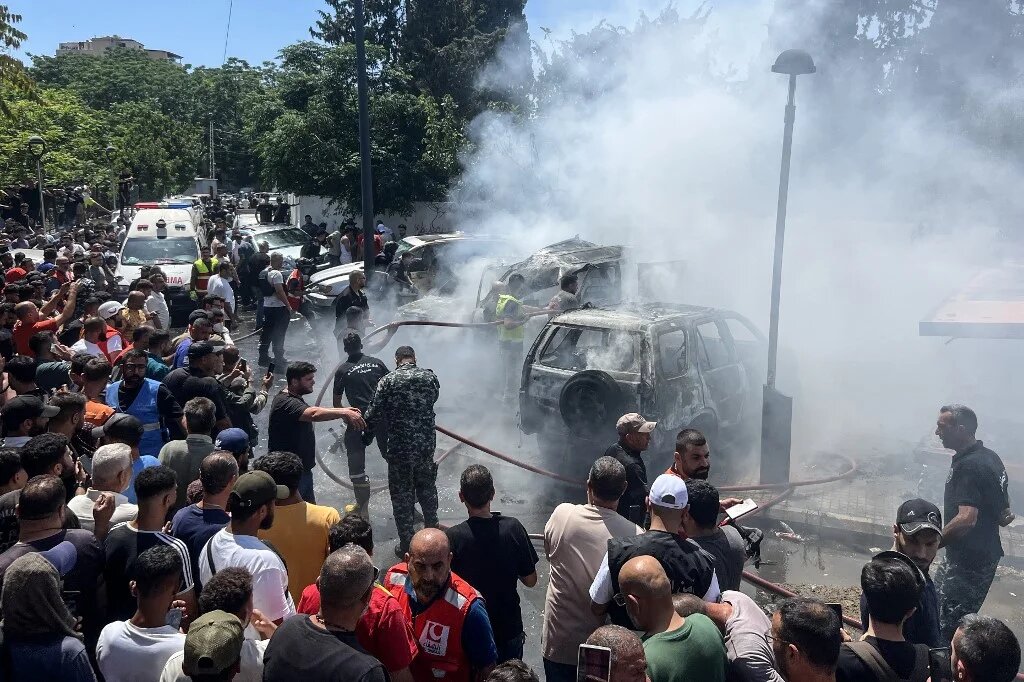
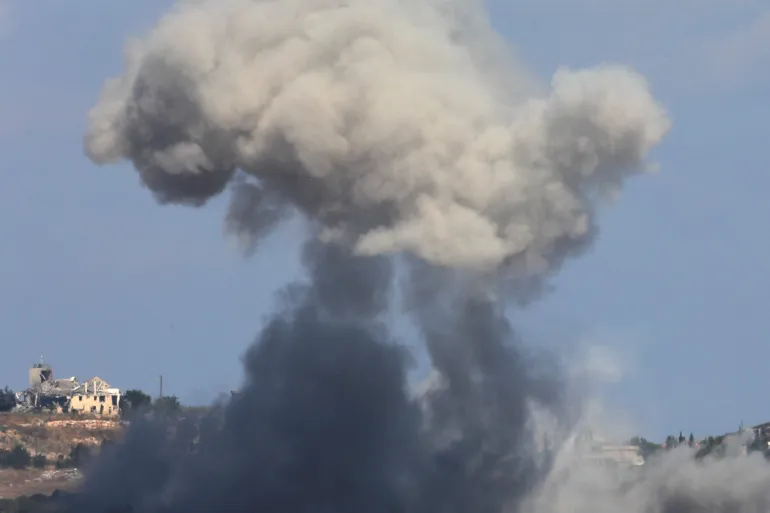
The announcement of Israel's buffer zone came just days after the United States had brokered a fragile ceasefire between Israel and Lebanon, intended to de-escalate cross-border hostilities. However, since the buffer zone's declaration, Israeli troops have been observed and reported to have attacked targets well beyond the newly designated Yellow Line, indicating a continued military presence and operational reach deeper into Lebanese territory. During this period of heightened escalation, Israel has killed close to 3,700 people in Lebanon, according to official figures. This recent flare-up in hostilities is part of a wider regional conflict; the US-Israel war on Iran, for instance, spilled over into Lebanon after Hezbollah fired at Israel on March 2. Hezbollah's action on March 2 was explicitly stated as a response to the killing of Iranian Supreme Leader Ali Khamenei, further illustrating the interconnected nature of regional conflicts. A similar pattern of Israeli territorial assertion was observed in October when a "ceasefire" in the Gaza Strip, also brokered by the US, led to the creation of an analogous Israeli buffer zone in that region, raising concerns about a precedent for such unilateral declarations.
In January of the current year, a consortium of international energy giants – France's TotalEnergies, Italy's Eni, and QatarEnergy – signed an offshore exploration permit with the Lebanese government for Block 8, located in Lebanon's exclusive economic zone. This agreement was made possible by Lebanon's proactive steps in the energy sector, including the passage of a hydrocarbon law in 2010, which laid the legal framework for granting oil companies exploration and production rights within its offshore territories. Earlier exploration efforts on Block 4, which commenced in 2020, were ultimately abandoned due to findings indicating a lack of economic feasibility, while no commercially viable discoveries were made in Block 9. These past endeavors show Lebanon's long-standing efforts to develop its energy resources and secure its economic independence.
The humanitarian and economic impact of regional conflicts on maritime activities is starkly evident in other areas. The United Nations has estimated that a staggering 72 percent of Gaza’s fishing fleet has been damaged or completely destroyed since the beginning of Israel’s military operations in Gaza, severely impacting the livelihoods of thousands. Meanwhile, the Gaza Marine field, located off the coast of Gaza, holds an estimated 45.3 billion cubic metres (1.6 trillion cubic feet) in recoverable natural gas, according to data from the US Energy Information Administration. Despite this significant potential, the Gaza Marine field remains largely untapped, a testament to the enduring political and security challenges in the region that impede critical economic development.
Expert and Political Reactions
The zone, demarcated by what Israel refers to as the "Yellow Line," is a key point of contention. Israel has publicly stated that it required the establishment of this buffer zone specifically to prevent attacks from Hezbollah fighters, framing it as a necessary security measure. This newly declared buffer zone represents approximately 6 percent of Lebanese territory, a substantial proportion that shows the scale of Israel's unilateral territorial assertion.
The 2022 maritime agreement, which the buffer zone now threatens, had previously drew varied reactions within Israel. Opposition leader Yair Lapid, who was Prime Minister at the time the agreement was signed, stated in 2022 that the deal "bolsters Israeli security and the Israeli economy," noting its perceived strategic benefits. However, his more recent comments reflect a shift in perspective or a critique of how the current government is handling the situation. On April 28, Lapid posted on X, sharply rebuking how Netanyahu's ministers "incessantly babble about the 'gas deal'," adding, "there’s no gas there, no security risk there, nothing there at all. Sea." This suggests a political divide within Israel regarding the actual value and implications of the original agreement and the current buffer zone.
Conversely, Energy Minister Eli Cohen, a member of the current governing coalition, expressed a vastly different view of the 2022 deal, describing it as "a surrender agreement that ceded to Lebanon all the disputed territories. This agreement weakened Israel and strengthened Hezbollah." These contrasting statements from prominent Israeli political figures highlight the deep internal disagreements over the nation's strategy in the Eastern Mediterranean and its dealings with Lebanon.
From the Lebanese perspective, the implications are equally stark. Lebanese researcher Ahmed Baydoun, who specializes in conflict investigations, offered a grim assessment of Israel's actions on the ground. Baydoun stated that the Israeli military has a "clear strategy of developing this buffer zone by its destruction of villages, uprooting of trees and continued evacuation notices in this area." This suggests that the buffer zone is not merely a line on a map but an active process of territorial alteration and displacement, with severe consequences for local populations. The ongoing challenges of resource development in the region are further exemplified by the Gaza Marine field, which, despite its estimated 45.3 billion cubic meters (1.6 trillion cubic feet) in recoverable natural gas, remains largely untapped due to the persistent political and security instability.
Legal and International Implications
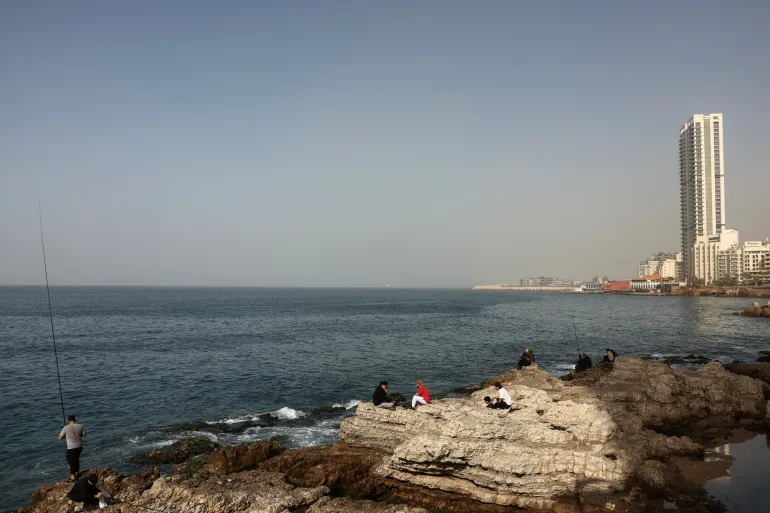
Israel’s new demarcation line extends significantly into Lebanon’s exclusive economic zone (EEZ) in the Eastern Mediterranean Sea, a move that is legally contentious under international maritime law. Specifically, the area Israel has placed within the “buffer zone” includes waters situated within 12 nautical miles (22.2km) of Lebanon’s coast, which, as per international conventions, fall squarely within Lebanon's sovereign territorial waters. More critically, this demarcation line directly absorbs two key offshore blocks, Block 9 and Block 8, which are integral parts of the Qana gasfield and border Israeli waters.
The UN Convention on the Law of the Sea, a cornerstone of international maritime governance, explicitly grants a country exclusive rights to explore, exploit, conserve, and manage natural resources, both living and non-living, within its EEZ. This framework is designed to prevent unilateral actions that could undermine the economic sovereignty and resource security of coastal states. The 2022 maritime agreement between Israel and Lebanon was specifically designed to settle their dispute over an area of 860sq km (332sq miles), thereby providing a mutually recognized framework for resource development. Israel's current action directly contravenes the spirit and letter of this agreement, reigniting a dispute that was thought to be resolved through diplomatic means.
The establishment of this new buffer zone in southern Lebanon also draws parallels with other Israeli territorial assertions. Separately, Israel is currently occupying more than 60 percent of the Gaza enclave’s territory under the guise of another buffer zone, demonstrating a consistent pattern of creating militarized zones that extend beyond internationally recognized borders. These actions raise serious questions about adherence to international law, the efficacy of brokered agreements, and the potential for increased regional instability as sovereign rights and economic interests clash. The international community now faces the challenge of upholding maritime law and ensuring that resource development in the Eastern Mediterranean proceeds in a manner that respects the sovereignty and economic rights of all nations involved.